🌱 Hand-picked heirloom seeds — free shipping on Amazon orders over $35
The Grow Library
Seed Planting Guide.
Tap a seed below to jump to its instructions. Keep packaging for reference. Info is educational only — not medical, herbal, or professional horticultural advice.
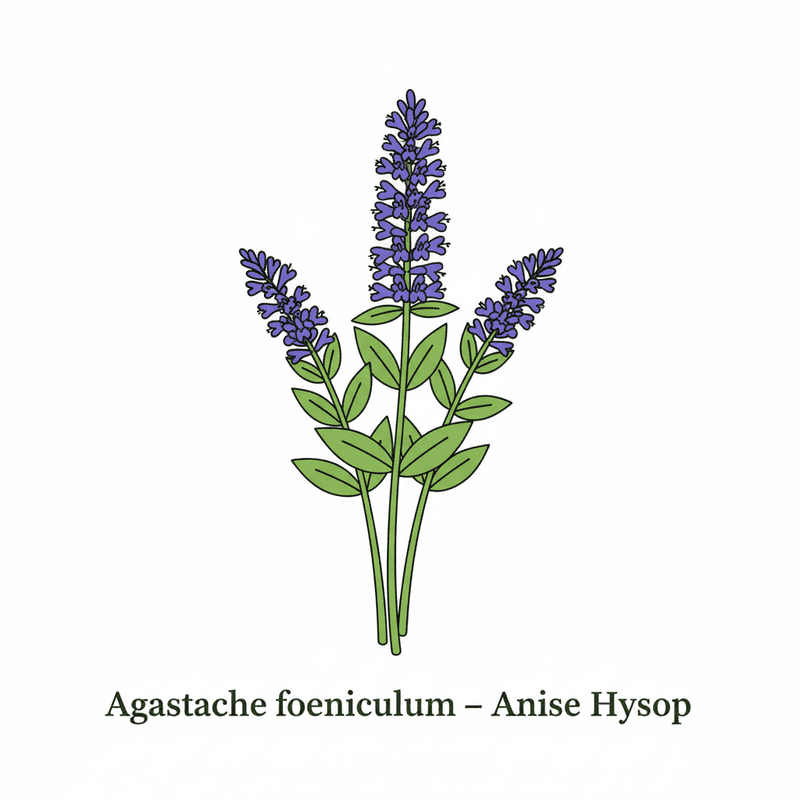
Anise Hyssop (Agastache foeniculum) is a delightful perennial herb in the mint family, known for its striking purple flower spikes, licorice-scented leaves, and attraction to pollinators. It's a low-maintenance plant that adds beauty and fragrance to any garden.
1.Sowing & Germination
→Start Indoors: For best results, sow seeds indoors 6-8 weeks before your last expected frost date.
→Surface Sow: Gently press the tiny seeds onto the surface of moist seed-starting mix. Do not cover them, as Anise Hyssop seeds require light to germinate.
→Germination Time: Expect germination in 7-14 days at a temperature range of 65-70°F (18-21°C). Keep the soil consistently moist during this period, perhaps by covering the tray with a clear dome to maintain humidity.
→Transplanting: Once seedlings have developed a few sets of true leaves and all danger of frost has passed, transplant them outdoors. Space plants 12-18 inches apart in the garden.
→Direct Sowing: In regions with a long growing season, you can also direct sow seeds outdoors after the last frost. Prepare a finely raked seedbed and scatter seeds lightly on the surface.
2.Growing & Care
Light & Growing
→Sunlight: Anise Hyssop thrives in full sun (at least 6 hours of direct sunlight per day) but can tolerate partial shade, especially in hotter climates.
→Growth Habit: It forms upright clumps, reaching heights of 2-4 feet and spreading about 1-2 feet wide.
→Pinching: Pinch back young plants when they are about 6 inches tall to encourage bushier growth and more flower spikes.
→Deer Resistant: A great bonus, deer tend to leave Anise Hyssop alone!
3.Harvest
Harvesting Anise Hyssop
→Leaves: Begin harvesting leaves once the plants are well-established and have reached about 8-10 inches tall. You can snip individual leaves or whole sprigs as needed throughout the growing season.
→Flowers: The beautiful purple flower spikes are also edible and make a lovely garnish. Harvest them as they open.
→Timing: For the most potent essential oils and flavor, harvest leaves and flowers in the morning after the dew has dried, but before the heat of the day.
→Drying/Storing: To dry, tie bundles of stems together and hang them in a cool, dark, well-ventilated area. Once crisp, strip the leaves and store them in airtight containers. Dried leaves retain much of their flavor.
4.In the Kitchen
Why Grow Anise Hyssop?
→Pollinator Paradise: It's an absolute magnet for bees, butterflies, and hummingbirds, making it an excellent choice for a pollinator garden.
→Culinary Delight: The leaves have a unique, sweet licorice-mint flavor, perfect for teas, lemonade, fruit salads, desserts, and even savory dishes like roasted chicken or pork.
→Aromatic & Ornamental: Its tall, vibrant purple flower spikes add vertical interest and a lovely scent to borders, herb gardens, and cottage garden designs.
→Medicinal Uses: Traditionally used by Native Americans for coughs, colds, and fevers due to its expectorant and diaphoretic properties.
→Low Maintenance: Once established, it requires minimal care, tolerates various conditions, and is generally pest and disease-free.
→Self-Seeding: It readily self-seeds, often ensuring new plants for years to come, though it's not overly aggressive. Anise Hyssop is truly a gem, offering beauty, fragrance, and utility with little effort
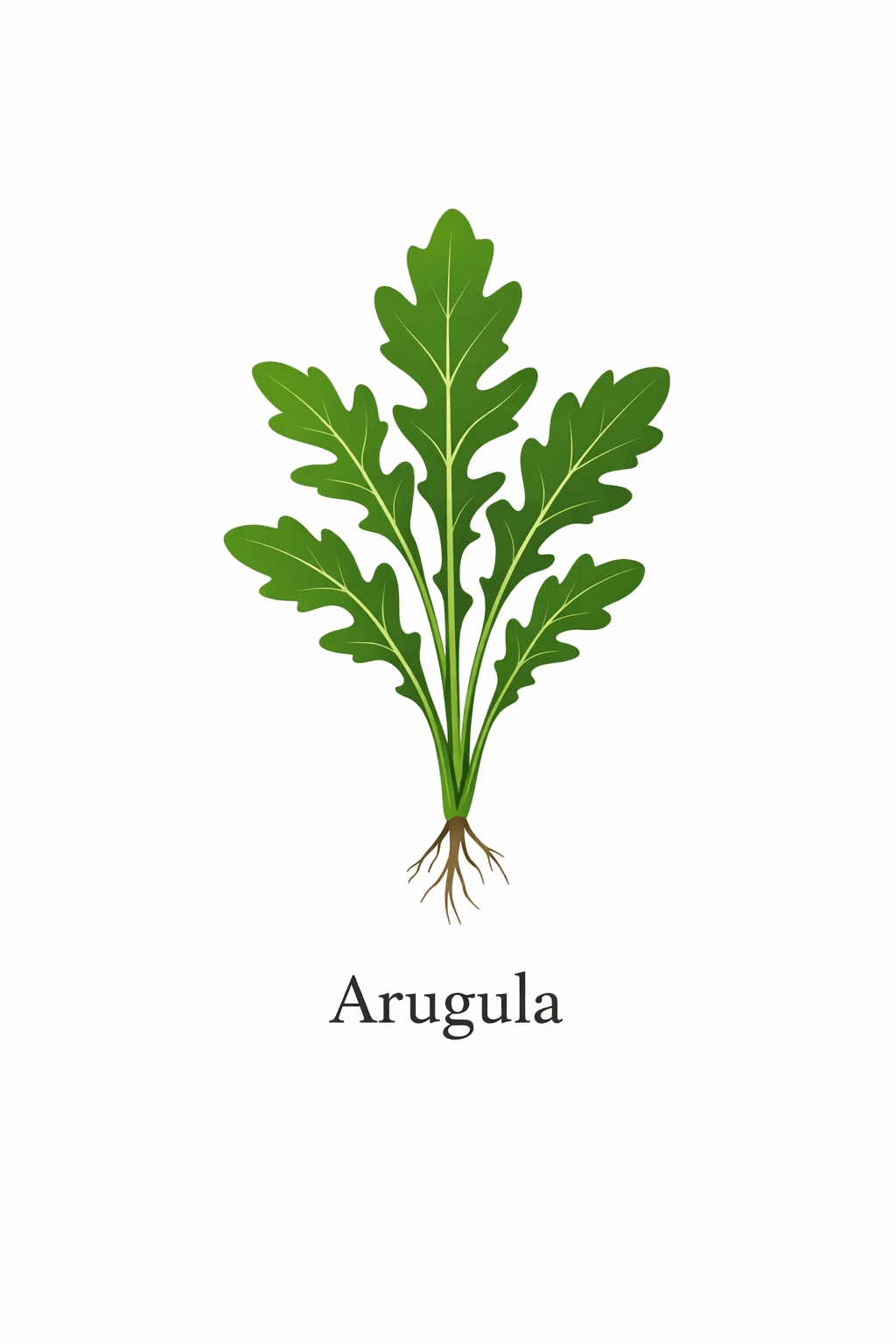
Arugula
Arugula
Arugula
Eruca sativa
Roquette is the quintessential arugula variety, prized for its broad, lobed leaves and complex, peppery-nutty flavor. It is a "cool-season" specialist, meaning it thrives in the crisp temperatures of early spring and late fall. Because it moves from seed to salad bowl in as little as 4 weeks, it is the perfect crop for gardeners of all skill levels.
Days to Maturity
20–50 Days
Sun / Light
Full Sun / Partial Shade
Sowing Depth
1/8 to 1/4 inch
Spacing
1–6 inches
Germination
5–15 Days
1.Sowing & Germination
Roquette seeds are hardy and eager to grow. They do not require an indoor start and perform best when sown directly into their final home.
→When to Plant: Sow outdoors as soon as the soil can be worked in spring (soil temp 40°F–65°F). For a fall harvest, sow again in late summer once the heat of August begins to fade.
→Sowing Depth: 1/8 to 1/4 inch deep. Covering too deeply will delay germination.
→Spacing for Baby Greens: Scatter seeds roughly 1 inch apart. No thinning required.
→Spacing for Mature Plants: Thin seedlings to 4–6 inches apart to allow for the characteristic rosette shape to form.
→Germination Time: Extremely fast—typically 5 to 15 days.
2.Growing & Care
→Watering: Keep the soil consistently moist. Arugula has a shallow root system; if the soil dries out, the plant enters "stress mode," which triggers it to flower (bolt) and makes the leaves painfully spicy.
→Feeding: If your soil is rich in compost, additional fertilizer is rarely needed. For an extra boost, use a nitrogen-rich liquid fertilizer once the plants are 3 inches tall.
→Pest Alert (Flea Beetles): These tiny insects love the peppery oils in Roquette and leave "shotholes" in the leaves. Pro Tip: Use a lightweight floating row cover immediately after sowing to keep them off your crop.
3.Harvest
→Days to Maturity: 20–28 Days (Baby); 40–50 Days (Mature).
→Baby Stage: Harvest when leaves are 2–3 inches long for the mildest flavor and most tender texture.
→Mature Stage: Harvest full-size leaves before the plant begins to flower.The "Cut-and-Come-Again" Method: Snip the outer leaves at the base, leaving the center "heart" intact. The plant will continue to produce new leaves from the center for multiple harvests.
→Bolting: When the plant sends up a central stalk with white, purple-veined flowers, the leaves will become very sharp and bitter. The flowers are edible and make a beautiful, spicy garnish for pizzas or salads!
4.In the Kitchen
→Storage: Arugula wilts quickly. After harvesting, rinse in cold water, pat dry, and store in a breathable bag in the refrigerator crisper drawer. Use within 5–7 days.
→Culinary Use: Use fresh in salads, wilt it into hot pasta, or blend mature leaves with walnuts, parmesan, and olive oil for a "Rocket Pesto."
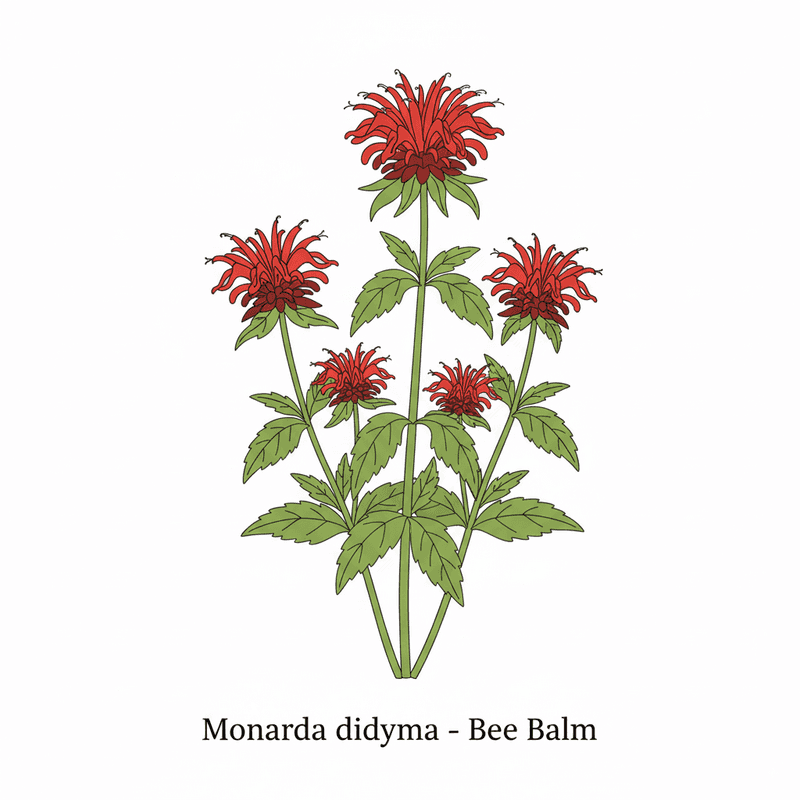
Bee Balm
Bee Balm
Bee Balm
Bee Balm (Monarda didyma, or other Monarda species/cultivars) is a striking perennial herb in the mint family, celebrated for its unique, shaggy flowers, aromatic foliage, and incredible ability to attract pollinators.
1.Sowing & Germination
→Start Indoors: For best results, sow Bee Balm seeds indoors 8-10 weeks before your last expected frost date.
→Cold Stratification: Many Monarda species benefit from cold stratification to improve germination rates. Mix seeds with a bit of damp sand or peat moss in a plastic bag and refrigerate for 4-6 weeks before sowing.
→Surface Sow: Scatter seeds lightly on the surface of moist seed-starting mix. Do not cover them, as Bee Balm seeds require light to germinate. Gently press them into the soil.
→Germination Time: Expect germination in 10-40 days at a temperature range of 60-70°F (15-21°C). Be patient, as germination can be erratic. Keep the soil consistently moist.
→Transplanting: Once seedlings have developed a few sets of true leaves and all danger of frost has passed, transplant them outdoors. Space plants 18-24 inches apart.
→Direct Sowing: You can also direct sow seeds outdoors in late fall (for natural cold stratification over winter) or early spring after the last frost. Scatter seeds on prepared soil.
2.Growing & Care
Light & Growing
→Sunlight: Bee Balm thrives in full sun (at least 6 hours of direct sunlight per day) to partial shade. In hotter climates, a little afternoon shade can be beneficial.
→Growth Habit: It typically grows 2-4 feet tall, forming clumps that can spread by rhizomes.
→Pinching & Deadheading: o Pinching: Pinch back young stems in late spring (before flowering) to encourage bushier growth and more blooms. o Deadheading: Remove spent flower heads to encourage a second flush of blooms and prevent excessive self-seeding, though some varieties are sterile.
→Air Circulation: Ensure good air circulation around plants to help prevent powdery mildew, which Bee Balm can be susceptible to, especially in humid conditions or crowded plantings.
3.Harvest
Harvesting Bee Balm
→Leaves: Harvest leaves and young stems throughout the growing season, especially before flowering, for their strong, minty-oregano flavor.
→Flowers: The vibrant flowers are also edible and make beautiful garnishes for salads or drinks. Harvest them when they are fully open.
→Timing: For the best flavor and essential oil content, harvest in the morning after the dew has dried.
→Preserving: o Drying: Gather stems into small bunches and hang them upside down in a cool, dark, well-ventilated area until dry. Strip the leaves and store them in airtight containers. o Freezing: You can also freeze fresh leaves for later use, though they may lose some texture.
4.In the Kitchen
Why Grow Bee Balm?
→Pollinator Magnet: As its name suggests, Bee Balm is an absolute favorite of bees! It's also a top choice for hummingbirds and butterflies, making it indispensable for any pollinator or wildlife garden.
→Medicinal Heritage: Traditionally used by Native Americans as a medicinal herb. It has antiseptic, antibacterial, and anti-inflammatory properties. Often made into a tea for colds, flu, sore throats, and digestive upset, or used topically for skin irritations.
→Ornamental Beauty: Its unique, spiky, often scarlet, pink, purple, or white flowers provide a spectacular show, adding vibrant color and architectural interest to perennial borders and naturalized areas.
→Aromatic Foliage: The leaves release a pleasant, minty-oregano scent when crushed, making it a lovely sensory plant for brush-past areas.
→Native & Low Maintenance: Many varieties are native to North America, making them well-adapted to local conditions once established. It's generally a vigorous and easy-to-grow plant.
→Tea & Culinary Use: The leaves and flowers can be used to brew a flavorful herbal tea (often called Oswego Tea) or to add a distinctive minty-oregano note to salads, lemonade, or even savory dishes. Bee Balm is a truly exceptional plant, offering a beautiful display, a feast for pollinators, and a rich history of beneficial uses.
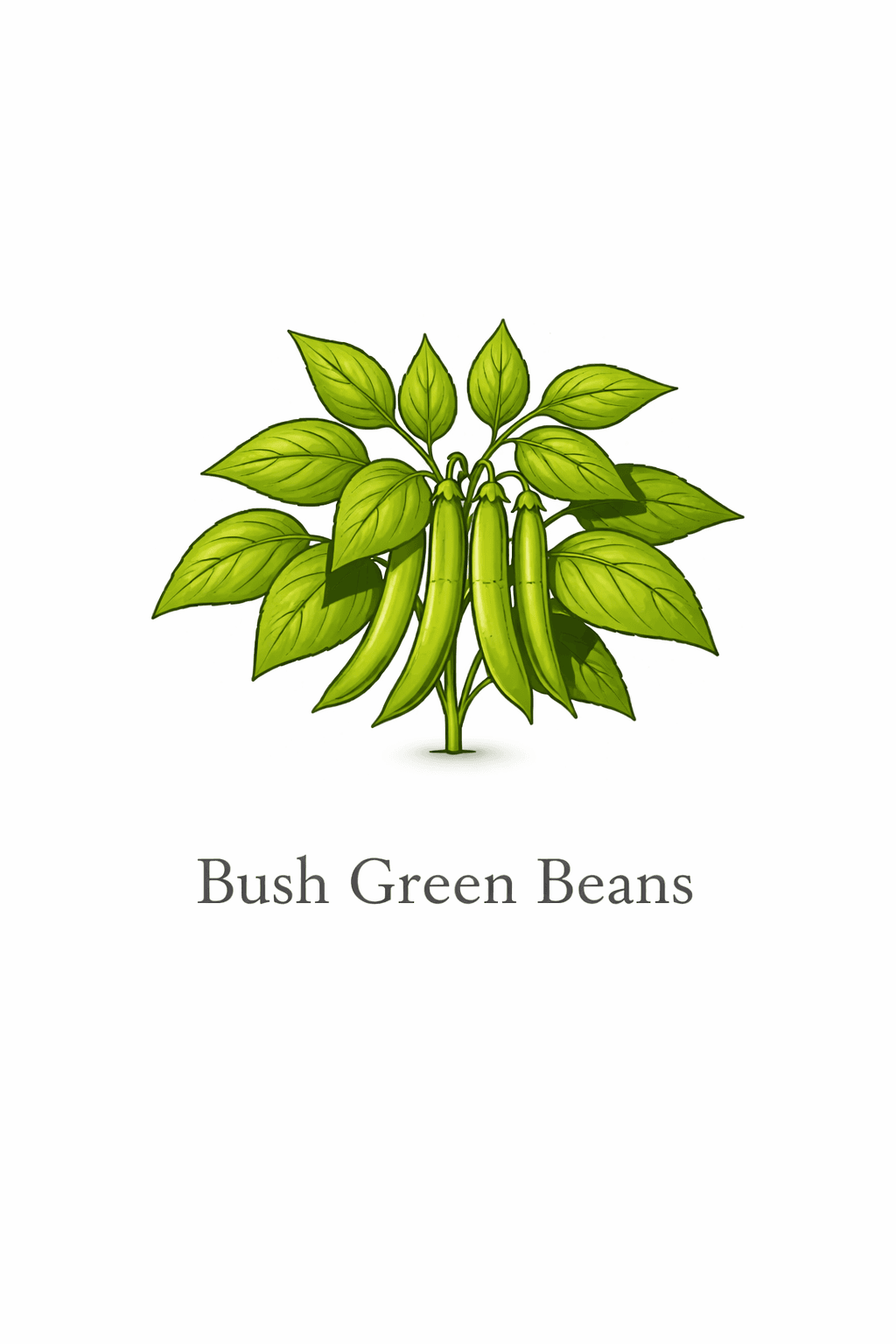
Blue Lake Bush Green Beans
Blue Lake Bush Green Beans
Blue Lake Bush Green Beans
Phaseolus vulgaris
The Blue Lake Bush Bean is a legendary American heirloom, famous for its heavy yields, tender texture, and "stringless" pods. Because this is a "bush" variety, it grows in compact mounds rather than on long vines, making it perfect for small gardens, raised beds, or even large containers without the need for trellising.
Days to Maturity
50–60 Days
Sun / Light
Full Sun (6–8 hours)
Sowing Depth
1 inch
Spacing
4–6 inches
Germination
6–10 Days
1.Sowing & Germination
Beans are tender warm-season crops. They have sensitive roots and do not like being moved, so starting them indoors is generally not recommended.
→When to Plant: Direct sow outdoors after the last frost, once the soil has warmed to at least 60°F–65°F. In cold soil, bean seeds are prone to rotting before they sprout.
→Sowing Depth: 1 inch deep.
→Spacing: Sow seeds 2–3 inches apart. Once they reach 3 inches tall, thin them to 4–6 inches apart. Leave 18–24 inches between rows.
→Succession Planting: Since bush beans tend to produce their entire crop over a 2–3 week window, sow a new batch every 10–14 days to ensure a continuous harvest all summer long.
→Germination Time: 6–10 days.
2.Growing & Care
→Watering: Provide 1 inch of water per week. Keep the soil consistently moist, especially while the plants are flowering and developing pods.
→Critical Rule: Do not handle or harvest bean plants when they are wet (from dew or rain). This is the fastest way to spread fungal diseases and blights between plants.
→Mulching: Once the soil is warm, apply a layer of mulch to suppress weeds and keep the shallow roots cool.
→Feeding: Beans are "nitrogen fixers," meaning they take nitrogen from the air and put it into the soil. They generally do not need much fertilizer.
3.Harvest
→Days to Maturity: 50–60 Days.
→When to Pick: Harvest when the pods are about 5–6 inches long, firm, and crisp. They should be picked before the seeds inside begin to "bulge" and become visible through the pod.The "Pick More, Grow More" Rule: The more you harvest, the more the plant will produce. Check your plants daily once they begin producing, as pods can grow from "perfect" to "over-mature" in just 24 hours.
→Method: Use two hands—one to hold the vine and the other to snap the bean off—to avoid pulling the plant out of the ground.
4.In the Kitchen
→Storage: Store unwashed beans in a reusable bag in the refrigerator for up to 7 days.
→Preparation: Blue Lake is the preferred variety for canning and freezing because it maintains its firm texture and bright green color even after processing.
→Flavor Profile: Known for a sweet, mild "beany" flavor and a satisfying "snap" when broken.
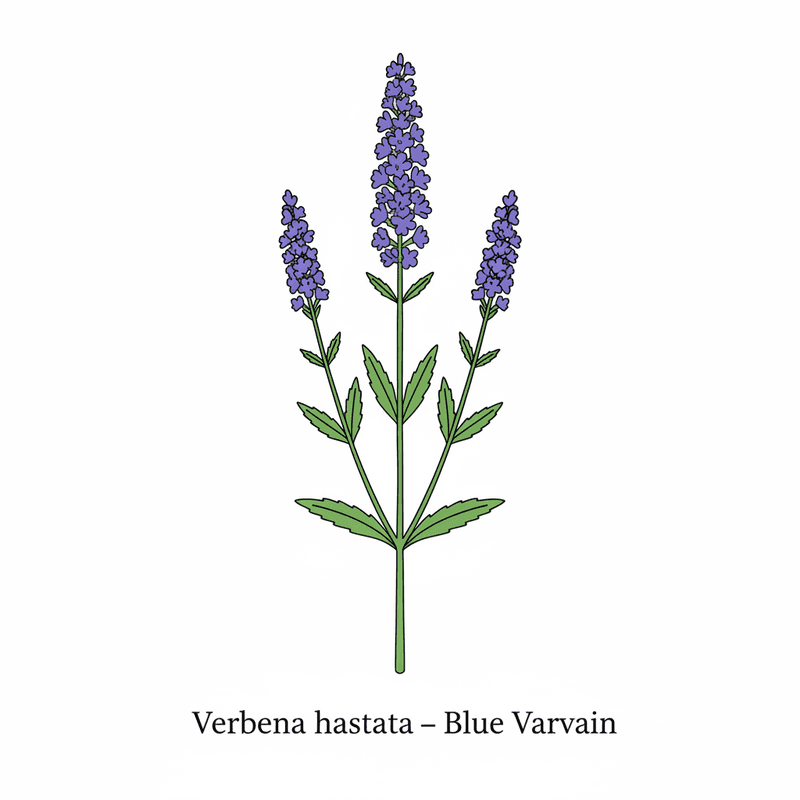
Blue Vervain
Blue Vervain
Blue Vervain
Blue Vervain (Verbena hastata) is a striking native perennial, cherished for its tall, slender spikes of delicate purple-blue flowers and its traditional medicinal properties. It's a fantastic plant for naturalized areas, rain gardens, and pollinator habitats.
1.Sowing & Germination
→Start Indoors: For best results, sow Blue Vervain seeds indoors 8-10 weeks before your last expected frost.
→Cold Stratification: Blue Vervain seeds require cold stratification for successful germination. Mix seeds with a small amount of damp sand or peat moss, place in a sealed plastic bag, and refrigerate for 30-60 days.
→Sowing Depth: After stratification, sow seeds lightly on the surface of moist seed-starting mix, barely covering them with a thin layer of soil or vermiculite, as they may also benefit from light to germinate.
→Germination Time: Germination can be slow and erratic, ranging from 14-60 days (or even longer) at a temperature of 65-70°F (18-21°C). Be patient! Keep the soil consistently moist.
→Transplanting: Once seedlings have developed a few sets of true leaves and all danger of frost has passed, transplant them outdoors. Space plants 12-18 inches apart.
→Direct Sowing: You can also direct sow seeds outdoors in late fall or very early spring. If sowing in fall, the winter cold will provide the necessary stratification.
2.Growing & Care
Light & Growing
→Sunlight: Blue Vervain thrives in full sun (at least 6 hours of direct sunlight per day). It can tolerate very light partial shade, but flowering will be reduced.
→Growth Habit: It grows quite tall, typically 3-6 feet, with a somewhat narrow, upright habit and candelabra-like branching topped with numerous slender flower spikes.
→Maintenance: Generally low maintenance. You can cut back spent flower stalks for a tidier appearance, though leaving some can encourage self-seeding and provide winter interest. It's rarely bothered by pests or diseases.
3.Harvest
Harvesting Blue Vervain
→Leaves & Flowers: The aerial parts (leaves, stems, and flowers) are typically harvested for medicinal use.
→Timing: The best time to harvest for potency is when the plant is in full bloom, usually from mid-summer through early fall. Cut the upper third to half of the flowering stems.
→Drying: Gather harvested stems into small bundles and hang them upside down in a cool, dark, well-ventilated area until thoroughly dry (this can take several weeks). Once dry, strip the leaves and flowers from the stems and store them in airtight containers away from light.
4.In the Kitchen
Why Grow Blue Vervain?
→Medicinal Powerhouse: Blue Vervain has a long history of use in herbal medicine, often referred to as a nervine. It's traditionally used to calm the nervous system, reduce anxiety, ease tension, promote restful sleep, and alleviate headaches. It's also considered a bitter tonic, aiding digestion and liver function, and has been used as a diaphoretic (to promote sweating) for fevers and colds.
→Pollinator Magnet: Its delicate blue-purple flowers are a fantastic food source for a wide array of pollinators, including many species of bees (especially long-tongued bees), butterflies, and beneficial insects.
→Striking Ornamental: The tall, architectural spikes of vibrant blue-purple flowers create a stunning vertical accent in the garden, adding a wild, natural beauty to borders, meadows, and native plant landscapes.
→Wet Soil Tolerant: One of its great advantages is its preference for moist to wet soils, making it perfect for rain gardens, pond edges, or areas of the garden that tend to stay damp.
→Native & Resilient: As a North American native, it's well-adapted to local conditions, requires minimal care once established, and contributes to local ecosystems.
→Tea & Tincture: The dried leaves and flowers are commonly used to make a calming herbal tea or tinctures for its medicinal benefits. Blue Vervain is a truly invaluable plant, offering serene beauty, critical support for pollinators, and powerful traditional healing properties.
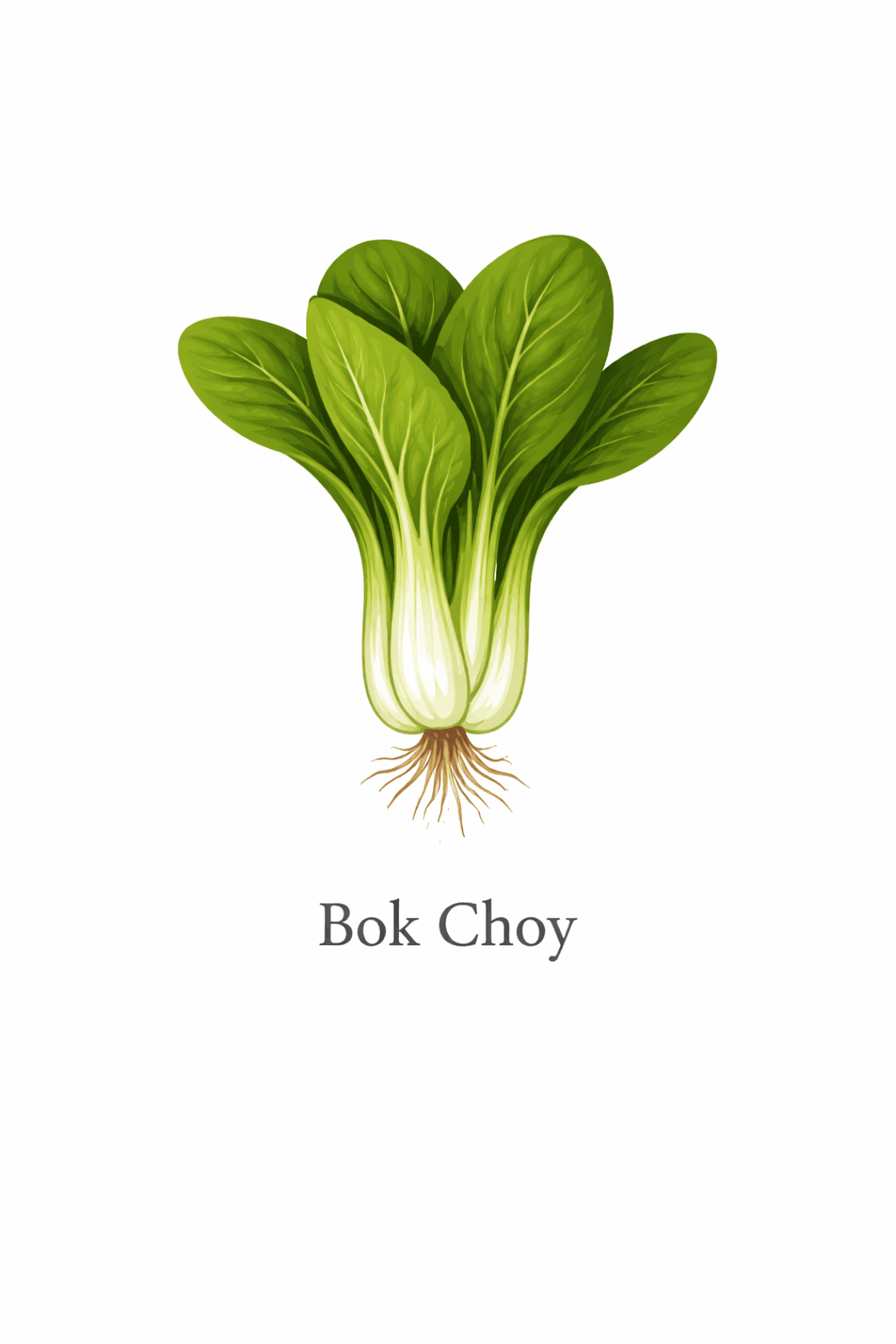
Bok Choy
Bok Choy
Bok Choy
Brassica rapa
The Bok Choy (Pak Choi) is a fast-growing, elegant member of the Chinese cabbage family. It is prized for its crunchy, succulent white stalks and tender, dark green leaves. Because it grows so rapidly, it is often one of the first vegetables a gardener can harvest in the spring.
Days to Maturity
30–55 Days
Sun / Light
Full Sun / Partial Shade
Sowing Depth
1/4 to 1/2 inch
Spacing
12 inches
Germination
8–14 Days
1.Sowing & Germination
Bok Choy is a cool-weather specialist. It grows best when the days are short and the temperatures are mild. If planted in the heat of summer, it will quickly "bolt" (go to seed) and become tough.When to Plant:Spring: Sow outdoors 4 weeks before the last frost.
→Fall: Sow in late summer/early autumn, about 6–8 weeks before the first hard frost.
→Sowing Method: While it can be started indoors in peat pots (to avoid root disturbance), it is most commonly Direct Sown.
→Sowing Depth: 1/4 to 1/2 inch deep.
→Spacing: Sow seeds 1 inch apart. Thin seedlings to 12 inches apart, depending on whether you want "baby" heads or full-sized stalks.
→Germination Time: Fast—typically 8-14 days.
2.Growing & Care
→Watering: Crucial. Bok Choy has a high water content and shallow roots. The soil should stay consistently moist. If the plant gets thirsty, it will immediately try to flower, which ruins the texture of the stalks.
→Feeding: Since it is a leaf-and-stem crop, it loves nitrogen. Apply a liquid organic fertilizer once the plant is about 4 inches tall.
→Pest Alert: Like all cabbage family members, it can attract flea beetles (tiny holes) and cabbage worms. Using a floating row cover is the most effective way to keep your leaves pristine and "market quality."
3.Harvest
→Days to Maturity: 30 Days (Baby); 45–55 Days (Mature).
→Baby Bok Choy: Can be harvested when the plant is only 4–6 inches tall. These are extremely tender and can be cooked whole.
→Mature Heads: Harvest when the base of the stalks feels firm and the plant is 8–12 inches tall.
→Method: Cut the entire plant off at the soil line with a sharp knife. Alternatively, you can harvest just the outer leaves and let the center continue to grow, though the quality is best when the whole head is harvested at once.
4.In the Kitchen
→Storage: Wrap in a damp paper towel and store in a plastic bag in the refrigerator for up to 1 week.
→Culinary Use: Bok Choy is a staple in stir-fries and soups. To maximize texture, cook the thicker white stalks for a minute or two before adding the green leaves, which wilt almost instantly.
→Nutrition: Extremely high in Calcium, Vitamin C, and Vitamin A.
Borage
Borage
Borage
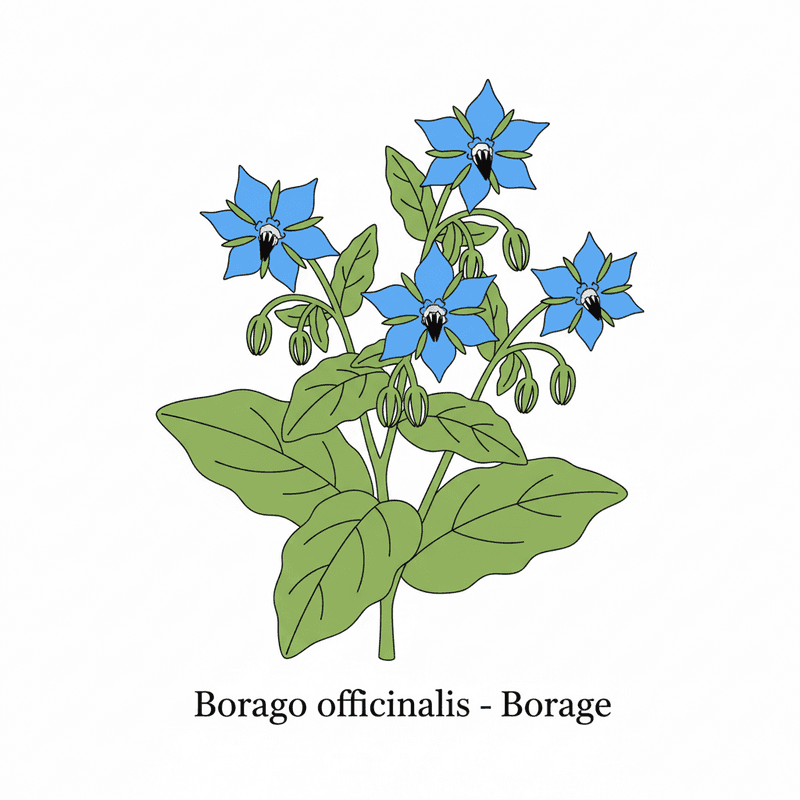
Borage (Borago officinalis) is a beautiful annual herb famous for its vibrant blue, star-shaped flowers and mild cucumber-like flavor. It's an incredibly easy-to-grow plant that attracts pollinators and offers various culinary and medicinal uses.
1.Sowing & Germination
→Direct Sowing is Best: Borage does not like to be transplanted, so direct sowing outdoors is highly recommended. Sow seeds after all danger of frost has passed in spring, when the soil has warmed.
→Sowing Depth: Plant seeds about ½ inch deep.
→Spacing: Sow seeds 6-12 inches apart. You can sow them closer and then thin them once they germinate.
→Germination Time: Borage seeds germinate relatively quickly, usually within 7-14 days, at a temperature range of 65-75°F (18-24°C). Keep the soil consistently moist during this period.
→Self-Seeding: Borage is an enthusiastic self-seeder! Once you have it in your garden, you'll likely find new plants popping up each spring from dropped seeds.
2.Growing & Care
Light & Growing
→Sunlight: Borage thrives in full sun (at least 6 hours of direct sunlight per day) but can tolerate partial shade, especially in hotter climates. Full sun will generally result in more robust plants and abundant flowering.
→Growth Habit: It's a bushy plant, typically growing 2-3 feet tall and equally wide, with large, somewhat hairy leaves and beautiful dangling clusters of blue (occasionally pink or white) star-shaped flowers.
→Maintenance: Borage requires very little maintenance. You can pinch back young plants to encourage bushier growth, but it's not strictly necessary. Deadheading spent flowers is mainly for tidiness, as the plant will continue to produce new blooms throughout the season.
3.Harvest
Harvesting Borage
→Leaves: Harvest young, tender leaves as needed throughout the growing season. The flavor is best when leaves are young; older leaves can become tougher and more fibrous. Use scissors or snip off individual leaves.
→Flowers: The vibrant blue flowers are fully edible and make a stunning garnish. Pick them as they open, usually in the morning when their color is most intense. You can also pick entire flower clusters.
→Timing: For culinary use, fresh is best! Harvest leaves and flowers just before you plan to use them.
→Preserving: o Freezing Flowers: You can freeze borage flowers in ice cubes to add a beautiful touch to summer drinks. o Drying: While possible, both the leaves and flowers lose much of their flavor and vibrant color when dried. It's generally best to use borage fresh.
4.In the Kitchen
Why Grow Borage?
→Pollinator Powerhouse: Borage is a massive draw for bees (especially honeybees!), bumblebees, and other beneficial insects. Its abundant nectar production makes it an excellent addition to any pollinator or bee-friendly garden, supporting local ecosystems.
→Medicinal & Traditional Use: Historically, borage has been revered for its medicinal properties. It's traditionally used as a tonic, a mild diuretic, and a diaphoretic (to induce sweating for fevers). The leaves and flowers are often used in teas to help soothe coughs, reduce inflammation, and calm the nervous system. Borage seed oil is highly valued for its gamma-linolenic acid (GLA) content, used in supplements for skin conditions and inflammation.
→Culinary Delight: The leaves have a unique, refreshing cucumber-like taste, perfect for salads, sandwiches, dips, and cold drinks. The beautiful blue flowers are edible and make a stunning, delicious garnish for cocktails, desserts, and salads.
→Easy & Resilient: Requires very little fuss once established, growing readily even in less-than-ideal conditions and often self-seeding for continuous enjoyment year after year.
→Ornamental Value: Its bold foliage and brilliant blue star-shaped flowers add a distinctive and beautiful touch to herb gardens, vegetable patches, and cottage garden borders. Borage is truly a multi-talented plant, providing a feast for the eyes and the palate, a vital resource for pollinators, and a rich history of beneficial uses.
Broccoli
Broccoli
Broccoli
Brassica oleracea
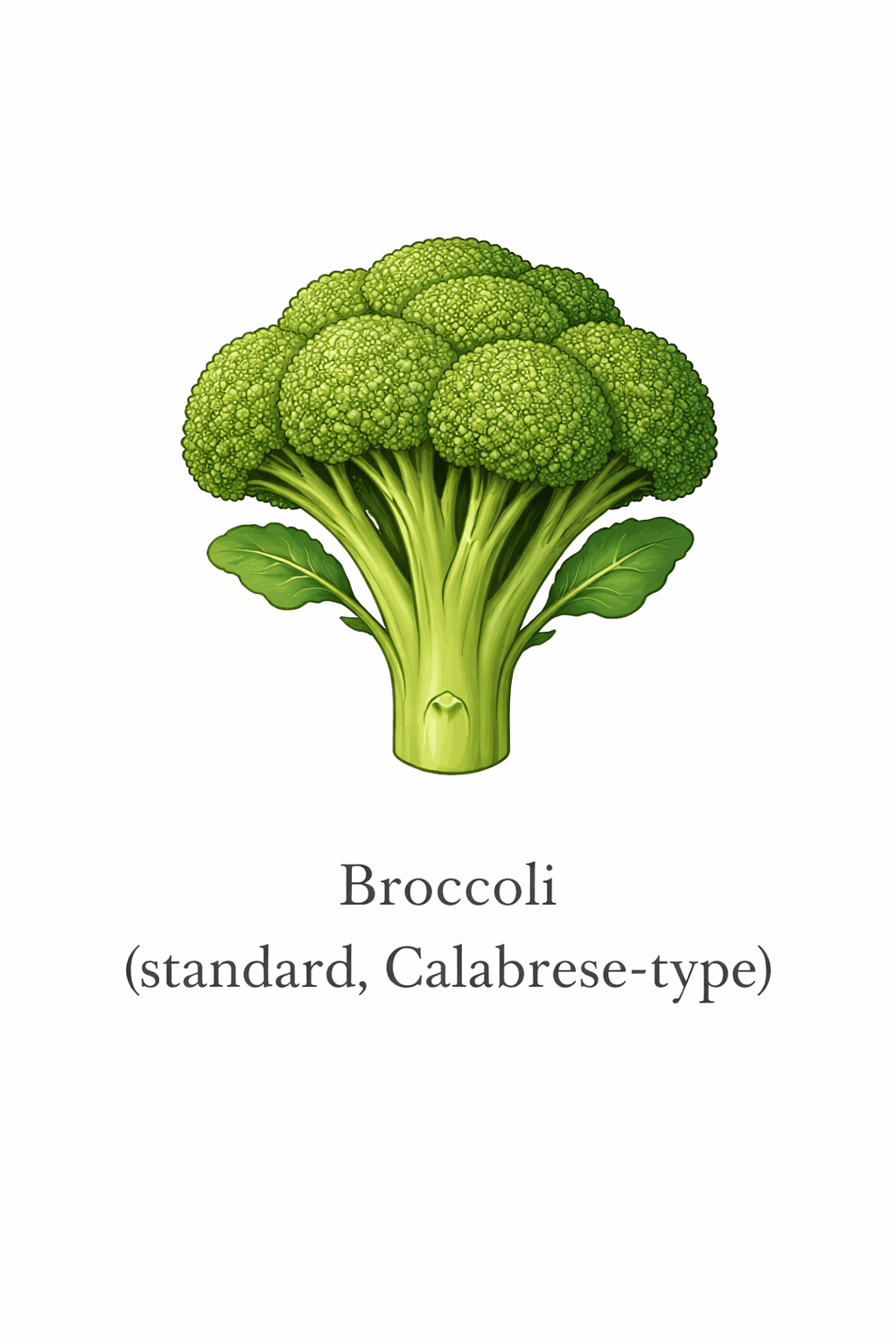
The Green Sprouting Calabrese Broccoli is an Italian heirloom dating back to the 1880s. Unlike many modern commercial varieties that produce one single head and then stop, Calabrese is famous for its "cut-and-come-again" nature. After the main central head is harvested, the plant continues to produce numerous smaller "side shoots," providing a continuous harvest over many weeks.
Days to Maturity
60–80 Days
Sun / Light
Full Sun (6+ hours)
Sowing Depth
1/2 to 1 inch
Spacing
18–24 inches
Germination
7–20 Days
1.Sowing & Germination
Broccoli is a cool-season vegetable. It needs to mature before the scorching heat of summer or the deep freezes of winter.When to Plant:Spring Crop: Start seeds indoors 6–8 weeks before the last frost. Transplant outdoors 2 weeks before the last frost.
→Fall Crop: (Often more successful): Start seeds in mid-summer and transplant into the garden in late summer. Broccoli loves maturing during the cooling days of autumn.
→Sowing Depth: 1/2 to 1 inch deep.
→Spacing: Space plants 18–24 inches apart in rows 30 inches apart. Do not crowd them; broccoli needs significant airflow to prevent rot.
→Germination Time: 7–20 days.
2.Growing & Care
→Watering: Provide consistent moisture (about 1–1.5 inches of water per week). Avoid getting water on the developing heads, which can encourage disease.
→Feeding: Broccoli is a "heavy feeder." Apply a balanced organic fertilizer at transplanting and side-dress with compost or nitrogen-rich fertilizer 3 weeks later.
→Mulching: Use a thick layer of straw or wood chips to keep the roots cool and moisture locked in.
→Pest Alert: Cabbage loopers and imported cabbage worms are common. Keep an eye out for small green caterpillars. Using floating row covers is the best organic prevention.
3.Harvest
→Days to Maturity: 60–80 Days.
→Primary Head: Harvest the central head when it is deep green and the buds are tight. Cut the stem at a slant about 5–6 inches below the head. Do not wait for the buds to open into yellow flowers, as the flavor will turn bitter.
→Side Shoots: Once the main head is removed, the plant will send out smaller "mini-florets" from the leaf axils. Keep harvesting these to encourage the plant to keep producing until the weather becomes too hot or cold.
→Frost Benefit: A light frost actually improves the flavor of Calabrese, making it noticeably sweeter!
4.In the Kitchen
→Storage: Store unwashed in a perforated bag in the refrigerator for up to 5 days.
→Nutrition: Calabrese is a nutritional powerhouse, packed with Vitamin C, Vitamin K, and fiber.
→Culinary Use: The stalks are just as delicious as the florets! Peel the tough outer skin of the stalk to reveal the sweet, tender interior for stir-fries or steaming.
Bronze Fennel
Bronze Fennel
Bronze Fennel
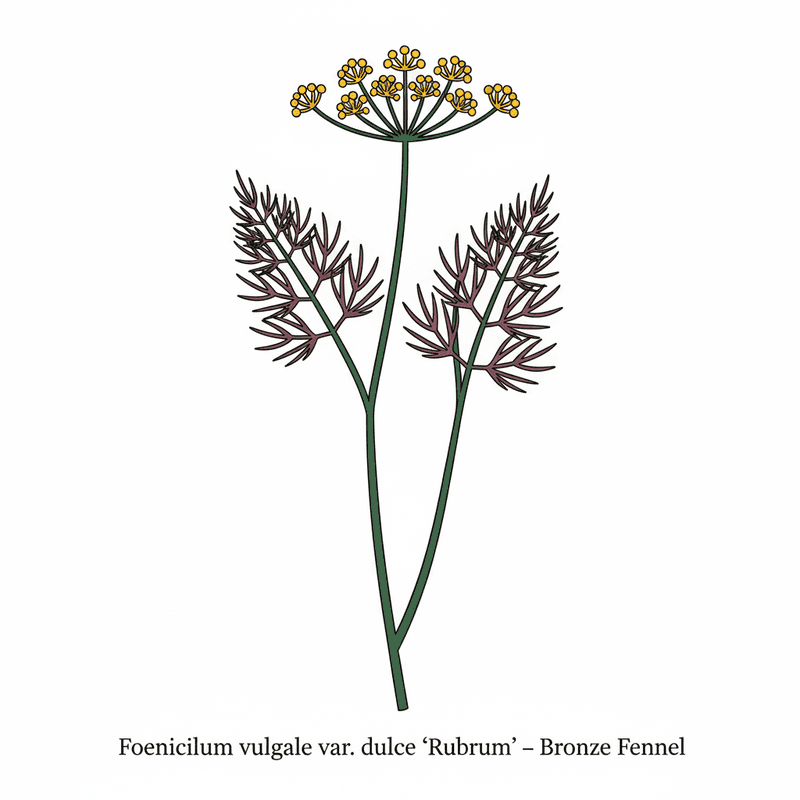
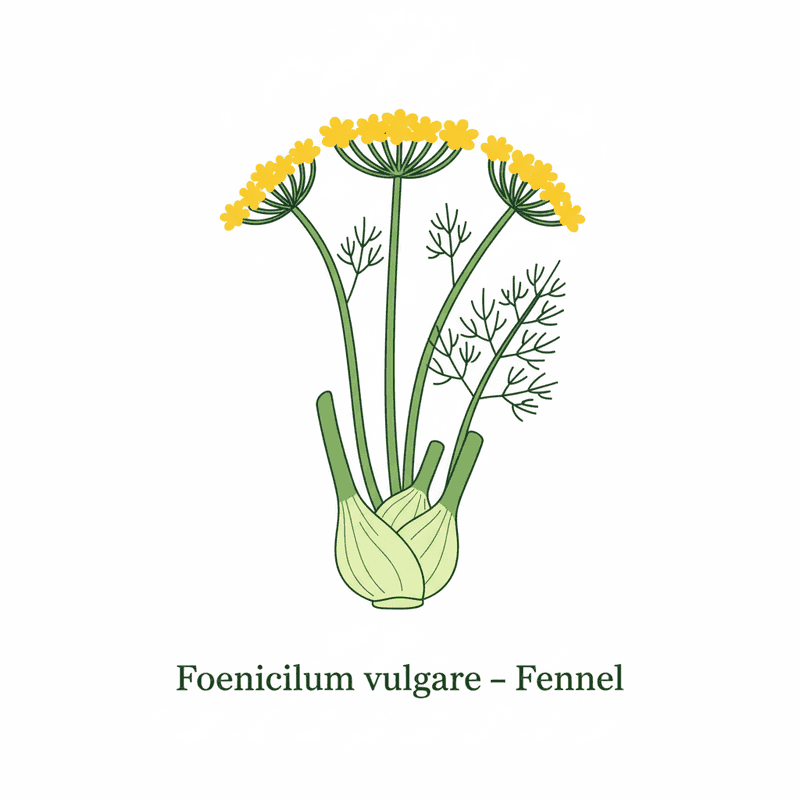
Bronze Fennel (Foeniculum vulgare 'Purpureum') is an ornamental and culinary perennial herb, prized for its feathery, bronze-purple foliage, delicate yellow flowers, and anise-like flavor. It's an excellent choice for adding texture, color, and wildlife appeal to your garden.
1.Sowing & Germination
→Direct Sowing Preferred: Fennel, including Bronze Fennel, often resents transplanting due to its taproot, so direct sowing is highly recommended. Sow seeds in spring after the danger of the last hard frost has passed, once the soil has warmed.
→Sowing Depth: Plant seeds about ¼ to ½ inch deep.
→Spacing: Sow seeds 6-12 inches apart. You can thin seedlings later to achieve the desired spacing.
→Germination Time: Fennel seeds typically germinate in 7-14 days at a temperature range of 60-70°F (15-21°C). Keep the soil consistently moist during germination.
→Self-Seeding: Bronze Fennel can self-seed quite readily, so be prepared for volunteer plants in subsequent years, or deadhead flowers if you wish to control its spread.
2.Growing & Care
Light & Growing
→Sunlight: Bronze Fennel thrives in full sun, requiring at least 6-8 hours of direct sunlight per day. Adequate sun is crucial for developing its best foliage color and flavor.
→Growth Habit: It forms upright, feathery clumps, typically growing 3-5 feet tall and 1-2 feet wide. In mid to late summer, it produces tall stems topped with flat clusters (umbels) of small yellow flowers.
→Maintenance: Generally low maintenance. You can cut back spent flower stalks for a tidier appearance or leave them for seed production and winter interest. Avoid growing near Dill, as they can cross-pollinate, leading to offspring with undesirable flavors.
3.Harvest
Harvesting Bronze Fennel
→Foliage: Harvest the feathery bronze leaves as needed once the plant is well-established, usually when it's about 8-12 inches tall. Snip off individual fronds or small sections of stems.
→Flowers: The yellow flower umbels are edible and can be harvested when fully open for garnishes or to infuse vinegars.
→Seeds: If you allow the flowers to go to seed, the seeds can be harvested when the flower heads have dried and turned brown. Place the heads in a paper bag to catch the dropping seeds, then store them in an airtight container.
→Timing: For the best flavor, harvest foliage in the morning after the dew has dried.
→Preserving: o Foliage: Use fresh, as it loses much of its flavor when dried or frozen. o Seeds: Dried seeds will retain their flavor for a long time if stored properly.
4.In the Kitchen
Why Grow Bronze Fennel?
→Ornamental Value: Its unique feathery, bronze-purple foliage provides fantastic texture and color contrast in the garden. It's a superb architectural plant, adding elegance and height to borders, herb gardens, and even containers.
→Culinary Delight: The leaves have a delicate, sweet anise or licorice-like flavor, milder than regular fennel bulb, and are wonderful finely chopped in salads, soups, fish dishes, and marinades. The seeds are also used as a spice in baking, sausages, and pickling.
→Medicinal Properties: Fennel, in general, has been traditionally used for its digestive properties, helping to relieve gas, bloating, and indigestion. Fennel tea made from leaves or seeds can also act as a mild expectorant.
→Aromatic: Crushing the foliage releases a pleasant, distinct anise aroma.
→Easy to Grow: Once established, it's quite resilient and requires minimal fuss, making it a rewarding plant for gardeners of all levels. Bronze Fennel is a truly multi-faceted plant, gracing the garden with beauty, providing culinary versatility, and serving as a vital resource for beneficial insects and butterflies.
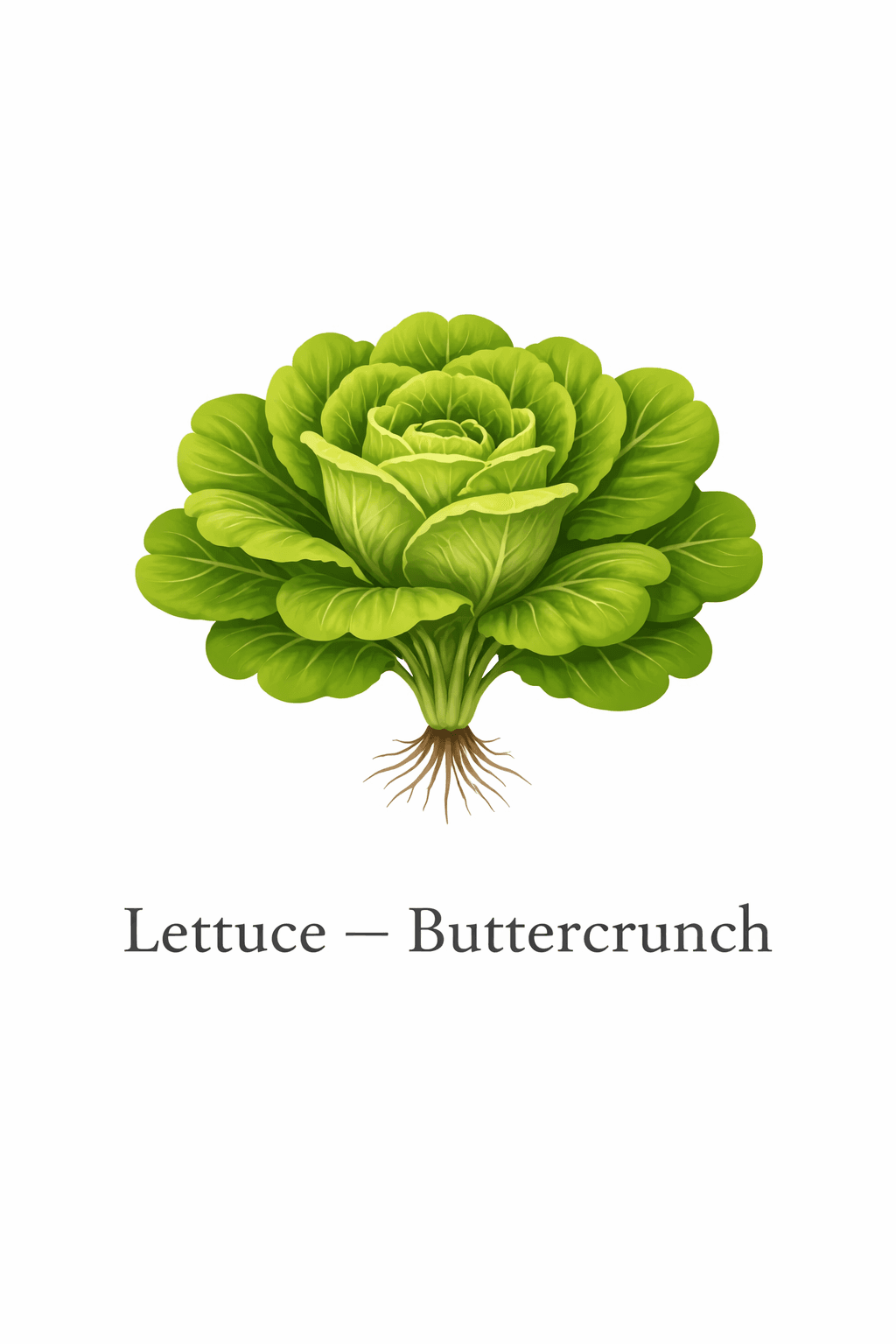
Buttercrunch Lettuce
Buttercrunch Lettuce
Buttercrunch Lettuce
Lactuca sativa
The Buttercrunch Lettuce is an All-America Selections winner for a reason. It produces a gorgeous, compact rosette with a thick, creamy-yellow heart and outer leaves that are so crisp they almost "snap."
Days to Maturity
25–65 Days
Sun / Light
Full Sun / Partial Shade
Sowing Depth
1/8 inch
Spacing
8-12 inches
Germination
7–14 Days
1.Sowing & Germination
Lettuce seeds are small and require light to germinate properly. They also prefer cool soil; if the ground is too hot (over 80°F), the seeds may enter a dormant state and refuse to sprout.When to Plant:Spring: Direct sow 3–4 weeks before the last frost.
→Fall: Sow again in late summer once temperatures begin to drop.
→Sowing Depth: 1/8 inch deep. Barely cover the seeds with a fine layer of soil, as they need a bit of light to "wake up."Spacing: Sow seeds 1 inch apart. Thin seedlings to 8-12 inches apart. If they are crowded, they won't form the signature "butter" heart.
→Germination Time: 7–14 days.
2.Growing & Care
→Watering: Lettuce has very shallow roots. It needs frequent, light watering rather than occasional deep soaking. Keep the soil surface moist.The "Bitterness" Factor: Bitterness in lettuce is usually caused by heat or water stress. Keeping the plants hydrated and cool is the secret to that famous "sweet" Buttercrunch flavor.
→Feeding: Since you want rapid leaf growth, a nitrogen-rich organic fertilizer (like compost tea or fish emulsion) every 2 weeks is highly beneficial.
→Mulching: A thin layer of clean straw or dried grass clippings will keep the soil cool and prevent mud from splashing onto the leaves, making your harvest much easier to clean.
3.Harvest
→Days to Maturity: 50–65 Days for full heads (can be picked as "baby" greens in 25 days).
→When to Pick: Harvest when the center of the rosette feels firm and full.Method:The Whole Head: Cut the entire plant at the soil line with a sharp knife.The "Inner Secret": Unlike leaf lettuce, Buttercrunch flavor is concentrated in the blanched, light-green interior.
→Morning Harvest: Always harvest lettuce in the early morning when the leaves are turgid (full of water). Afternoon-picked lettuce is often limp and loses its "snap."
4.In the Kitchen
→Storage: Wash in very cold water, spin dry, and store in a breathable bag in the fridge. It will stay crisp for about 5–7 days.
→Culinary Use: The leaves are naturally cupped, making them the perfect "low-carb" vessel for lettuce wraps, tuna salad, or tacos.
→Flavor Profile: It has a mild, almost buttery flavor (hence the name) and lacks the sharp "bite" found in romaine or endive.
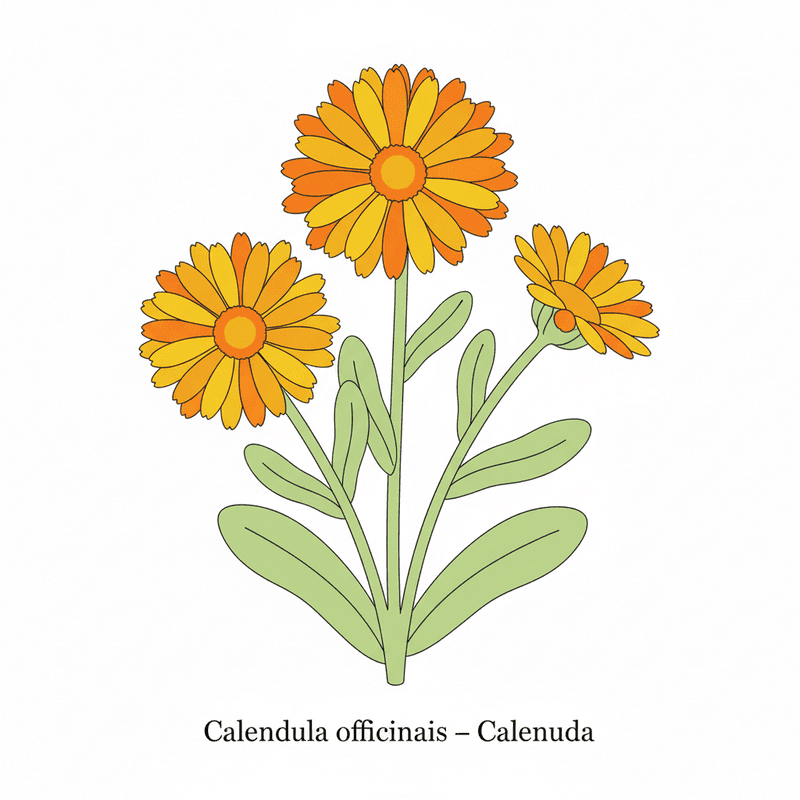
Calendula
Calendula
Calendula
Calendula (Calendula officinalis), also known as "Pot Marigold," is a bright and easy-to-grow annual herb, celebrated for its vibrant daisy-like flowers ranging from sunny yellow to deep orange. It's a powerhouse for pollinators, a delightful culinary ingredient, and a renowned medicinal plant.
1.Sowing & Germination
→Direct Sowing Preferred: Calendula is very easy to grow directly from seed. Sow seeds outdoors in early spring as soon as the soil can be worked, or in late summer/early fall for blooms the following spring in milder climates.
→Sowing Depth: Plant seeds about ¼ to ½ inch deep.
→Spacing: Sow seeds 6-12 inches apart. Thin seedlings to 8-12 inches apart for optimal growth.
→Germination Time: Seeds typically germinate in 7-14 days at a temperature range of 60-70°F (15-21°C). Keep the soil consistently moist during germination.
→Self-Seeding: Calendula is an excellent self-seeder! Once established, you can expect volunteer plants to pop up in subsequent seasons, ensuring a continuous supply of these cheerful blooms.
2.Growing & Care
Light & Growing
→Sunlight: Calendula performs best in full sun (at least 6 hours of direct sunlight per day). It can tolerate some partial shade, especially in hotter climates, but may produce fewer flowers.
→Growth Habit: It typically grows 1-2 feet tall and equally wide, forming bushy plants with abundant flowers.
→Maintenance: o Deadheading: Regularly deadhead spent flowers (remove the faded blooms) to encourage continuous blooming throughout the season and prevent excessive self-seeding if desired. o Pinching: You can pinch back young plants to encourage a bushier habit, but it's not always necessary as they naturally branch out.
3.Harvest
Harvesting Calendula
→Flowers: The petals (and sometimes whole flower heads) are the primary part harvested.
→Timing: Harvest flowers when they are fully open, preferably in the mid-morning after the dew has dried but before the intense heat of the day. Snip the flower head close to the base of the stem.
→Regular Harvesting is Key: The more you harvest, the more flowers the plant will produce, ensuring a continuous supply until the first hard frost.
→Drying: o Gently remove individual petals from the flower heads or lay whole flower heads face down on screens in a warm, dry, well-ventilated area out of direct sunlight. o Once completely dry (crispy to the touch), store the dried petals or whole flower heads in airtight glass jars away from light and heat. Properly dried calendula retains its color and potency.
4.In the Kitchen
Why Grow Calendula?
→Medicinal Miracles: Calendula is one of the most revered herbal remedies for skin health. It's known for its powerful anti-inflammatory, antiseptic, antifungal, and wound-healing properties. It's commonly used in salves, oils, balms, and teas to soothe irritated skin, heal cuts, scrapes, burns, rashes, insect bites, and promote tissue regeneration.
→Culinary & Edible Beauty: The vibrant petals are entirely edible and add a beautiful splash of color and a mild peppery, slightly bitter flavor to salads, soups, rice dishes, and baked goods. They can also be used as a natural food coloring, hence the "Pot Marigold" name.
→Pollinator Paradise: Calendula flowers are incredibly attractive to a wide range of pollinators, including bees, butterflies, and hoverflies, making them a fantastic addition to any ecological garden.
→Easy to Grow & Prolific: It's one of the easiest flowers to grow from seed, blooming quickly and continuously for months, even with minimal care.
→Cheerful & Vibrant: Its sunny disposition and bright orange and yellow hues bring joy and visual appeal to any garden bed, container, or cutting garden. Calendula is a truly indispensable herb, providing continuous beauty, a versatile culinary ingredient, and profound healing properties, all with minimal effort.
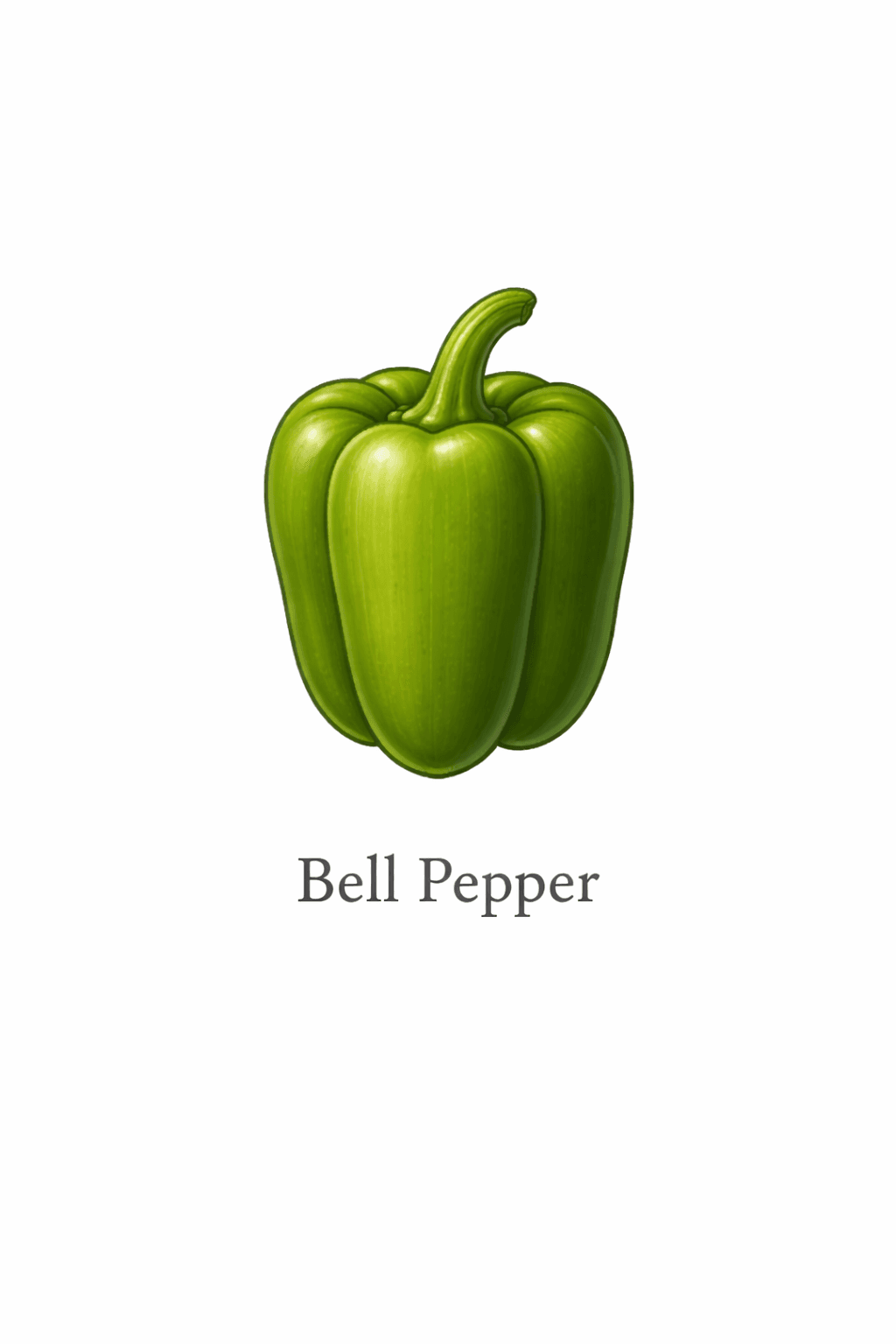
California Wonder 300 TMR Bell Pepper
California Wonder 300 TMR Bell Pepper
California Wonder 300 TMR Bell Pepper
Capsicum annuum
The California Wonder 300 TMR is the quintessential American bell pepper. It is an improved, mosaic-virus-resistant (TMR stands for Tobacco Mosaic Resistant) version of the classic heirloom. It produces large, thick-walled, four-lobed peppers that are crisp and sweet.
Days to Maturity
70–90+ Days
Sun / Light
Full Sun (8+ hours)
Sowing Depth
1/4 inch
Spacing
18–24 inches
Germination
10–21 Days
1.Sowing & Germination
Peppers have a long growing season and require a head start. They are "heat-lovers" and will sit dormant if the soil is too cold.
→Indoor Start (Highly Recommended): Sow seeds indoors 8–10 weeks before your last expected frost.
→Sowing Depth: 1/4 inch deep.
→The Warmth Factor: Pepper seeds germinate best at soil temperatures of 75°F–85°F. Use a seedling heat mat if possible. Germination can be slow, taking anywhere from 10 to 21 days.
→Transplanting: Do not move seedlings outdoors until night temperatures stay consistently above 55°F and the soil has warmed. "Harden off" your plants for 7–10 days before planting them in the garden.Spacing:In Trays: Sow 2–3 seeds per cell.
→In Garden: Space plants 18–24 inches apart in rows 24–30 inches apart.
2.Growing & Care
→Watering: Provide 1–2 inches of water per week. Keep soil moisture consistent; fluctuations can lead to "Blossom End Rot" (dark leathery spots on the bottom of the fruit) due to calcium uptake issues.
→Staking: California Wonder produces heavy fruits. Use a small tomato cage or a sturdy stake to support the plant so the branches don't snap under the weight of the harvest.
→Mulching: Use black plastic mulch to warm the soil in cooler regions, or straw/wood chips in hotter regions to retain moisture.
→Feeding: Use a balanced organic fertilizer when transplanting, and a low-nitrogen, high-phosphorus fertilizer once flowers appear to encourage fruit production rather than just leaves.
3.Harvest
→Days to Maturity: 70–75 Days (Green); 90+ Days (Red).Green vs. Red: You can harvest the peppers when they are full-size and glossy green. However, if you leave them on the plant longer, they will turn bright red. Red peppers are significantly sweeter and higher in Vitamin C.
→Method: Use garden snips or a sharp knife to cut the stem. Do not pull the pepper by hand, as the branches are brittle and break easily.
4.In the Kitchen
→Storage: Fresh peppers will last 1–2 weeks in the refrigerator crisper drawer.
→Preserving: Bell peppers freeze exceptionally well. Simply chop them up and place them in freezer bags—no blanching required!
→Culinary Use: Because the "300 TMR" has such thick walls, it is the perfect variety for stuffed peppers, as it holds its shape beautifully during baking.
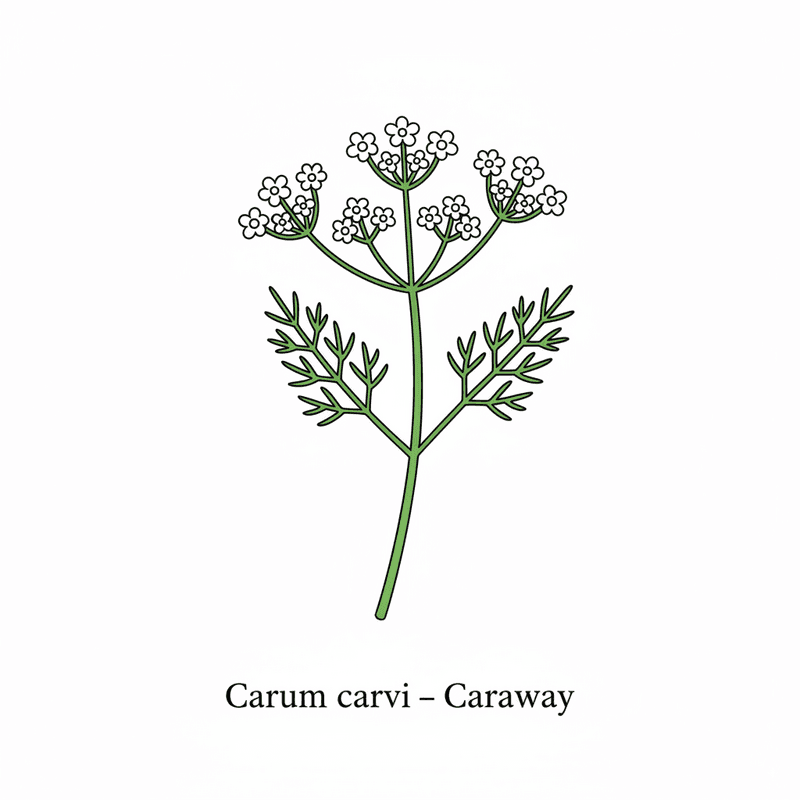
Caraway
Caraway
Caraway
Caraway (Carum carvi) is a biennial herb, meaning it completes its life cycle over two years. In its first year, it forms a rosette of fern-like foliage, and in its second year, it sends up a flower stalk, produces seeds, and then dies. It's cherished for its distinctive seeds, which are widely used in baking and cooking, and its delicate foliage.
1.Sowing & Germination
→Direct Sowing Preferred: Caraway develops a taproot and generally prefers to be direct-sown rather than transplanted.
→Timing: o Spring Sowing: Sow seeds in early spring as soon as the soil can be worked. This will allow the plants to establish well in the first year for seed production the following year. o Late Summer/Fall Sowing: You can also sow seeds in late summer or early fall. The plants will establish a rosette before winter and then flower and set seed the next spring/summer.
→Sowing Depth: Plant seeds about ¼ to ½ inch deep.
→Spacing: Sow seeds 4-6 inches apart. You can thin seedlings to 8-12 inches apart for mature plants.
→Germination Time: Caraway seeds can be slow and erratic to germinate, taking anywhere from 14-28 days (sometimes longer) at a temperature range of 60-70°F (15-21°C). Keeping the soil consistently moist is crucial.
→Cold Stratification (Optional but helpful): Some gardeners find that a period of cold stratification (mimicking winter conditions) can improve germination rates. You can achieve this by refrigerating moistened seeds for a few weeks before sowing, or by simply sowing outdoors in late fall.
→Self-Seeding: Once established, Caraway will often self-seed, ensuring a continuous supply of plants if you allow some seeds to drop.
2.Growing & Care
Light & Growing
→Sunlight: Caraway thrives in full sun, requiring at least 6-8 hours of direct sunlight per day. It can tolerate very light partial shade, but growth and seed production may be reduced.
→Growth Habit: In its first year, it forms a low-growing rosette of finely cut, fern-like leaves, resembling parsley. In the second year, it sends up a tall, slender flower stalk (1-2 feet tall) topped with flat clusters (umbels) of tiny white or pinkish flowers.
→Maintenance: Generally very low maintenance. Ensure good air circulation, especially in humid conditions. Keep an eye out for aphids, which can sometimes be attracted to the plant.
3.Harvest
Harvesting Caraway
→Leaves (First Year): The young, tender leaves from the first year's growth can be harvested as needed. They have a mild, pleasant flavor similar to a mix of parsley and dill with a hint of caraway.
→Seeds (Second Year): This is the primary harvest! o Timing: Harvest the seeds when they have fully ripened. This usually occurs in mid to late summer of the second year. The flowers will fade, and the seed heads will turn brown and dry. o How to Harvest: Cut the entire flower stalks when the seeds are fully developed but before they begin to shatter and fall. Place the stalks upside down in a paper bag to catch any falling seeds, or hang them in a cool, dry, well-ventilated area for further drying. o Processing: Once completely dry, rub the seed heads gently to release the seeds. Clean the seeds by winnowing or sifting to remove chaff.
→Roots (First Year - Optional): The taproot can also be harvested in the fall of the first year, much like a parsnip, and cooked as a vegetable. It has a slightly earthy, spicy flavor.
4.In the Kitchen
Why Grow Caraway?
→Distinctive Culinary Spice: Caraway seeds are renowned for their warm, pungent, anise-like flavor. They are essential in rye bread, sauerkraut, goulash, cheeses, and various European cuisines. The young leaves can also be used fresh in salads or as a garnish.
→Medicinal Properties: Caraway has a long history of medicinal use, particularly as a digestive aid. It's known for its carminative properties, helping to relieve gas, bloating, and indigestion. Caraway tea can be soothing for an upset stomach and may help stimulate appetite.
→Ornamental Value (Subtle): Its delicate, fern-like foliage provides fine texture in the first year, and the elegant flower stalks add a graceful, airy quality to the garden in the second.
→Easy to Grow: Once established, Caraway is a relatively low-maintenance plant, making it suitable for gardeners of all experience levels.
→Historically Rich: Caraway is one of the oldest cultivated herbs, with uses dating back thousands of years across various cultures for both culinary and medicinal purposes. Caraway offers a unique blend of historical significance, culinary versatility, potential health benefits, and subtle garden beauty, making it a truly rewarding plant to cultivate.
Catnip
Catnip
Catnip
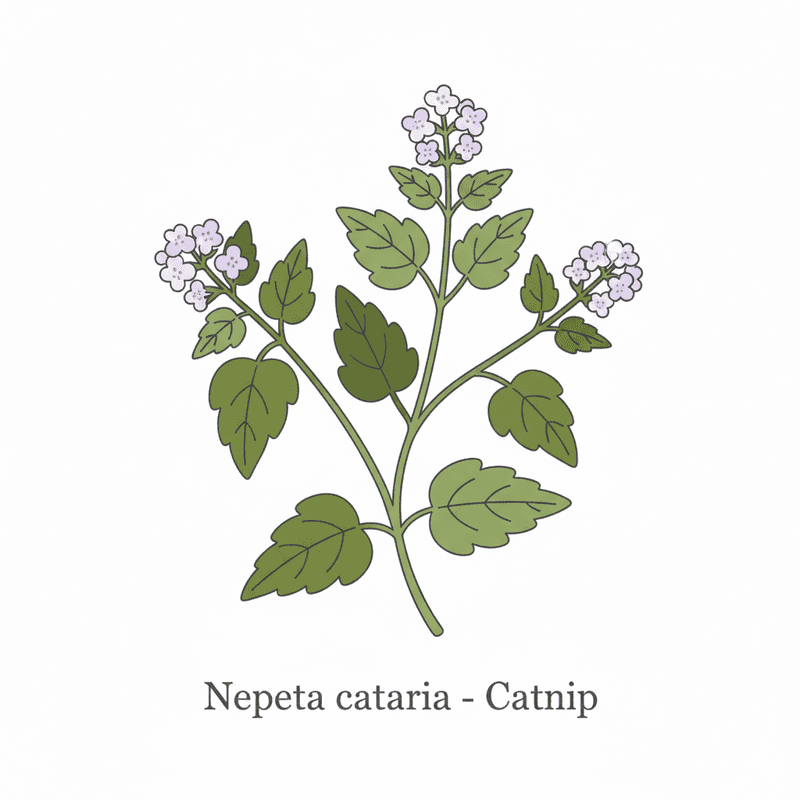
Catnip (Nepeta cataria) is a hardy perennial herb in the mint family, instantly recognizable by its velvety, grayish-green leaves and spikes of delicate white or pale lavender flowers. It's incredibly easy to grow and a must-have for cat owners, herbalists, and anyone looking to attract beneficial insects.
1.Sowing & Germination
→Start Indoors (Optional but Recommended): Catnip seeds can be slow and sometimes erratic to germinate. Starting them indoors 6-8 weeks before the last frost can give them a head start.
→Cold Stratification (Helpful): While not strictly required for all seeds, a period of cold stratification can significantly improve germination rates. Mix seeds with a bit of damp sand or peat moss in a plastic bag and refrigerate for 2-4 weeks before sowing.
→Sowing Depth: Sow seeds lightly, about ¼ inch deep.
→Germination Time: Expect germination in 10-20 days at a temperature range of 65-75°F (18-24°C). Keep the soil consistently moist.
→Direct Sowing: You can also direct sow seeds outdoors in early spring after the danger of frost has passed.
→Transplanting: Once seedlings have developed a few sets of true leaves and are large enough to handle, transplant them outdoors after the last frost, spacing them 12-18 inches apart.
→Self-Seeding: Catnip is an enthusiastic self-seeder! Once established, it will readily drop seeds, and you'll likely have volunteer plants popping up in subsequent years.
2.Growing & Care
Light & Growing
→Sunlight: Catnip thrives in full sun (at least 6 hours of direct sunlight per day) but can tolerate partial shade, especially in hotter climates. Full sun generally leads to more potent essential oils.
→Growth Habit: It forms bushy clumps, typically growing 2-3 feet tall and equally wide. It produces upright spikes of small, whorled flowers from early summer into fall.
→Maintenance: o Pinching/Pruning: Pinch back young plants to encourage bushier growth. After the first flush of flowers, you can cut the plant back by about one-third to encourage new growth and a second bloom. o Containment: Like many mints, Catnip can spread both by self-seeding and by creeping rhizomes. If you want to control its spread, consider growing it in containers or in an area where it can roam freely without overtaking other plants. o Protect from Cats: If growing for harvest, you might need to protect young plants from enthusiastic felines until they are well-established!
3.Harvest
Harvesting Catnip
→Leaves & Flowers: Harvest the leaves and flowering tops. The plant is most potent when it's just beginning to flower.
→Timing: Harvest on a dry day, preferably in the morning after the dew has evaporated. You can harvest as needed throughout the growing season. For a larger harvest, cut back entire stems by about one-third to one-half, leaving enough foliage for the plant to recover and produce more.
→Drying: o Gather cut stems into small bunches and hang them upside down in a cool, dark, well-ventilated area until thoroughly dry (leaves should be crumbly). o Alternatively, spread leaves and flower tops on screens or clean paper in a well-ventilated room. o Once dry, strip the leaves and flowers from the stems and store them in airtight containers away from light and heat. Properly dried catnip retains its potency for many months.
4.In the Kitchen
Why Grow Catnip?
→Feline Fascination: The most famous reason! Many (but not all) cats are irresistibly drawn to catnip due to the chemical nepetalactone. They'll roll in it, rub against it, and chew it, experiencing a euphoric reaction. It's a wonderful, natural treat and enrichment for your feline friends.
→Medicinal Properties for Humans: Catnip has a long history of use in herbal medicine for people. It's primarily known as a gentle nervine, promoting relaxation and aiding sleep. It can be made into a calming tea to help reduce anxiety, alleviate headaches, soothe an upset stomach, and ease cold symptoms.
→Attracts Pollinators & Beneficials: Its small, abundant flowers are highly attractive to bees (especially honeybees) and other beneficial insects, making it a great addition to a pollinator-friendly garden.
→Pest Repellent: Some studies suggest that catnip can act as a mosquito repellent and may deter other garden pests.
→Easy to Grow & Hardy: An incredibly resilient and low-maintenance perennial, thriving in a variety of conditions with little fuss.
→Versatile Garden Addition: Adds a soft, silvery-green texture to herb gardens, cottage gardens, and borders. Catnip is a truly rewarding plant, bringing joy to cats, offering soothing remedies for humans, and supporting local ecosystems with its pollinator appeal.
Chamomile
Chamomile
Chamomile
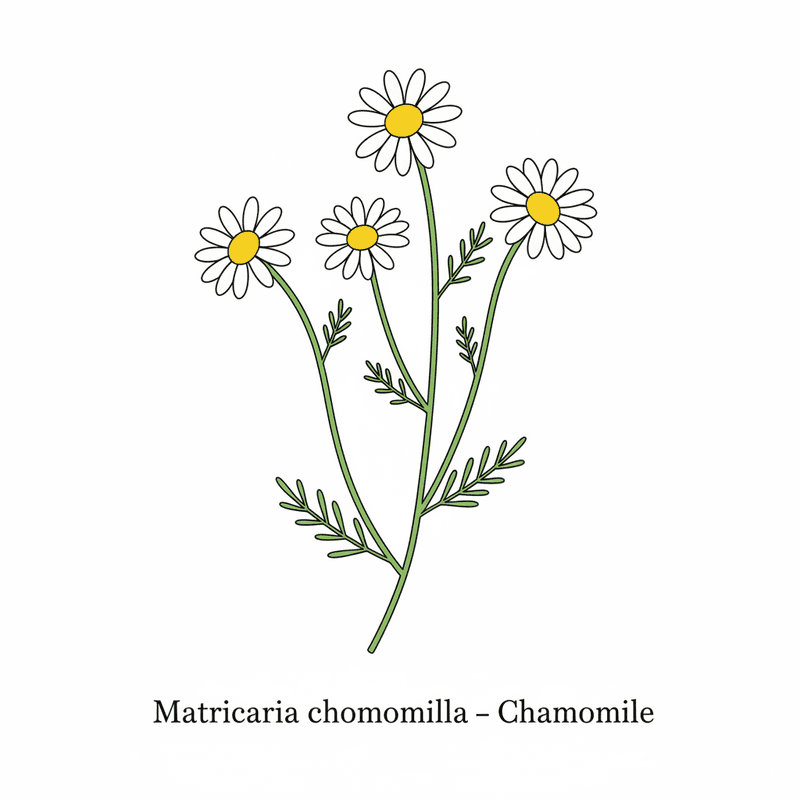
How to Grow Chamomile
1.Sowing & Germination
→Direct Sowing is Best: Chamomile prefers to be direct-sown rather than transplanted. Its tiny seeds often benefit from sunlight to germinate.
→Timing: Sow seeds in early spring after the danger of the last hard frost has passed, as soon as the soil can be worked. In mild climates, you can also sow in late summer/early fall for winter rosettes and early spring blooms.
→Sowing Depth: Scatter the tiny seeds lightly on the surface of finely raked, moist soil. Gently press them down, but do not cover them, as they need light to germinate.
→Spacing: Sow thinly, then thin seedlings to 6-12 inches apart once they are a few inches tall.
→Germination Time: Seeds typically germinate in 7-14 days at a temperature range of 60-70°F (15-21°C). Keep the soil consistently moist during this period, perhaps by misting gently.
→Self-Seeding: Chamomile readily self-seeds, ensuring a continuous supply of plants in subsequent seasons if you allow some flowers to go to seed.
2.Growing & Care
Light & Growing
→Sunlight: Chamomile thrives in full sun (at least 6 hours of direct sunlight per day) but can tolerate light partial shade, especially in hotter climates. Full sun generally leads to more abundant flowering.
→Maintenance: Generally low maintenance. Deadhead spent flowers regularly to encourage continuous blooming and prevent excessive self-seeding if desired. Ensure good air circulation, especially in humid conditions.
3.Harvest
Harvesting Chamomile
→Flowers (Primary Harvest): The flower heads are the most commonly used part of the plant for teas and medicinal preparations.
→Timing: Harvest flowers when they are fully open, showing distinct white petals and a prominent yellow center. Pick them in the mid-morning after the dew has dried, when their essential oil content is highest.
→How to Harvest: Gently pinch or snip off the flower heads from the stems. Regular harvesting (every few days) encourages the plant to produce more blooms.
→Drying: o Spread the harvested flower heads in a single layer on screens, clean paper, or a clean cloth in a warm, dry, well-ventilated area, out of direct sunlight. o Turn them occasionally to ensure even drying. o Once completely dry (they should feel crisp and crumble easily), store the dried flowers in airtight glass jars away from light and heat. Properly dried chamomile retains its aroma and potency for a long time.
4.In the Kitchen
Why Grow Chamomile?
→Ultimate Calming Herb: Chamomile is renowned worldwide as a gentle yet effective nervine. Its most famous use is in tea to promote relaxation, reduce stress and anxiety, and aid restful sleep. It's often considered safe enough for children.
→Digestive Soother: It's an excellent digestive aid, helping to relieve indigestion, gas, bloating, and stomach cramps due to its anti-spasmodic and anti-inflammatory properties.
→Anti-inflammatory & Antiseptic: Applied topically (as a compress or rinse), chamomile can help soothe skin irritations, minor burns, rashes, and even calm conjunctivitis.
→Pollinator Magnet: The abundant, small daisy-like flowers are highly attractive to bees, hoverflies, and other beneficial insects, making it a wonderful addition to a pollinator-friendly garden.
→Easy to Grow & Prolific: Chamomile is very forgiving and easy to cultivate from seed, blooming quickly and continuously for months, even with minimal care. Chamomile is an indispensable herb for anyone seeking natural remedies for relaxation and digestion, and a charming addition to any garden that supports pollinators.
Chervil
Chervil
Chervil
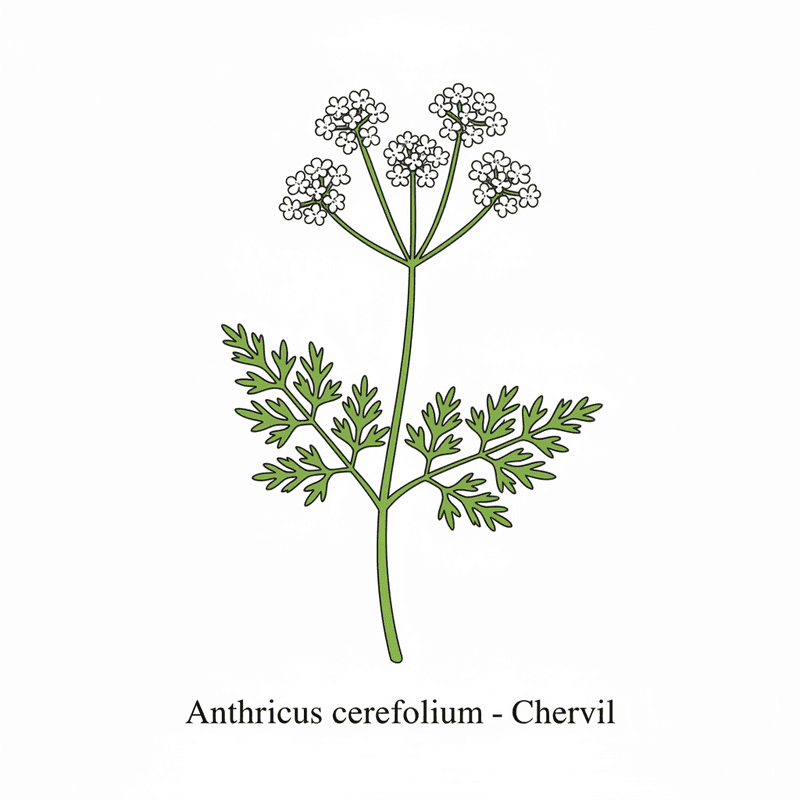
Chervil (Anthriscus cerefolium) is a delicate annual herb belonging to the parsley family, prized for its finely cut, fern-like foliage and mild, subtly anise-like flavor. It's an essential herb in classic French cooking and thrives in cooler conditions.
1.Sowing & Germination
→Direct Sowing is Best: Chervil, like many members of the carrot family, develops a taproot and does not transplant well. Direct sowing is highly recommended.
→Timing: o Spring: Sow seeds in early spring as soon as the soil can be worked. Chervil prefers cool weather and can tolerate light frost. Successive sowings every 2-3 weeks will ensure a continuous supply of fresh leaves. o Fall: In mild climates, you can sow in late summer or early fall for a winter harvest. o Avoid Summer Heat: Chervil will quickly "bolt" (go to seed) in hot weather, so avoid sowing during the peak of summer.
→Sowing Depth: Plant seeds about ¼ to ½ inch deep.
→Spacing: Sow seeds thinly in rows or broadcast. Thin seedlings to 6-8 inches apart once they are a few inches tall.
→Germination Time: Seeds typically germinate in 7-14 days at a cool temperature range of 55-65°F (13-18°C). Keep the soil consistently moist.
→Fresh Seeds are Key: Chervil seeds lose viability quickly, so always use fresh seeds for the best germination rates.
→Self-Seeding: If allowed to flower and go to seed, Chervil will often self-seed, providing new plants in subsequent cool seasons.
2.Growing & Care
Light & Growing
→Sunlight: Chervil prefers partial shade, especially in warmer climates. In cooler regions or early spring/late fall, it can tolerate more sun. Too much direct, hot sun will cause it to bolt quickly.
→Growth Habit: It forms a loose rosette of delicate, lacy, fern-like leaves, typically growing 1-2 feet tall. In the second year (if it survives and doesn't bolt), it will produce small white flowers in umbels.
→Maintenance: o Succession Planting: The best way to ensure a continuous supply is to sow small batches every few weeks. o Pinching: Pinch back flower stalks as soon as they appear to extend the harvest period of the leaves. Once it bolts, the leaves become bitter. o Mulching: A light layer of mulch can help keep the soil cool and moist, delaying bolting.
3.Harvest
Harvesting Chervil
→Leaves (Primary Harvest): The tender leaves are the main culinary part.
→Timing: Begin harvesting individual leaves or outer sprigs once the plant is well-established and has a good amount of foliage (around 6-8 inches tall). Harvest regularly to encourage new growth.
→How to Harvest: Snip the outer leaves or stems close to the base of the plant. Avoid taking more than one-third of the plant at a time.
→Fresh is Best: Chervil loses much of its delicate flavor when dried or cooked for too long. It's best used fresh or added at the very end of cooking.
→Preserving (Limited Success): o Freezing: You can chop chervil and freeze it in ice cube trays with a little water or oil, but it will still lose some flavor and texture. o Drying: Not recommended for culinary use, as it becomes almost flavorless.
4.In the Kitchen
Why Grow Chervil?
→Culinary Elegance (French Cuisine): Chervil is one of the "fines herbes" of French cooking, along with parsley, chives, and tarragon. Its mild, sophisticated flavor, often described as a delicate blend of parsley and a hint of anise or licorice, is perfect for eggs, fish, chicken, salads, and soups. It's best used fresh as a garnish or added at the very end of cooking.
→Delicate Beauty: Its finely cut, lacy foliage adds a graceful, feathery texture to the herb garden, vegetable patch, or container plantings.
→Cool-Season Crop: A great herb for extending the growing season into cooler months or for shady spots where other herbs might struggle.
→Aids Digestion (Traditional): Traditionally, chervil has been used as a mild digestive aid and blood purifier. Chervil is a refined and essential herb for any cook who appreciates subtle flavors and delicate garnishes, and a charming addition to the cool-season garden.
Chicory
Chicory
Chicory
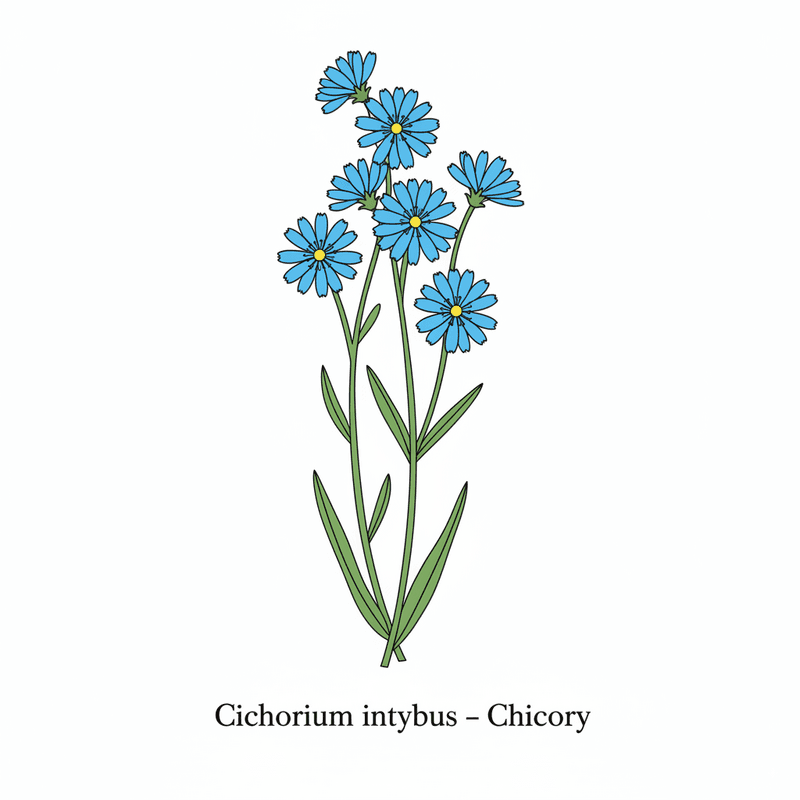
Chicory (Cichorium intybus) is a hardy perennial herb belonging to the daisy family, known for its vibrant blue flowers, bitter edible leaves, and deep taproot which can be roasted and ground as a coffee substitute. It's a robust plant that adds beauty, culinary options, and traditional remedies to the garden.
1.Sowing & Germination
→Direct Sowing is Best: Chicory develops a deep taproot, making it less keen on transplanting. Direct sowing is generally preferred.
→Timing: o Spring: Sow seeds in early spring, 2-3 weeks before the last expected frost, as soon as the soil can be worked. This allows for a good leaf harvest in the first year and root development. o Late Summer/Early Fall: You can also sow in late summer/early fall for larger roots and an earlier spring harvest of leaves the following year.
→Sowing Depth: Plant seeds about ¼ to ½ inch deep.
→Spacing: Sow seeds 4-6 inches apart in rows, then thin seedlings to 8-12 inches apart for mature plants or 4-6 inches apart if growing for blanching heads or smaller roots.
→Germination Time: Seeds typically germinate in 7-14 days at a temperature range of 60-75°F (15-24°C). Keep the soil consistently moist during germination.
→Self-Seeding: Chicory is an excellent self-seeder! If allowed to flower and set seed, you'll likely have volunteer plants popping up in subsequent seasons.
2.Growing & Care
Light & Growing
→Sunlight: Chicory thrives in full sun (at least 6-8 hours of direct sunlight per day). It can tolerate some partial shade, especially in hotter climates, but full sun encourages the best growth and flowering.
→Growth Habit: In its first year, it forms a rosette of dandelion-like leaves. In its second year (or sometimes late in the first year), it sends up tall, branching flower stalks (3-6 feet tall) covered with charming sky-blue flowers.
→Maintenance: Generally very low maintenance. It's a tough plant. o Cutting Back: If harvesting leaves regularly, cutting back the plant can encourage new, tender growth and delay bolting. o Flowering: Allow some plants to flower for their beauty and to attract pollinators, but cut back some flower stalks to prevent excessive self-seeding if desired.
3.Harvest
Harvesting Chicory
→Leaves: o Young Leaves: Harvest young, tender leaves in spring and fall for salads. The bitterness increases as leaves mature and in hot weather. o Blanched Heads (forcing): For less bitter, tender leaves (like Belgian Endive or Radicchio, which are types of chicory), you can "force" them. Cut off the top growth in fall, cover the root with sand or soil, and allow new shoots to grow in darkness, either in the garden or dug up and brought indoors. o How to Harvest: Snip outer leaves as needed, leaving the crown to produce more.
→Roots: o Timing: The roots are best harvested in the fall of the first year (when they are thickest before the plant goes to seed) or in early spring of the second year before flower stalks emerge. o How to Harvest: Dig carefully around the plant to avoid damaging the taproot. Lift the root, clean it, and prepare for use.
→Flowers: The beautiful blue flowers are edible and can be used as a garnish.
4.In the Kitchen
Why Grow Chicory?
→Culinary Versatility: o Leaves: Young leaves add a pleasant bitter note to salads, stir-fries, or sautéed greens. Blanched chicory heads offer a milder, crisp texture. o Roots: The roasted and ground roots are a well-known coffee substitute or additive, particularly popular in Louisiana. They have an earthy, slightly bitter flavor that complements coffee.
→Medicinal & Traditional Use: Chicory roots and leaves have a long history in herbal medicine. It's a known liver tonic, aiding digestion and stimulating bile production. It's also a mild diuretic and has been traditionally used to support kidney health and lower blood sugar. Its prebiotics (inulin) benefit gut health.
→Pollinator Magnet: The lovely blue flowers are very attractive to bees and other beneficial insects, providing a valuable nectar source late into the season.
→Ornamental Beauty: Its tall, graceful flower stalks dotted with sky-blue blooms create a beautiful, naturalized look in the garden, adding height and color. Chicory is a truly multi-purpose plant, offering distinct flavors for the kitchen, significant health benefits, and a rugged beauty that enhances any garden space.
Chives
Chives
Chives
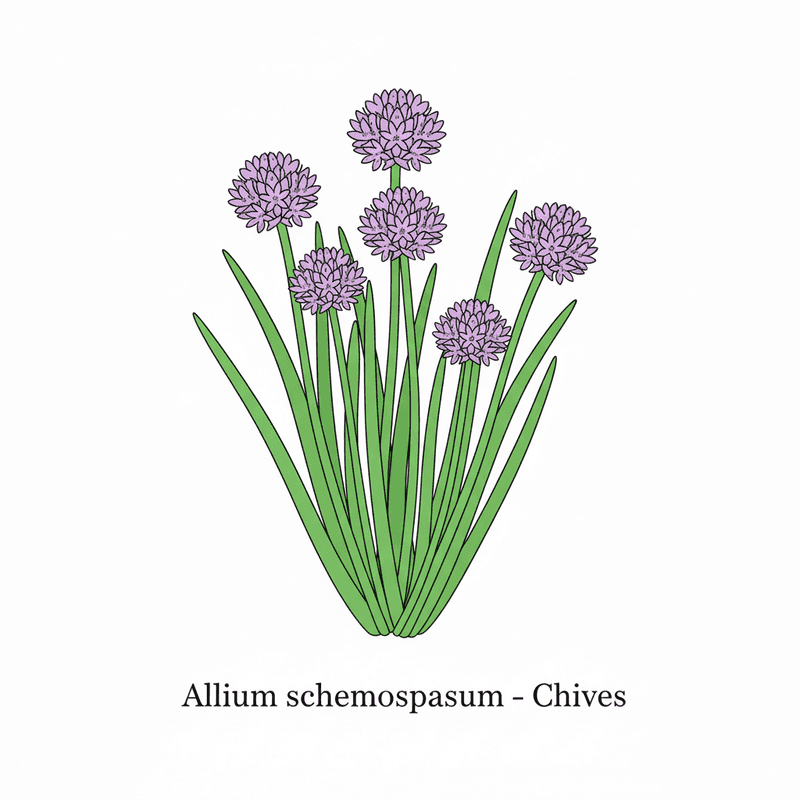
Chives (Allium schoenoprasum) are a hardy perennial herb belonging to the onion family, prized for their delicate, grass-like, hollow green leaves and beautiful globe-shaped purple flowers. They are one of the easiest herbs to grow, offering a mild oniony flavor and year-round appeal in many climates.
1.Sowing & Germination
→Start Indoors (Recommended): Chives can be slow to germinate and grow from seed, so starting them indoors 8-10 weeks before the last expected frost is often recommended for an earlier harvest.
→Sowing Depth: Plant seeds about ¼ inch deep. You can sow several seeds together in a small clump to mimic their natural clumping habit.
→Germination Time: Seeds typically germinate in 10-21 days at a temperature range of 60-70°F (15-21°C). Keep the soil consistently moist. Patience is key!
→Direct Sowing: You can also direct sow seeds outdoors in early spring as soon as the soil can be worked.
→Transplanting: Once seedlings are well-established and danger of frost has passed, transplant them outdoors in clumps of 5-10 seedlings. Space clumps 8-12 inches apart.
→Division (Easiest Method): The easiest and quickest way to establish chives is by dividing existing clumps. Dig up a mature clump, gently separate it into smaller sections (each with roots and several "bulblets"), and replant. This can be done in spring or fall.
→Self-Seeding: If allowed to flower and go to seed, chives will readily self-seed, creating new clumps.
2.Growing & Care
Light & Growing
→Sunlight: Chives thrive in full sun (at least 6 hours of direct sunlight per day) but can tolerate partial shade, especially in hotter climates. Full sun generally results in the best growth and flavor.
→Growth Habit: They form dense clumps of slender, upright, hollow leaves, typically growing 10-18 inches tall. In late spring to early summer, they produce attractive purple (sometimes pink or white) spherical flower heads on thin stalks.
→Maintenance: o Deadheading (Optional): Remove spent flower heads to prevent excessive self-seeding, or leave them for ornamental interest and to attract pollinators. o Division: Divide established clumps every 3-4 years in spring or fall to rejuvenate the plant and prevent it from becoming overcrowded, which can reduce vigor.
3.Harvest
Harvesting Chives
→Leaves (Primary Harvest): The tender green leaves are the main culinary part.
→Timing: Begin harvesting once the plant is well-established and about 6 inches tall. You can harvest as needed throughout the growing season.
→How to Harvest: Using sharp scissors, snip off individual leaves or entire clumps of leaves from the outer edges, cutting about 1-2 inches above the soil line. Regular harvesting encourages new growth.
→Flowers: The edible purple flower heads are a beautiful garnish and can be harvested when fully open.
→Fresh is Best: Chives are best used fresh, as they lose much of their delicate flavor when dried.
→Preserving: o Freezing: Chop fresh chives and freeze them in airtight containers or ice cube trays with a little water/oil. This preserves their flavor much better than drying. o Vinegar/Oil Infusion: Infuse chives in vinegar or oil for a flavored condiment.
4.In the Kitchen
Why Grow Chives?
→Culinary Essential: Chives offer a delicate, mild oniony flavor that enhances a vast array of dishes. They are perfect for garnishing soups, salads, baked potatoes, eggs, cream cheese, and are a key component of "fines herbes" in French cuisine.
→Easy to Grow & Hardy: One of the most forgiving and low-maintenance herbs, thriving in various conditions and coming back reliably year after year (perennial).
→Ornamental Value: Their slender foliage and charming globe-shaped purple flowers add a lovely texture and visual appeal to herb gardens, borders, and containers. The flowers are beautiful in edible arrangements!
→Pollinator Friendly: The pretty purple flowers are highly attractive to bees and other beneficial insects, making them a great addition to a pollinator garden.
→Pest Deterrent: The oniony scent can deter some common garden pests.
→Medicinal (Mild): While not a powerhouse, chives contain vitamins (A, C, K) and minerals, and like other alliums, may offer mild antioxidant and antibacterial properties. Chives are an indispensable herb for any cook, offering continuous fresh flavor, ornamental charm, and ease of cultivation, making them a staple in almost any garden.
Cilantro / Coriander
Cilantro / Coriander
Cilantro / Coriander
Coriandrum sativum
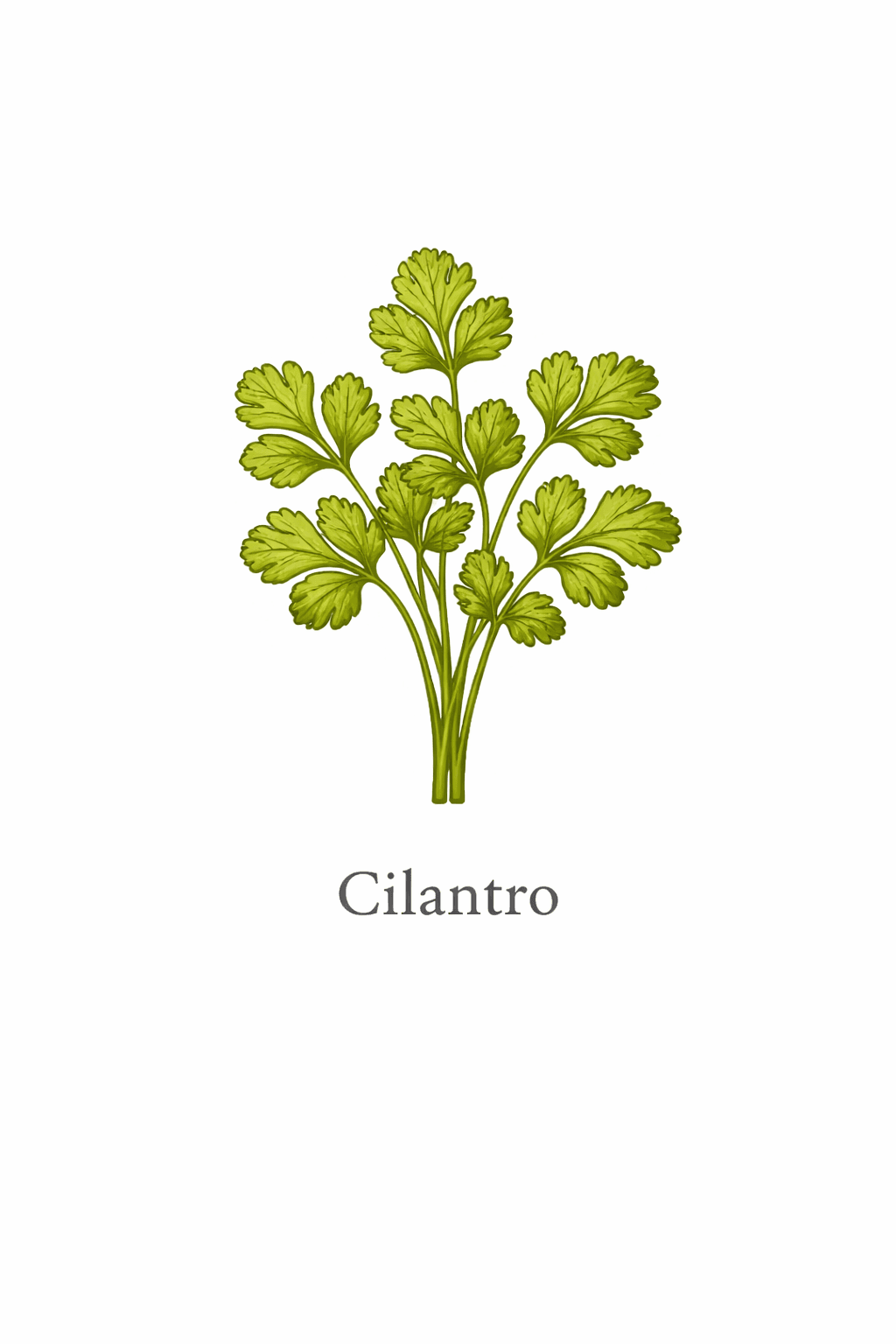
The Cilantro "Slow Bolt" variety is specifically bred to address the biggest challenge of growing this herb: its tendency to go to seed (bolt) as soon as the weather warms up. This variety stays in the leafy stage much longer than standard types, providing a larger harvest of the fresh greens we know as Cilantro, while eventually producing the flavorful seeds known as Coriander.
Days to Maturity
50–100 Days
Sun / Light
Full Sun / Partial Shade
Sowing Depth
1/4 to 1/2 inch
Spacing
4–6 inches
Germination
7–14 Days
1.Sowing & Germination
Cilantro has a long taproot and does not like being moved. For this reason, it should always be sown directly into the garden or its final container.When to Plant:Spring: Direct sow outdoors 1–2 weeks before the last frost.
→Fall: Sow in late summer for a second harvest that often lasts until the first hard freeze.
→Sowing Method: Direct Sow. If planting in containers, choose a pot at least 8 inches deep to accommodate the taproot.
→Sowing Depth: 1/4 to 1/2 inch deep.
→Spacing: Sow seeds 1 inch apart. Thin seedlings to 4–6 inches apart.
→Succession Planting: Even "Slow Bolt" varieties have a short lifespan. For a constant supply of fresh leaves, sow a new batch of seeds every 2–3 weeks.
→Germination Time: 7–14 days. Pro Tip: Gently crush the seed husks (which contain two seeds each) before planting to speed up germination.
2.Growing & Care
→Watering: Keep the soil consistently moist. Water-stressed plants will bolt almost immediately.
→Feeding: Use a nitrogen-rich liquid fertilizer once or twice during the leafy growth stage to encourage lush foliage.
→Mulching: A light layer of mulch helps keep the roots cool, which is the secret to preventing the plant from sensing the summer heat too early.
3.Harvest
→Days to Maturity: 50–55 Days (Leaves); 90–100 Days (Seeds).
→Stage 1 (Cilantro): Begin harvesting the outer leaves once the plant is 6 inches tall. You can harvest the entire plant once it reaches 10–12 inches, or use the "cut-and-come-again" method by taking the older, outer leaves.
→Stage 2 (Coriander): Once the plant produces lacy, fern-like leaves and white flowers, the leaf flavor changes. Allow the flowers to turn into green round seeds. When the seeds turn brown and dry on the plant, harvest them. These are your Coriander seeds!
4.In the Kitchen
→Storage (Leaves): Fresh cilantro wilts quickly. Store it with the stems in a glass of water in the fridge, covered loosely with a plastic bag. It will stay fresh for about a week.
→Storage (Seeds): Store dried Coriander seeds in an airtight jar. For the best flavor, toast the seeds briefly in a dry pan before grinding them.
→Culinary Use: The leaves are essential for salsas, curries, and street tacos. The seeds (Coriander) offer a warm, citrusy spice used in baking, sausages, and spice rubs.
Cimarron Red Lettuce
Cimarron Red Lettuce
Cimarron Red Lettuce
Lactuca sativa
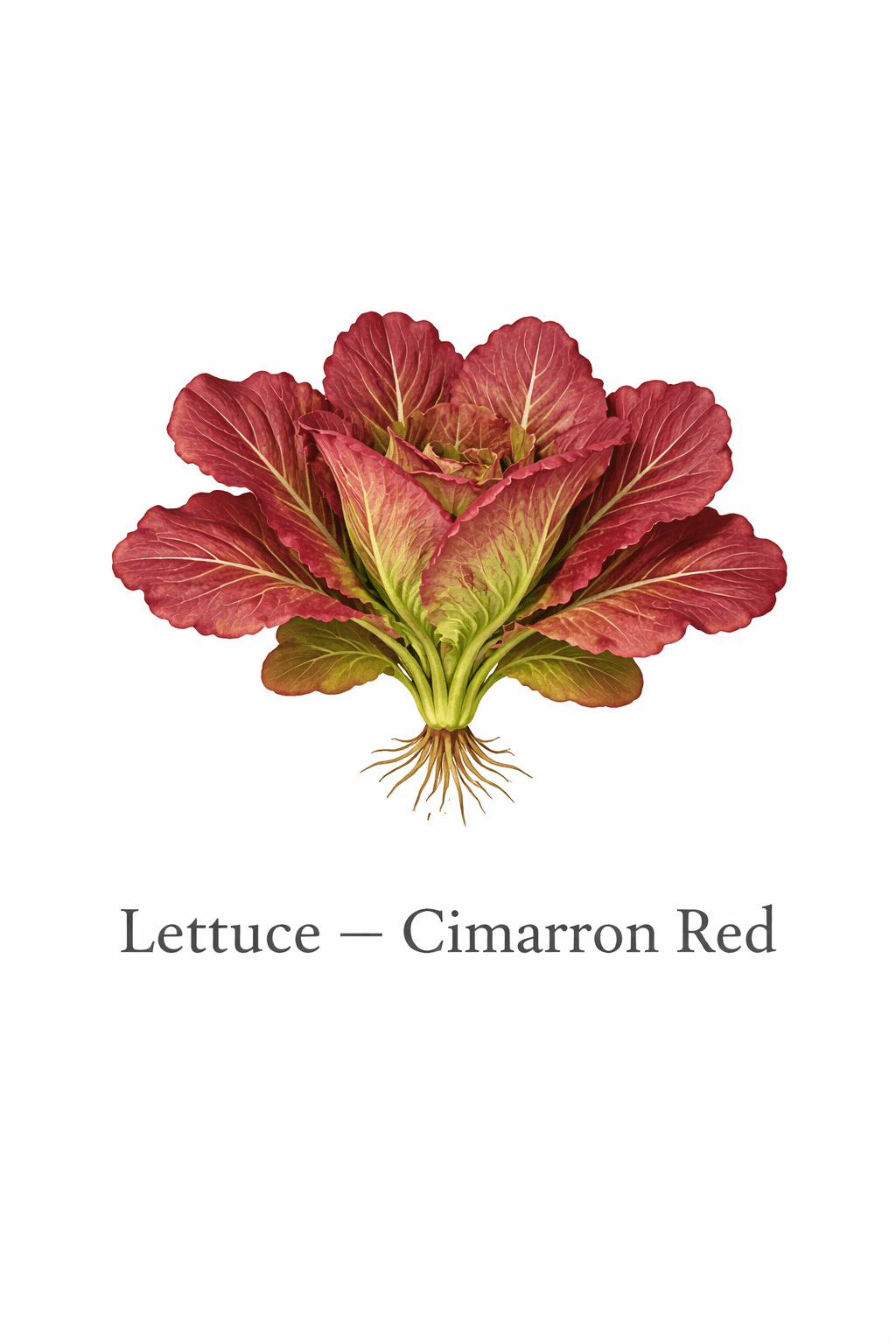
The Cimarron Red Lettuce is a stunning heirloom Romaine. It is famous for its deep bronze-red, fan-shaped leaves that transition to a crisp, emerald-green heart. Not only is it one of the most beautiful lettuces in the garden, but it is also remarkably slow to bolt and resistant to many common lettuce diseases.
Days to Maturity
30–70 Days
Sun / Light
Full Sun (6+ hours)
Sowing Depth
1/8-1/4 inch
Spacing
8–12 inches
Germination
7–12 Days
1.Sowing & Germination
Cimarron Red is a hardy variety that can handle light frosts better than many green lettuces. The red pigments in the leaves actually act as a natural "antifreeze" for the plant.When to Plant:Spring: Direct sow outdoors 4 weeks before the last frost.
→Fall: Sow in late summer for a fall harvest. The red color becomes much more intense and vibrant as the nights get cooler.
→Sowing Depth: 1/8-1/4 inch deep. Like most lettuce, these seeds need light to germinate. Cover them very lightly with fine soil or vermiculite.
→Spacing: Sow 1 inch apart. Thin seedlings to 8–12 inches apart to allow for the tall, upright Romaine heads to develop.
→Germination Time: 7–12 days.
2.Growing & Care
→Watering: Keep the soil consistently moist. Because Romaine grows taller than leaf lettuce, it can dry out faster in the wind. Water at the base of the plant to keep the tightly bunched leaves from rotting.
→Succession Planting: To have a steady supply of these beautiful red leaves, sow a small patch every 2 weeks.
→Pest Alert: Slugs and snails love the tender leaves. Use organic slug bait or copper tape around containers if they become a problem.
→Weeding: Keep the area clear of weeds; lettuce does not like to compete for the moisture it needs to stay crisp.
3.Harvest
→Days to Maturity: 30 Days (Baby); 60–70 Days (Full Head).
→Baby Leaf Method: Snip individual leaves when they are 3 inches tall for a "Gourmet Red" salad mix.
→Full Head Method: Harvest the entire plant when the head has reached its full height (8–12 inches) and the center feels somewhat firm.
→Regrowth: If you cut the head off 1 inch above the soil, the plant will often sprout a second, smaller "mini-head" of leaves!
4.In the Kitchen
→Storage: Cimarron Red is a "sturdy" lettuce. After washing and drying, it will stay fresh in the refrigerator for 7–10 days, significantly longer than delicate butterheads.
→Culinary Use: It provides a spectacular color contrast in salads. The leaves are crisp and have a sweet, nutty flavor. Because it is a Romaine type, the ribs are sturdy enough to be used in Caesar salads or even lightly grilled!
→Nutrition: Red-leafed lettuces are generally higher in antioxidants (anthocyanins) and Vitamin A than green varieties.
Copenhagen Market Cabbage
Copenhagen Market Cabbage
Copenhagen Market Cabbage
Brassica oleracea
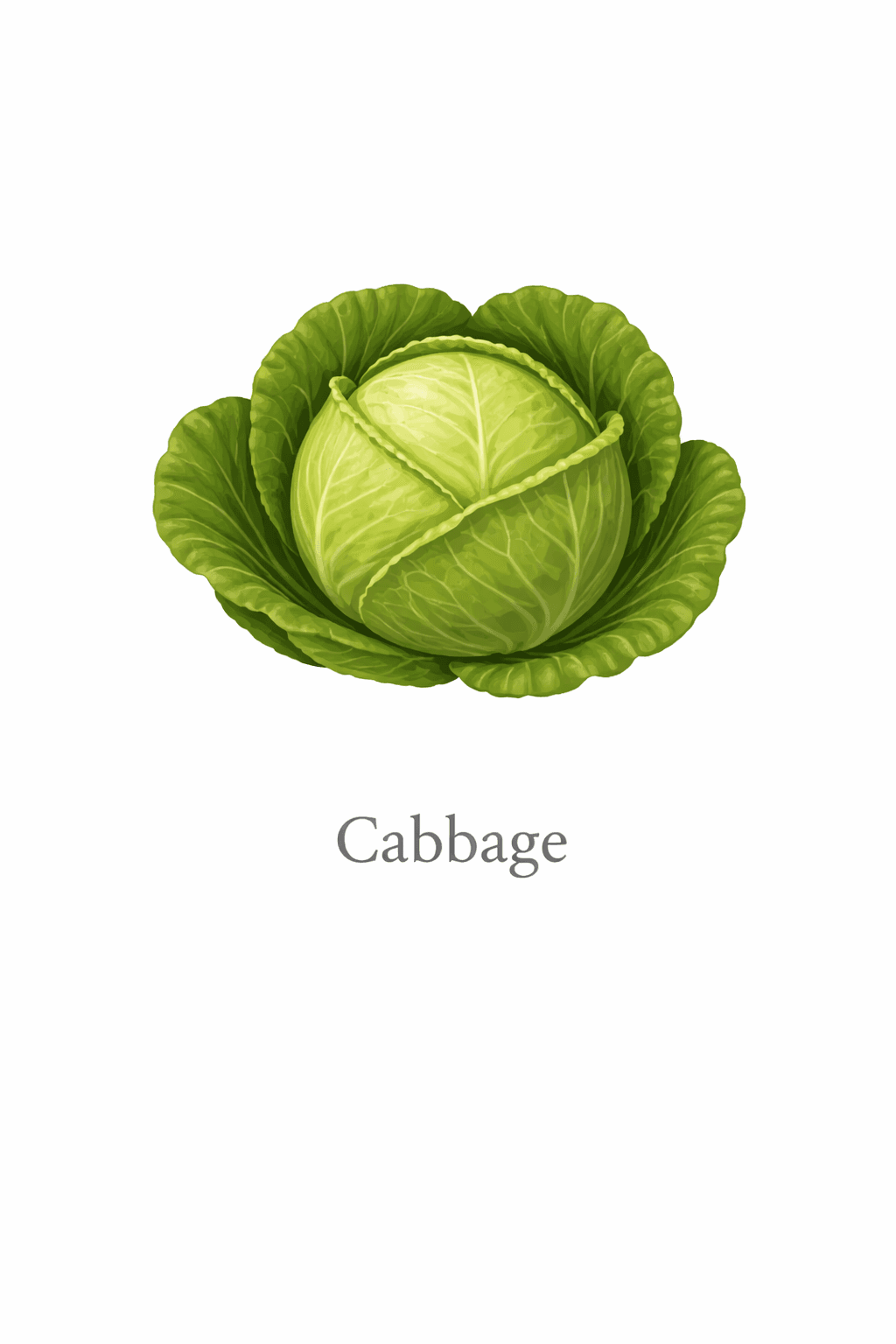
The Copenhagen Market Cabbage is a beloved Danish heirloom introduced in 1909. It is famous for being one of the best "early" cabbages, meaning it matures much faster than the giant storage varieties. It produces perfectly round, 6-to-8-inch heads that are dense, sweet, and weigh between 3 and 5 pounds.
Days to Maturity
65–75 Days
Sun / Light
Full Sun (6+ hours)
Sowing Depth
1/4 inch
Spacing
12–18 inches
Germination
7–14 Days
1.Sowing & Germination
Cabbage is a hardy, cool-weather crop that can survive light frosts. To get a head start before the summer heat arrives, indoor starting is highly recommended.When to Plant:Spring Crop: Start seeds indoors 6–8 weeks before the last frost. Transplant outdoors 3–4 weeks before the last frost date.
→Fall Crop: Start seeds in mid-summer and transplant into the garden in late summer. Fall-grown cabbage is often sweeter as it matures in the cooling air.
→Sowing Depth: 1/4 inch deep.
→Spacing: Space plants 12–18 inches apart in rows 24 inches apart. If you plant them closer, the heads will be smaller (perfect for "personal-sized" cabbages).
→Germination Time: 7–14 days.
2.Growing & Care
→Watering: Consistent moisture is the most important factor for cabbage. If the soil stays dry for too long and then receives a heavy watering, the heads may split open. Aim for 1–1.5 inches of water per week.
→Feeding: Apply a nitrogen-rich organic fertilizer 3 weeks after transplanting. Cabbage needs plenty of fuel to wrap those heavy leaves into a tight head.
→Pest Alert: The Cabbage White Butterfly will lay eggs on the leaves, which hatch into green caterpillars (cabbage worms). Use floating row covers to block the butterflies or use organic Bt (Bacillus thuringiensis) if you spot holes in the leaves.
→Mulching: Use straw or compost to keep the soil cool and prevent moisture evaporation.
3.Harvest
→Days to Maturity: 65–75 Days from transplanting.
→When to Pick: Harvest when the heads feel firm and solid to the touch. If the head feels "squishy," it needs more time to fill out.
→Method: Cut the head at the base with a sharp knife, leaving a few of the outer "wrapper" leaves attached to protect the head.
→Pro Tip: If you leave the stem in the ground after harvesting the main head, the plant will often grow several "mini-cabbages" (the size of Brussels sprouts) along the stalk for a second harvest!
4.In the Kitchen
→Storage: Copenhagen Market is a "fresh market" cabbage, it will stay crisp in the refrigerator for 3–4 weeks.
→Culinary Use: Because of its tender texture and high sugar content, this is the premier variety for coleslaw, sauerkraut, and raw salads. It also holds up well to quick stir-frying.
→Nutrition: Excellent source of Vitamin C, Vitamin K, and dietary fiber.
Dandelion
Dandelion
Dandelion
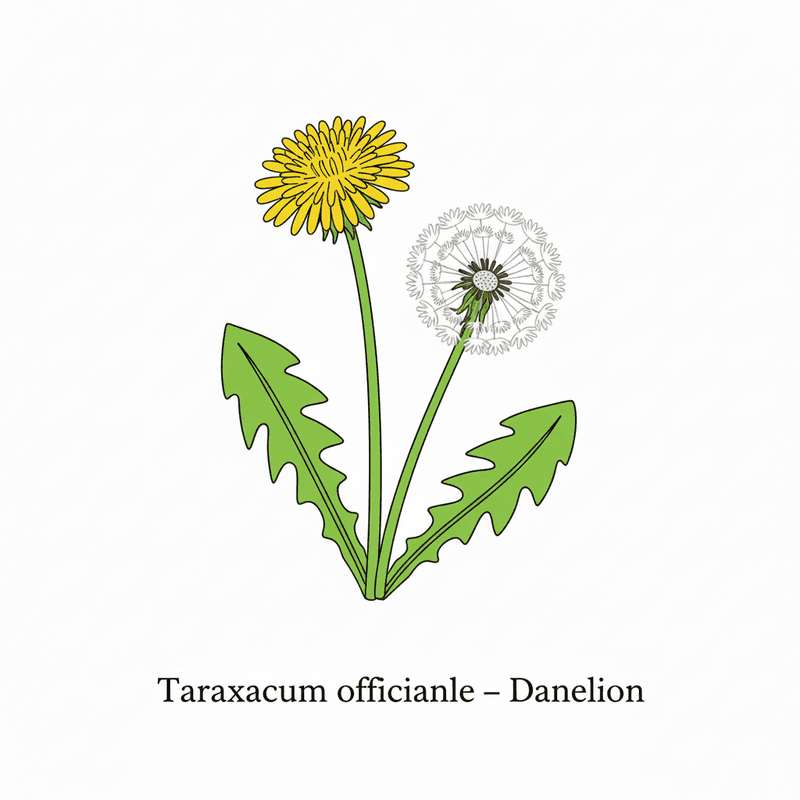
Dandelion (Taraxacum officinale) is a hardy perennial herb from the daisy family, recognized by its bright yellow flowers, deeply toothed leaves (dents de lion - lion's teeth), and fluffy seed heads. While many try to eradicate it, cultivating dandelion allows you to appreciate its extensive culinary, medicinal, and ecological benefits.
1.Sowing & Germination
→Direct Sowing is Easiest: Dandelion seeds germinate readily and are best direct-sown.
→Timing: o Spring: Sow seeds in early spring as soon as the soil can be worked. o Fall: You can also sow in late summer or early fall.
→Sowing Depth: Plant seeds about ¼ inch deep.
→Spacing: Sow seeds 2-3 inches apart, then thin seedlings to 6-12 inches apart for optimal leaf and root development.
→Germination Time: Seeds typically germinate in 7-21 days at a cool temperature range of 50-65°F (10-18°C). Keep the soil consistently moist.
→Self-Seeding: Dandelion is famous for its prolific self-seeding (those fluffy "parachutes"!). If you allow plants to go to seed, new ones will readily pop up.
2.Growing & Care
Light & Growing
→Sunlight: Dandelions are highly adaptable and will grow in full sun to partial shade. More sun generally leads to more robust growth and flowering.
→Growth Habit: They form a low-lying rosette of leaves, from which hollow flower stalks emerge, each topped with a single bright yellow flower. They develop a strong, deep taproot.
→Maintenance: o Harvesting: Regular harvesting of leaves can encourage a continuous supply of tender greens. o Deadheading: If you wish to prevent self-seeding, deadhead the flowers before they turn into fluffy seed heads. o Root Management: If growing for roots, ensure consistent moisture and good soil depth.
3.Harvest
Harvesting Dandelion
→Leaves: o Timing: Harvest young, tender leaves in early spring or late fall for the mildest flavor. Older leaves become more bitter, especially in hot weather. o How to Harvest: Cut outer leaves near the base of the plant, leaving the central crown intact to allow for regrowth. o Blanching (Optional): To reduce bitterness, you can "blanch" dandelion leaves by covering the plant with an overturned pot or dark cloth for 1-2 weeks before harvest. This process excludes light, making the leaves paler and milder.
→Flowers: o Timing: Harvest bright yellow flowers when fully open, preferably in mid-morning after the dew has dried. o How to Harvest: Snip off the entire flower head just below the green sepals.
→Roots: o Timing: Harvest roots in the fall of the first year (when they are plump and full of nutrients before flower stalks emerge) or in early spring of the second year before the plant sends up a flower stalk. o How to Harvest: Dig deeply and carefully around the plant to extract the entire taproot. Clean thoroughly.
4.In the Kitchen
Why Grow Dandelion?
→Nutritional Powerhouse: Dandelion leaves are incredibly nutritious, packed with vitamins A, C, K, and E, as well as calcium, iron, and potassium. They are more nutritious than many common garden greens!
→Medicinal Marvel: Dandelion has a rich history as a potent medicinal herb. o Liver & Digestive Tonic: The roots are particularly valued as a liver tonic, supporting liver function and aiding digestion by stimulating bile flow. They are also a mild laxative. o Diuretic: The leaves are a natural diuretic, helping to reduce water retention without depleting potassium (unlike many pharmaceutical diuretics). o Antioxidant & Anti-inflammatory: All parts of the plant contain antioxidants and may have anti-inflammatory properties.
→Culinary Versatility: o Leaves: Delicious in salads (especially young leaves), sautéed as greens, or added to soups and stir-fries. o Flowers: The petals can be added to salads, made into dandelion wine, or used to make fritters. o Roots: Can be roasted and ground as a caffeine-free coffee substitute, or diced and added to stews.
→Early Pollinator Food: The bright yellow flowers are one of the earliest and most vital food sources for bees and other pollinators in spring, providing essential nectar and pollen when few other plants are blooming.
→Soil Improver: Its deep taproot helps break up compacted soil, bringing up nutrients from lower soil levels, and improving soil structure.
→Hardy & Resilient: Requires virtually no care once established, thriving in a wide range of conditions. Dandelion is far more than a "weed"; it's a valuable and beneficial plant that deserves a place in any garden for its incredible health benefits, culinary uses, and ecological contributions.
Detroit Dark Red Beets
Detroit Dark Red Beets
Detroit Dark Red Beets
Beta vulgaris
The Detroit Dark Red Beet is the gold standard for home gardeners. Originally introduced in 1892, this heirloom variety is famous for its perfectly round, 3-inch roots and deep crimson color that doesn't fade when cooked. It is also a "dual-purpose" crop, providing both sweet roots and nutritious, spinach-like greens.
Days to Maturity
50–60 Days
Sun / Light
Full Sun / Light Shade
Sowing Depth
1/2 inch
Spacing
3–4 inches
Germination
7–14 Days
1.Sowing & Germination
Beet "seeds" are actually small, dried fruits containing 2 to 6 individual seeds. This means that thinning is almost always necessary after they sprout.
→When to Plant: Beets are hardy and prefer cool weather. Sow outdoors 2–4 weeks before the last frost in spring. For a fall crop, sow 8–10 weeks before the first expected autumn frost.
→Seed Preparation: For faster germination, soak the seeds in warm water for 2–4 hours before planting to soften the outer shell.
→Sowing Depth: 1/2 inch deep.
→Spacing: Sow seeds 1–2 inches apart. Once seedlings are 3 inches tall, thin them to 3–4 inches apart. (Eat the thinnings—they are delicious baby greens!)Germination Time: 7–14 days. Beets germinate best when soil temperatures are between 50°F and 75°F.
2.Growing & Care
→Watering: Consistent moisture is the secret to tender beets. If the soil dries out and then becomes soaked, the roots may crack. Aim for 1 inch of water per week.
→Mulching: A layer of straw or grass clippings helps regulate soil temperature and keeps the "shoulders" of the beet (the part that pops out of the ground) from getting sun-scorched.
→Weeding: Hand-weed carefully. Beets do not like competition, but their roots are shallow, so don't use heavy tools near the base of the plant.
3.Harvest
→Days to Maturity: 50–60 Days.
→Greens: You can snip 1 or 2 leaves from each plant throughout the season without hurting root development. Harvest when leaves are 4–6 inches long.
→Roots: Detroit Dark Red can be harvested at any size.
→Baby Beets: 1 inch diameter (very sweet and tender).
→Mature Beets: 2.5 to 3 inches diameter (best for canning and roasting).
→Storage Tip: Twist the greens off with your hands rather than cutting them with a knife; leaving about 1 inch of stem prevents the beet from "bleeding" and losing its color during cooking.
4.In the Kitchen
→Root Storage: Beets store incredibly well. Cut off the greens and store the unwashed roots in a perforated bag in the refrigerator for up to 3 weeks, or in a cold root cellar for months.
→Flavor Profile: Detroit Dark Red is known for its high sugar content and earthy finish. It is the premier choice for pickling, borscht, or roasting with goat cheese.
Echinacea
Echinacea
Echinacea
Echinacea (Echinacea purpurea, also known as Purple Coneflower) is a robust perennial herb from the daisy family, celebrated for its large, distinctive daisy-like flowers with prominent cone-shaped centers and its renowned medicinal properties. It's a cornerstone of any pollinator-friendly or native plant garden.
1.Sowing & Germination
→Start Indoors (Recommended): Echinacea seeds often benefit from cold stratification and can have variable germination rates, so starting them indoors 8-10 weeks before the last expected frost is a good approach.
→Cold Stratification: Echinacea seeds require a period of cold stratification to break dormancy. Mix seeds with a small amount of damp sand or peat moss in a sealed plastic bag and refrigerate for 4-8 weeks.
→Sowing Depth: After stratification, sow seeds about ¼ inch deep.
→Germination Time: Seeds typically germinate in 10-20 days (sometimes longer) at a temperature range of 65-75°F (18-24°C). Keep the soil consistently moist.
→Direct Sowing: You can also direct sow seeds outdoors in late fall (to allow natural cold stratification over winter) or very early spring.
→Transplanting: Once seedlings have developed a few sets of true leaves and are large enough to handle, transplant them outdoors after the danger of frost has passed. Space plants 18-24 inches apart.
→Division (Easiest Method): For established plants, the easiest way to propagate is by dividing clumps in early spring or fall.
→Self-Seeding: Echinacea will readily self-seed if you allow some flowers to go to seed, often ensuring new plants for years to come.
2.Growing & Care
Light & Growing
→Sunlight: Echinacea thrives in full sun (at least 6 hours of direct sunlight per day). It can tolerate very light partial shade, but may produce fewer flowers and become leggy.
→Growth Habit: It forms a strong clump of basal leaves in the first year, then sends up sturdy flower stalks 2-5 feet tall in subsequent years, topped with large, showy flowers.
→Maintenance: o Deadheading (Optional): Deadhead spent flowers to encourage more blooms and a tidier appearance. However, leaving some spent flower heads provides seeds for birds (like goldfinches) and winter interest, and allows for self-seeding.
3.Harvest
Harvesting Echinacea
→Leaves: Harvest young leaves in spring or early summer.
→Flowers: Harvest fully open flowers throughout the blooming season (mid-summer to fall). You can use the petals or the entire flower head (including the cone).
→Roots: The roots are generally considered the most medicinally potent part. o Timing: Roots are best harvested in the fall after the plant has gone dormant (after the first hard frost) or in early spring before new growth emerges. Plants should be at least 2-3 years old for a substantial root harvest. o How to Harvest: Dig carefully around the plant to lift the entire root system. Wash thoroughly.
→Drying: o Leaves/Flowers: Spread in a single layer on screens in a warm, dry, well-ventilated area out of direct sunlight. o Roots: Wash thoroughly, chop into smaller pieces (if large), and dry on screens or in a dehydrator at low heat until brittle. o Store all dried parts in airtight containers away from light and heat.
4.In the Kitchen
Why Grow Echinacea?
→Immune System Powerhouse (Medicinal): Echinacea is one of the most widely recognized and scientifically studied herbal immune stimulants. It's traditionally used to prevent and treat colds, flu, and other infections, as well as to boost overall immune function. It's often prepared as a tea, tincture, or capsule from the roots, leaves, and flowers.
→Pollinator Magnet: The large, colorful flowers are an absolute feast for a vast array of pollinators, including bees (especially native bees), butterflies, and beneficial.
→Long Blooming Season: Echinacea blooms from mid-summer well into fall, providing continuous color and food for pollinators when many other plants have faded. Echinacea is a truly invaluable plant, combining significant medicinal power with stunning beauty and vital ecological benefits, making it an essential addition to almost any garden.
Evening Primrose
Evening Primrose
Evening Primrose
Evening Primrose (Oenothera biennis) is known for its bright yellow, often fragrant, cup-shaped flowers that famously open in the evening and wither by midday. It's a robust plant that attracts nocturnal pollinators and offers a range of benefits.
1.Sowing & Germination
→Direct Sowing is Easiest: Evening Primrose seeds germinate readily and are best direct-sown.
→Timing: o Spring: Sow seeds in early spring as soon as the soil can be worked. This allows the plant to form a rosette of leaves in its first year. o Late Summer/Fall: You can also sow in late summer or early fall. The plants will establish a rosette before winter and then flower in the following spring/summer.
→Sowing Depth: Plant seeds about ¼ inch deep.
→Spacing: Sow seeds 6-12 inches apart. Thin seedlings to 12-18 inches apart for mature plants, as they can become quite large.
→Germination Time: Seeds typically germinate in 7-21 days at a temperature range of 60-70°F (15-21°C). Keep the soil consistently moist.
→Self-Seeding: Evening Primrose is an enthusiastic self-seeder! If allowed to flower and set seed, you'll likely have volunteer plants popping up year after year, effectively acting like a perennial in the garden.
2.Growing & Care
Light & Growing
→Sunlight: Evening Primrose thrives in full sun (at least 6-8 hours of direct sunlight per day). It can tolerate very light partial shade, but full sun encourages the most abundant flowering.
→Growth Habit: In its first year (for biennials), it forms a low-lying rosette of rough, hairy leaves. In the second year, it sends up a tall, sturdy flower stalk (3-6 feet tall) adorned with numerous bright yellow flowers.
→Maintenance: o Deadheading (Optional): Deadhead spent flower stalks to prevent excessive self-seeding if you want to control its spread. o Staking: Taller stalks may benefit from staking in windy locations.
3.Harvest
Harvesting Evening Primrose
→Leaves: o Timing: Harvest young, tender leaves from the first-year rosette or early in the second year before flowering, for the mildest flavor. Older leaves become tougher and more bitter. o How to Harvest: Snip outer leaves near the base of the plant.
→Flowers: o Timing: Harvest fresh flowers as they open in the evening or early morning, before they wilt. o How to Harvest: Gently pluck the entire flower from its stem.
→Roots: o Timing: The taproot is best harvested in the fall of the first year (when it's plump and full of nutrients before flower stalks emerge) or in early spring of the second year before the plant sends up a flower stalk. o How to Harvest: Dig carefully around the plant to extract the entire taproot. Clean thoroughly.
→Seeds (for Evening Primrose Oil): o Timing: Allow the flowers to go to seed. Harvest the small seed pods when they have dried and turned brown. o How to Harvest: Cut the entire seed stalks. Place them in a paper bag to catch the seeds as they dry and shatter. o Processing: Seeds can be pressed for oil (a complex process) or used whole.
4.In the Kitchen
Why Grow Evening Primrose?
→Medicinal Powerhouse (Especially Oil): Evening Primrose Oil (EPO), extracted from the seeds, is its most famous medicinal product. It's rich in gamma-linolenic acid (GLA), an omega-6 fatty acid known for its anti-inflammatory properties. EPO is widely used to manage symptoms of PMS, menopause, eczema, acne, and rheumatoid arthritis. The leaves and roots also have traditional medicinal uses as astringents and for digestive issues.
→Culinary Versatility: o Leaves: Young leaves can be eaten raw in salads or cooked like spinach. o Flowers: The beautiful yellow flowers are edible and make an attractive garnish for salads, desserts, or drinks. o Roots: The first-year taproot can be harvested and cooked like a parsnip or potato, offering a nutty, slightly peppery flavor.
→Striking Ornamental: The tall, slender flower stalks covered with cheerful yellow blooms create a dramatic and beautiful display in the evening garden, adding height and a touch of wild elegance.
→Drought Tolerant & Hardy: Extremely resilient and low-maintenance once established, thriving in various conditions, including poor soils, making it excellent for naturalized areas or challenging spots. Evening Primrose is a truly remarkable plant, offering significant medicinal value, unique culinary uses, striking nocturnal beauty, and robust adaptability for the low-maintenance gardener.
Fennel
Fennel
Fennel
Fennel (Foeniculum vulgare) is a herbaceous perennial that is often grown as an annual, especially for its bulbous base. It's known for its delicate, anise-scented foliage, its crunchy "bulb"
1.Sowing & Germination
→Direct Sowing is Best: Fennel develops a taproot and does not transplant well. Direct sowing is highly recommended.
→Timing: o Spring: Sow in early spring for a summer harvest, but be mindful of heat (see "Bolting" below). o Late Summer/Early Fall: This is often the best time to sow Fennel. The plants will mature in cooler weather, which helps prevent bolting and encourages good bulb formation.
→Sowing Depth: Plant seeds about ¼ to ½ inch deep.
→Spacing: Sow seeds 4-6 inches apart, thin seedlings to 6-10 inches apart to allow bulbs to develop properly.
→Germination Time: Seeds typically germinate in 7-14 days at a temperature range of 60-70°F (15-21°C). Keep the soil consistently moist during germination.
→Self-Seeding: If allowed to flower and go to seed, fennel will readily self-seed, so be prepared for volunteer plants if you don't deadhead.
2.Growing & Care
Light & Growing
→Sunlight: Fennel thrives in full sun, requiring at least 6-8 hours of direct sunlight per day. Adequate sun is crucial for developing its best flavor and encouraging good bulb formation.
→Maintenance: o Bolting Prevention: Fennel is very prone to bolting (going to seed) in hot weather or if it experiences stress (like lack of water, or overcrowding). Cooler temperatures and consistent moisture help prevent this. Once it bolts, the bulb will stop swelling, and the leaves may become tougher. o Companion Planting: Avoid planting near Dill, as they can cross-pollinate, leading to offspring with undesirable flavors and characteristics.
3.Harvest
Harvesting Fennel
→Bulb: o Timing: Harvest the "bulb" when it reaches the desired size, usually 3-5 inches in diameter, before the plant sends up a flower stalk. This typically takes 60-90 days from sowing. o How to Harvest: Cut the entire plant at the soil line, leaving the roots to potentially regrow.
→Foliage (Dill-like "Fennel Fronds"): o Timing: Harvest the feathery leaves as needed throughout the growing season. o How to Harvest: Snip individual fronds or small sections of stems.
→Flowers: o Timing: The yellow flower umbels are edible and can be harvested when fully open for garnishes or to infuse vinegars.
→Seeds: o Timing: If you allow the flowers to go to seed, the seeds can be harvested when the flower heads have dried and turned brown. This is typically in late summer to early fall. o How to Harvest: Cut the entire flower stalks when the seeds are fully developed but before they begin to shatter. Place the heads in a paper bag to catch the dropping seeds, then hang them to dry further. o Processing: Once completely dry, rub the seed heads gently to release the seeds. Clean the seeds by winnowing or sifting. Store them in an airtight container.
→Preserving: o Bulbs: Store whole bulbs in the refrigerator for a few weeks. o Foliage: Use fresh, as it loses much of its flavor when dried or frozen. o Seeds: Dried seeds will retain their flavor for a long time if stored properly.
4.In the Kitchen
Why Grow Fennel?
→Culinary Versatility: o Bulb: Crisp and refreshing, with a mild anise flavor. Delicious raw in salads, roasted, grilled, braised, or sautéed. o Foliage (Fronds): Used as a delicate herb for garnishing, in salads, or to flavor fish and poultry. o Seeds: A popular spice in baking, sausages, curries, and pickling.
→Medicinal Properties: Fennel has a long history of traditional use, particularly as a digestive aid. It's known for its carminative properties, helping to relieve gas, bloating, and indigestion. Fennel tea is often used to soothe an upset stomach, ease colic, and act as a mild expectorant.
→Ornamental Value: Its feathery foliage adds beautiful texture and an airy quality to the garden. The tall stalks and yellow flower umbels create a striking architectural element.
→Aromatic: The entire plant releases a pleasant, distinct anise aroma when brushed against or crushed.
→Self-Seeding: If allowed to flower, it often self-seeds, providing continuous crops with minimal effort. Fennel is an exceptional plant, offering distinct flavors for gourmet cooking, significant health benefits, and a graceful beauty that enhances any garden space.
Fordhook Giant Swiss Chard
Fordhook Giant Swiss Chard
Fordhook Giant Swiss Chard
Beta vulgaris
The Fordhook Giant Swiss Chard is an heirloom classic introduced in 1924. It is widely considered the most productive and heat-tolerant chard available. Unlike the "Rainbow" varieties, Fordhook is prized for its massive, succulent, creamy-white stalks and its deeply crinkled (savoyed) emerald-green leaves. It is a workhorse in the garden, often producing from early spring until the ground freezes.
Days to Maturity
30–65 Days
Sun / Light
Full Sun / Partial Shade
Sowing Depth
1/2 inch
Spacing
10–12 inches
Germination
7–14 Days
1.Sowing & Germination
Swiss Chard seeds are actually "seed balls" or clusters, meaning each "seed" you plant will likely produce 2 to 3 sprouts.When to Plant:Spring: Direct sow 2–3 weeks before the last frost.
→Fall: Sow in late summer for a crop that thrives in the cooling autumn air.
→Sowing Method: Direct Sow is easiest, though chard transplants better than its cousin, the beet.
→Sowing Depth: 1/2 inch deep.
→Spacing: Space seeds 2 inches apart. Once they are 3 inches tall, thin to 10–12 inches apart. Because Fordhook is a "Giant" variety, it needs significant space to reach its full size.
→Germination Time: 7–14 days. To speed things up, soak the seeds in water for 12–24 hours before planting.
2.Growing & Care
→Watering: Keep the soil consistently moist. If chard gets too dry, the leaves can become tough and the stalks may get "stringy." Aim for 1 inch of water per week.
→Feeding: Since you are harvesting the foliage, chard loves nitrogen. A mid-season side-dressing of compost or a liquid organic fertilizer will keep the plants producing new leaves rapidly.
→Mulching: A layer of straw helps keep the soil moisture even and prevents soil from splashing into the deeply crinkled leaves.
3.Harvest
→Days to Maturity: 30 Days (Baby); 55–65 Days (Full Size).The "Cut and Come Again" Method: This is the best way to harvest chard. Snip off the outermost leaves about 1–2 inches above the ground. As long as you don't damage the center "crown," the plant will keep producing new leaves from the middle all season long.
→Size: Fordhook leaves can grow up to 2 feet tall! However, for the best flavor, harvest when leaves are between 10 and 15 inches long.
→Method: Use a clean knife or garden snips. Pulling the stalks can accidentally uproot the whole plant.
4.In the Kitchen
→Storage: Wrap in a damp paper towel and store in a plastic bag in the fridge for up to 1 week.
→Two-in-One Vegetable: Treat the leaves like spinach (sautéed or steamed) and the thick white stalks like asparagus or celery (braised or stir-fried).
→Flavor Profile: Fordhook has a mild, earthy flavor similar to beets, but without the "dirt" aftertaste some people find in beet greens. It is much more tender than kale.
Holy Basil
Holy Basil
Holy Basil
Holy Basil (Ocimum tenuiflorum), commonly known as Tulsi, is a tender perennial herb in the mint family, though often grown as an annual in cooler climates. It is deeply cherished in India for its spiritual significance and extensive medicinal properties, offering a pungent, clove-like, slightly peppery aroma and flavor distinct from culinary basils.
1.Sowing & Germination
→Start Indoors (Recommended): Holy Basil seeds benefit from warm conditions to germinate. Start seeds indoors 6-8 weeks before the last expected frost date.
→Sowing Depth: Sow seeds lightly, about ¼ inch deep. Gently press them into the surface of moist seed-starting mix, as some light can aid germination.
→Germination Time: Seeds typically germinate in 7-14 days at a warm temperature range of 70-80°F (21-27°C). Keep the soil consistently moist.
→Transplanting: Once seedlings have developed a few sets of true leaves and all danger of frost has passed (night temperatures consistently above 50°F/10°C), transplant outdoors. Space plants 12-18 inches apart.
→Direct Sowing: Possible in warm climates with a long growing season once the soil is thoroughly warm.
2.Growing & Care
Light & Growing
→Sunlight: Holy Basil thrives in full sun, needing at least 6-8 hours of direct sunlight per day. It can tolerate very light partial shade, especially in very hot climates, but full sun encourages the most robust growth and highest essential oil content.
→Growth Habit: It forms a bushy plant, typically growing 1-3 feet tall and wide, with slightly hairy stems and leaves. It produces numerous flower spikes topped with small, often purplish flowers.
→Pinching & Pruning: o Pinch Back: Once the plant has developed 3-4 sets of true leaves, pinch off the top set of leaves just above a node. This encourages branching and a bushier plant, leading to more leaves for harvest. o Deadheading/Prevent Flowering: Continuously pinch off flower buds as soon as they form to extend the leaf harvest. However, many people allow Holy Basil to flower as the flowers are also used medicinally and are highly attractive to pollinators. Allowing some flowers to set seed is good for self-seeding.
3.Harvest
Harvesting Holy Basil
→Leaves & Flowers: The leaves and flowering tops are the primary parts harvested for medicinal and culinary use.
→Timing: Begin harvesting once the plant is well-established and has several sets of leaves, usually when it's about 8-12 inches tall. Harvest throughout the growing season. The plant is often considered most potent when it's just beginning to flower.
→How to Harvest: Snip off entire sprigs or stems, leaving at least 2-3 sets of leaves at the bottom to encourage regrowth. Regular harvesting encourages the plant to produce more leaves and maintains its bushy shape.
→Drying: o Gather cut stems into small bunches and hang them upside down in a cool, dark, well-ventilated area until thoroughly dry (leaves should be crisp). o Alternatively, spread leaves and flower tops in a single layer on screens. o Once dry, strip the leaves and flowers from the stems and store them in airtight glass jars away from light and heat. Properly dried Holy Basil retains much of its aroma and potency.
4.In the Kitchen
Why Grow Holy Basil?
→Adaptogen & Stress Reducer (Medicinal): Holy Basil is a cornerstone of Ayurvedic medicine and is highly valued as an adaptogen, helping the body adapt to stress. It's renowned for its ability to calm the nervous system, reduce anxiety, improve mood, and enhance mental clarity.
→Immune Booster: It possesses significant immune-modulating, anti-inflammatory, antioxidant, and antimicrobial properties. It's widely used to help prevent and treat colds, flu, coughs, and other respiratory infections.
→Culinary & Aromatic: While distinct from culinary basil, its unique pungent, clove-like, and peppery flavor with hints of mint is used in various Thai, Indian, and other Asian dishes. It makes a truly wonderful and aromatic herbal tea.
→Pollinator Magnet: The flowers are extremely attractive to bees and other beneficial insects, providing a valuable nectar source.
→Easy to Grow (in warm conditions): A relatively straightforward herb to cultivate, especially if given plenty of sun and warmth. Holy Basil is an extraordinary herb, offering a profound array of medicinal benefits, a unique aromatic experience, and a beautiful presence in any garden.
Italian Large Leaf Basil
Italian Large Leaf Basil
Italian Large Leaf Basil
Ocimum basilicum
Italian Large Leaf is a high-yielding, vigorous annual herb. It is known for its "savoyed" (crinkly) leaves that can grow up to 4 inches long. It is slightly more heat-tolerant and less prone to bolting than other sweet basils, making it a reliable performer in the peak of summer.
Days to Maturity
60–70 Days
Sun / Light
Full Sun (6-8 hours)
Sowing Depth
1/4 inch
Spacing
12–18 inches
Germination
5–10 Days
1.Sowing & Germination
Basil is a "tropical" herb that loves heat. It is extremely sensitive to cold and should never be exposed to frost.
→Indoor Start (Recommended): Sow seeds indoors 6–8 weeks before the last frost. This gives you a massive head start for a summer harvest.
→Direct Sowing: Only sow outdoors once the soil is warm (at least 70°F) and night temperatures are consistently above 50°F.
→Sowing Depth: 1/4 inch deep.
→Spacing in Trays: Sow 2–3 seeds per cell.
→Spacing in Garden: Space plants 12–18 inches apart to allow for plenty of airflow, which prevents fungal diseases.
→Germination Time: 5–10 days in warm conditions. Using a heat mat to keep soil at 75°F will speed this up significantly.
2.Growing & Care
→Watering: Keep the soil consistently moist but not soggy. Water at the base of the plant to keep the leaves dry, as wet foliage can lead to "downy mildew" or spotting.
→Pinching (Essential): When the plant is about 6 inches tall and has 3 sets of leaves, pinch off the top center stem just above a leaf node. This "shocks" the plant into growing two new branches, creating a bushy, productive plant rather than a tall, spindly one.
→Flower Removal: If you see flower spikes (buds) forming at the tips, pinch them off immediately. Once basil flowers, the leaf flavor becomes bitter and the plant stops producing new foliage.
3.Harvest
→Days to Maturity: 60–70 Days.
→When to Start: You can begin harvesting individual leaves once the plant is 6–8 inches tall.
→Harvest Technique: Always harvest from the top of the plant, cutting just above a pair of leaves. This encourages the plant to branch out and continue growing.
→Best Time: Harvest in the morning after the dew has dried for the highest concentration of essential oils and best flavor.
4.In the Kitchen
→Storage: Do not refrigerate fresh basil! It will turn black and lose flavor. Instead, treat it like a bouquet of flowers—place the stems in a jar of water on your kitchen counter.
→Preserving: To save your harvest, blend leaves with a little olive oil and freeze in ice cube trays for year-round use.
→Culinary Use: Because the leaves are so large, they are perfect for wrapping around a piece of mozzarella or using as a "lettuce wrap" for appetizers.
Jalapeño Pepper
Jalapeño Pepper
Jalapeño Pepper
Capsicum annuum
The Jalapeño is the world’s most popular chili pepper for a reason. This variety produces heavy yields of 3-inch, thick-walled fruits with a famous "medium" heat (typically 2,500 to 8,000 Scoville units). It is a sturdy, upright plant that is as ornamental as it is delicious.
Days to Maturity
70–85 Days
Sun / Light
Full Sun (8+ hours)
Sowing Depth
1/4 inch
Spacing
12–18 inches
Germination
10–21 Days
1.Sowing & Germination
Jalapeños are heat-loving perennials (grown as annuals in the USA). They require a long, warm season to produce their best fruit.
→Indoor Start (Essential): Sow seeds indoors 8–10 weeks before the last frost. Peppers are slow to start and need the extra time.
→Sowing Depth: 1/4 inch deep.
→The Warmth Factor: Pepper seeds are notorious for "sitting" if the soil is cold. Use a heat mat to maintain a soil temperature of 80°F–85°F for the best germination.
→Transplanting: Wait until the soil is warm (at least 65°F) and night temperatures are consistently above 55°F. "Harden off" the plants by bringing them outdoors for a few hours a day for a week before planting permanently.
→Spacing: Space plants 12–18 inches apart in rows 24 inches apart.
→Germination Time: 10-21 days.
2.Growing & Care
→Watering: Provide 1 inch of water per week. Keep the moisture consistent. If the soil swings from bone-dry to soaking wet, the peppers may develop "blossom end rot" or the fruit may crack.The "Stress" Secret: If you want spicier peppers, slightly reduce your watering once the fruits have reached full size. This minor stress can increase the capsaicin levels.
→Feeding: Avoid high-nitrogen fertilizers once the plant is established; too much nitrogen will give you a beautiful green bush with zero peppers. Switch to a fertilizer higher in phosphorus and potassium once flowers appear.
→Support: While jalapeño plants are sturdy, a small stake or "pepper cage" can help support the branches when they are loaded with heavy fruit.
3.Harvest
→Days to Maturity: 70–85 Days.Green vs. Red: Most jalapeños are harvested when they are deep green and firm. However, if left on the vine, they will eventually turn bright red. Red jalapeños are sweeter and usually pack more heat."Checking" (White Lines): You may notice small, tan-colored "stretch marks" or lines on the skin. This is called "checking." In many cultures, this is a sign of a superior, spicier pepper!
→Method: Use scissors or snips to harvest. Pulling the fruit can easily snap the brittle branches of the plant.
4.In the Kitchen
→Storage: Fresh jalapeños will last up to 2 weeks in the refrigerator.
→Preserving: They are the best variety for "Cowboy Candy" (candied jalapeños) or pickling. They also freeze well: just slice them up and store in a freezer bag.
→Safety Note: When cutting jalapeños, the oils (capsaicin) can stick to your hands. Avoid touching your eyes or face, and wash your hands thoroughly with soap and water after handling.
Kale
Kale
Kale
Brassica napus
While many kales belong to the Brassica oleracea family (like Lacinato or Curly), this variety is a Brassica napus, making it more closely related to rutabagas. This gives it a unique advantage: it is incredibly cold-hardy and has a much more tender, mild flavor than its "rubbery" supermarket cousins.
Days to Maturity
25–50 Days
Sun / Light
Full Sun / Partial Shade
Sowing Depth
1/4 to 1/2 inch
Spacing
12 inches
Germination
10–20 Days
1.Sowing & Germination
Dwarf Siberian is one of the easiest kales to grow because it is vigorous and less prone to bolting than other varieties.When to Plant:Spring Crop: Sow outdoors 4–6 weeks before the last frost.
→Fall Crop (Best Results): Sow in late summer. This variety thrives in the cold; its flavor actually improves significantly after it has been "kissed" by a hard frost.
→Sowing Depth: 1/4 to 1/2 inch deep.
→Spacing: Sow seeds 1 inch apart. Thin seedlings to 12 inches apart. (Don't toss the thinnings—they are excellent "baby kale" for salads!)Germination Time: 10–20 days.
2.Growing & Care
→Watering: Keep the soil consistently moist. Drought-stressed kale becomes tough and unpleasantly bitter. Aim for 1–1.5 inches of water per week.
→Feeding: As a leafy green, kale is a nitrogen lover. Apply a balanced organic fertilizer at planting and a nitrogen-rich side-dressing (like fish emulsion) mid-season.
→Pest Alert: The Cabbage White Butterfly is the main enemy. Watch for small green caterpillars (cabbage worms). Because the leaves of Dwarf Siberian are ruffled but not tightly curled, it’s easier to spot and remove pests than on "Curly" kale.
→Mulching: A layer of straw or leaves will keep the soil cool and prevent the bottom leaves from touching the dirt.
3.Harvest
→Days to Maturity: 25–30 Days (Baby); 50 Days (Mature).
→Baby Greens: Harvest individual leaves when they are 2–4 inches long.
→Mature Leaves: Harvest the outer, larger leaves as needed once the plant is about 12 inches tall.The "Center" Rule: Always harvest the outermost leaves first. Never cut the central "growing point" or "heart" of the plant; if you leave the center intact, the plant will continue to produce new leaves from the middle all the way into winter.
→Winter Harvest: In many zones, Dwarf Siberian will survive under a blanket of snow, providing fresh greens when the rest of the garden is dead.
4.In the Kitchen
→Storage: Store unwashed leaves in a plastic bag in the refrigerator for up to 1 week.
→Culinary Use: Because this variety is more tender than "Lacinato" or "Curly" kale, it is much better for raw massaged salads. It is also the perfect choice for smoothies, kale chips, or quick sautés with garlic and olive oil.
→Nutrition: A true "superfood," Dwarf Siberian is exceptionally high in Vitamins A, C, and K, as well as calcium and iron.
Large Red Cherry Tomato
Large Red Cherry Tomato
Large Red Cherry Tomato
Solanum lycopersicum
The Large Red Cherry Tomato is a classic high-yield heirloom that bridges the gap between a tiny snack tomato and a full-sized slicer. These plants are prolific, producing clusters of deep red, 1-to-2-inch fruits that are famous for their perfect "old-fashioned" tomato flavor—a balance of sweetness and a tangy acidic bite.
Days to Maturity
65–75 Days
Sun / Light
Full Sun (8+ hours)
Sowing Depth
1/4 inch
1.Sowing & Germination
Tomatoes are tropical plants that require a long, warm growing season. In most climates, starting them indoors is a must.
→Indoor Start: Sow seeds indoors 6–8 weeks before the last frost.
→Sowing Depth: 1/4 inch deep.
→The Warmth Factor: Use a heat mat to keep soil at 75°F–80°F. Germination is much slower in cool soil.
→Transplanting: Wait until the soil is warm and nights are consistently above 55°F.The "Deep Plant" Trick: When transplanting, bury the stem up to the first set of leaves. The plant will grow extra roots all along the buried stem, creating a massive, stable root system.
2.Growing & Care
→Support: Because they are indeterminate and heavy producers, they must be caged or trellised. A standard flimsy store-bought cage is often too small; a tall, heavy-duty stake or "cattle panel" trellis is better.
→Watering: Water deeply and consistently. Inconsistent watering (letting them dry out then soaking them) causes the thin skins of cherry tomatoes to split or crack. Always water at the base to keep leaves dry and prevent blight.
→Pruning: To keep the plant manageable and improve airflow, pinch off the "suckers"—the small shoots that grow in the "V" between the main stem and the branches.
→Feeding: Use a balanced fertilizer at planting, then switch to a low-nitrogen, high-potassium/phosphorus fertilizer once the first flowers appear.
3.Harvest
→Days to Maturity: 65–75 Days.
→When to Pick: Harvest when the fruit is a uniform, deep red and gives slightly to a gentle squeeze.
→Frequency: Once they start ripening, check the vines every day. Cherry tomatoes produce in "flushes," and regular harvesting encourages the plant to keep blooming.
→Frost Warning: If a frost is predicted, harvest all remaining green fruits. They will often ripen on a sunny windowsill or inside a paper bag.
4.In the Kitchen
→Storage: Never refrigerate fresh tomatoes! It ruins their texture and kills the flavor. Store them at room temperature on the counter.
→Culinary Use: These are the ultimate salad tomatoes. Because they are slightly larger than "Sweet 100s," they are also excellent for roasting whole with olive oil and garlic, or for skewering on kebabs.
→Yield: A single Large Red Cherry plant can produce hundreds of tomatoes in a single season. Be prepared to share with neighbors!
Lavender
Lavender
Lavender
Lavender (Lavandula spp.) is a fragrant perennial sub-shrub in the mint family, instantly recognizable by its silvery-green foliage and spikes of intensely aromatic purple (sometimes pink or white) flowers.
1.Sowing & Germination
→Start Indoors (Recommended): Lavender seeds can be slow and erratic to germinate, and often require cold stratification. Starting them indoors 10-12 weeks before the last expected frost is best.
→Cold Stratification: Lavender seeds require a period of cold stratification to break dormancy. Mix seeds with a small amount of damp sand or peat moss in a sealed plastic bag and refrigerate for 4-6 weeks.
→Sowing Depth: After stratification, sow seeds lightly, about ¼ inch deep. Gently press them into the surface of moist seed-starting mix, as light can aid germination.
→Germination Time: Seeds typically germinate in 14-28 days (sometimes longer) at a temperature range of 65-75°F (18-24°C). Keep the soil consistently moist. Patience is key!
→Direct Sowing: Possible in late fall (for natural cold stratification over winter) or very early spring in mild climates, but germination can be less reliable.
→Transplanting: Once seedlings have developed a few sets of true leaves and are large enough to handle, transplant them outdoors after all danger of frost has passed. Space plants 2-3 feet apart, depending on the variety.
→Cuttings (Easiest Method): Propagating from semi-hardwood cuttings in late spring/early summer is much faster and more reliable than growing from seed, and ensures the new plant is true to type.
2.Growing & Care
Light & Growing
→Sunlight: Lavender absolutely demands full sun, needing at least 6-8 hours of direct sunlight per day. It will not thrive in shade.
→Growth Habit: It forms a beautiful, mounding shrub of fragrant, silvery-green foliage, topped with numerous flower spikes.
→Maintenance: o Pruning: Crucial for healthy, long-lived lavender! Annual Pruning: Prune after the main bloom flush (or in early spring before new growth) by cutting back about one-third of the plant's height, focusing on maintaining a rounded shape and removing old flower stalks. Avoid Old Wood: Do not cut back into the woody, leafless base, as this can kill the plant or prevent it from regrowing. o Air Circulation: Ensure good air circulation to prevent fungal issues. o Winter Protection: In colder zones, English Lavender is hardy, but others may need winter protection or to be brought indoors.
3.Harvest
Harvesting Lavender
→Flowers (Primary Harvest): The flower spikes are harvested for their fragrance and essential oils.
→Timing: Harvest when about half to two-thirds of the individual flowers on the spike have opened, but before they are fully open and faded. This is when the oil content and fragrance are highest. Harvest on a dry, sunny morning after the dew has evaporated.
→How to Harvest: Using sharp scissors or clippers, cut the flower stalks with long stems, just above the foliage.
→Drying: o Gather cut stems into small bunches (5-10 stems per bunch) and secure with a rubber band. o Hang upside down in a cool, dark, dry, well-ventilated area (e.g., a closet or attic) for 1-3 weeks, or until thoroughly dry and crispy. o Once dry, strip the flowers from the stems and store them in airtight glass jars or sachets away from light and heat.
4.In the Kitchen
Why Grow Lavender?
→Incredible Fragrance: The number one reason! Lavender's distinctive, soothing aroma is legendary, used in aromatherapy, perfumes, potpourri, and cleaning products.
→Medicinal & Calming: Lavender is renowned for its calming and relaxing properties. It's used in aromatherapy to reduce stress, anxiety, and promote sleep. Lavender tea or essential oil (used carefully) can soothe headaches, improve digestion, and has antiseptic and anti-inflammatory qualities.
→Culinary Delight: English Lavender flowers and sometimes young leaves add a unique, floral, slightly sweet flavor to desserts, baked goods, teas, lemonade, honey, and even savory dishes (use sparingly!).
→Pollinator Paradise: The abundant flowers are a powerful magnet for bees (especially honeybees) and butterflies, providing essential nectar and supporting biodiversity.
→Ornamental Beauty: Its silvery foliage and elegant purple flower spikes create a stunning visual impact in the landscape, perfect for borders, rock gardens, cottage gardens, and hedges. Lavender is a truly exceptional herb, offering a sensory feast of sight and smell, profound therapeutic benefits, culinary versatility, and ecological support, making it an indispensable addition to almost any garden.
Lemon Balm
Lemon Balm
Lemon Balm
Lemon Balm (Melissa officinalis) is a hardy perennial herb in the mint family, celebrated for its refreshing lemony scent, bright green crinkled leaves, and small, inconspicuous white or pale pink flowers. It's an incredibly easy-to-grow plant that offers a delightful aroma, culinary uses, and significant medicinal benefits, especially for calming the nervous system.
1.Sowing & Germination
→Start Indoors (Recommended): Lemon Balm seeds can be slow and sometimes erratic to germinate and require light for germination. Starting them indoors 6-8 weeks before the last expected frost is a good approach.
→Sowing Depth: Scatter the tiny seeds lightly on the surface of moist seed-starting mix. Gently press them down, but do not cover them, as they need light to germinate.
→Germination Time: Seeds typically germinate in 10-14 days (sometimes up to 21 days) at a temperature range of 65-70°F (18-21°C). Keep the soil consistently moist, perhaps by covering the tray with a clear dome to maintain humidity.
→Direct Sowing: You can also direct sow seeds outdoors in early spring after the danger of frost has passed, or in late summer/early fall.
→Transplanting: Once seedlings have developed a few sets of true leaves and are large enough to handle, transplant them outdoors after the last frost, spacing them 12-18 inches apart.
→Division (Easiest Method): Like other mints, Lemon Balm is very easy to propagate by dividing established clumps in spring or fall.
→Self-Seeding: Lemon Balm is an enthusiastic self-seeder! If allowed to flower and go to seed, you'll likely have volunteer plants popping up in subsequent years.
2.Growing & Care
Light & Growing
→Sunlight: Lemon Balm thrives in full sun (at least 6 hours of direct sunlight per day) but performs exceptionally well in partial shade, especially in hotter climates where it can help prevent scorched leaves.
→Growth Habit: It forms a bushy, upright clump, typically growing 1-2 feet tall and wide. It produces small, whorled flowers along its stems in summer.
→Maintenance: o Pinching/Pruning: Pinch back young plants to encourage bushier growth. After the first flush of leaves and before flowering, you can cut the plant back by about one-third to encourage fresh, tender growth and delay flowering (which can make leaves tougher). o Deadheading: Deadhead spent flowers to prevent excessive self-seeding, which can be vigorous. o Containment: Like many mints, Lemon Balm can spread both by self-seeding and by creeping rhizomes. If you want to control its spread, consider growing it in containers or in an area where it can roam freely without overtaking other plants.
3.Harvest
Harvesting Lemon Balm
→Leaves (Primary Harvest): The tender leaves are the main part used.
→Timing: Begin harvesting individual leaves or entire sprigs once the plant is well-established and has a good amount of foliage. Harvest throughout the growing season. The flavor and aroma are best before the plant flowers.
→How to Harvest: Snip off outer leaves or entire stems, leaving enough foliage for the plant to continue growing. Regular harvesting encourages new growth.
→Drying: o Gather cut stems into small bunches and hang them upside down in a cool, dark, well-ventilated area until thoroughly dry (leaves should be crisp). o Alternatively, spread leaves on screens. o Once dry, strip the leaves from the stems and store them in airtight glass jars away from light and heat. Properly dried Lemon Balm retains much of its aroma and potency, but its essential oils can degrade over time, so aim to use within a year.
4.In the Kitchen
Why Grow Lemon Balm?
→Ultimate Calming Herb (Medicinal): Lemon Balm is one of the most beloved and effective nervine herbs. It's widely used to reduce stress and anxiety, promote relaxation, improve sleep, and alleviate mild depression. It's often made into a soothing tea. It's also traditionally used for cold sores and digestive upset due to its antiviral and antispasmodic properties.
→Refreshing Culinary Herb: Its bright, fresh lemon scent and flavor are delightful in teas, iced drinks, fruit salads, desserts, custards, and as a garnish. It pairs wonderfully with fish and poultry.
→Aromatic & Beautiful: Its cheerful green foliage and vibrant lemony scent make it a sensory delight in herb gardens, cottage gardens, and containers. Lemon Balm is an indispensable herb for anyone seeking natural remedies for stress and digestive issues, and a delightful, fragrant addition to any garden or kitchen.
Lemon Mint
Lemon Mint
Lemon Mint
Lemon Mint (Monarda citriodora) is a fascinating annual herb from the mint family. It's known for its unique tiered flower spikes, aromatic foliage with a strong lemon-mint scent, and attraction to a wide array of pollinators.
1.Sowing & Germination
→Direct Sowing is Easiest: Lemon Mint seeds germinate readily. Direct sowing outdoors after the last expected frost date is often the simplest method.
→Timing: o Spring: Sow seeds in mid-to-late spring after all danger of frost has passed and the soil has warmed. o Fall (for milder climates): You can also sow in late summer/early fall for plants to establish before winter and flower the following spring.
→Sowing Depth: Scatter the tiny seeds lightly on the surface of finely raked, moist soil. Gently press them down, but do not cover them, as they need light to germinate.
→Spacing: Sow seeds thinly, then thin seedlings to 6-12 inches apart once they are a few inches tall.
→Germination Time: Seeds typically germinate in 10-20 days at a temperature range of 65-75°F (18-24°C). Keep the soil consistently moist.
→Self-Seeding: Lemon Mint is an excellent self-seeder! If allowed to flower and set seed, it will readily pop up in subsequent seasons, often making it seem like a perennial.
2.Growing & Care
Light & Growing
→Sunlight: Lemon Mint thrives in full sun (at least 6 hours of direct sunlight per day). It can tolerate very light partial shade, but full sun encourages the best growth, most abundant flowering, and highest essential oil content.
→Growth Habit: It forms upright, somewhat airy clumps, typically growing 1-3 feet tall. It produces distinctive, often purplish-pink, tiered flower spikes that resemble pagodas or stacked rings of flowers.
→Maintenance: o Pinching/Pruning: Pinch back young plants to encourage bushier growth. After the first flush of flowers, you can cut the plant back by about one-third to encourage new growth and a second bloom, extending the season. o Deadheading: Deadhead spent flowers to prevent excessive self-seeding if you wish to control its spread. o Air Circulation: Ensure good air circulation, especially in humid conditions, to help prevent powdery mildew.
3.Harvest
Harvesting Lemon Mint
→Leaves & Flowers: The leaves and flowering tops are the primary parts harvested. The plant is most aromatic and flavorful when just beginning to flower.
→Timing: Begin harvesting leaves once the plant is well-established and has a good amount of foliage. You can harvest as needed throughout the growing season. For larger harvests, cut entire stems by about one-third to one-half.
→How to Harvest: Snip off individual leaves or entire sprigs/stems. Regular harvesting encourages new growth.
→Drying: o Gather cut stems into small bunches and hang them upside down in a cool, dark, well-ventilated area until thoroughly dry (leaves should be crisp). o Alternatively, spread leaves and flower tops in a single layer on screens. o Once dry, strip the leaves and flowers from the stems and store them in airtight glass jars away from light and heat. Properly dried Lemon Mint retains much of its aroma and flavor.
4.In the Kitchen
Why Grow Lemon Mint?
→Refreshing Aroma & Flavor: Its vibrant lemon-mint scent and flavor are truly invigorating. It makes a delicious and uplifting herbal tea, can be used to flavor lemonade, fruit salads, and even light savory dishes.
→Medicinal & Traditional Use: Like other Monarda species, Lemon Mint has traditional uses, particularly for colds, coughs, and fevers due to its diaphoretic (sweat-inducing) and antiseptic properties. Its calming aroma can also be uplifting.
→Ornamental Value: Its distinctive tiered flowers, often in shades of purple and pink, provide striking visual interest and unique texture in herb gardens, perennial borders, and naturalized areas. Lemon Mint is a wonderfully versatile herb, offering a unique flavor profile, powerful appeal to pollinators, and a beautiful, distinctive presence in the garden.
Mallow
Mallow
Mallow
Mallow refers to several species within the Malva genus, most commonly Common Mallow (Malva sylvestris) or Cheeseweed/Roundleaf Mallow (Malva neglecta). These are hardy annuals, biennials, or short-lived perennials, often considered wildflowers or even weeds, but are highly valued for their edible and medicinal properties. They feature rounded, lobed leaves and charming, often pinkish-purple flowers.
1.Sowing & Germination
→Direct Sowing is Easiest: Mallow seeds germinate readily and are best direct-sown.
→Timing: o Spring: Sow seeds in early spring as soon as the soil can be worked. o Fall: You can also sow in late summer or early fall for plants to establish before winter and flower the following spring.
→Seed Scarification (Optional but helpful): Mallow seeds have a hard seed coat that can sometimes inhibit germination. You can lightly scarify them (gently rub them with sandpaper or nick them with a knife) or soak them in warm water for 24 hours before sowing to improve germination rates.
→Sowing Depth: Plant seeds about ¼ to ½ inch deep.
→Spacing: Sow seeds 6-12 inches apart, then thin seedlings to 12-18 inches apart for mature plants.
→Germination Time: Seeds typically germinate in 7-21 days at a temperature range of 60-70°F (15-21°C). Keep the soil consistently moist.
→Self-Seeding: Mallow is an enthusiastic self-seeder! If allowed to flower and set seed, you'll likely have volunteer plants popping up year after year, effectively creating a continuous patch.
2.Growing & Care
Light & Growing
→Sunlight: Mallow thrives in full sun (at least 6-8 hours of direct sunlight per day) but can tolerate partial shade, especially in hotter climates.
→Growth Habit: Can grow into a bushy plant 2-4 feet tall and wide.
→Maintenance: Generally very low maintenance. o Deadheading: You can deadhead spent flowers to encourage more blooms or to prevent excessive self-seeding. o Pinching: Pinch back taller varieties to encourage bushier growth. o Disease/Pest Resistance: Usually quite resilient, though sometimes susceptible to rust in very humid conditions.
3.Harvest
Harvesting Mallow
→Leaves: o Timing: Harvest young, tender leaves from spring through summer. Older leaves can become tougher and slightly more fibrous. o How to Harvest: Snip outer leaves near the base of the plant. Regular harvesting encourages new growth.
→Flowers: o Timing: Harvest bright, fully open flowers, preferably in the morning after the dew has dried. o How to Harvest: Gently pluck the entire flower from its stem.
→Fruits ("Cheeseweed"): o Timing: Harvest the small, round, cheese-wheel-shaped fruits when they are still green and tender. o How to Harvest: Pluck them from the plant.
→Roots (Optional): o Timing: Roots can be harvested in late fall of the first year or early spring of the second year. o How to Harvest: Dig carefully to extract the taproot.
4.In the Kitchen
Why Grow Mallow?
→Medicinal Powerhouse (Demulcent): Mallow is most famous for its mucilage content, which gives it powerful demulcent (soothing and coating) properties. It's traditionally used to calm irritated mucous membranes, making it excellent for sore throats, coughs, bronchitis, and digestive issues like heartburn, gastritis, and ulcers. It can also be used topically for skin irritations.
→Edible Versatility: All parts of the Mallow plant are edible! o Leaves: Young leaves have a mild, slightly mucilaginous (okra-like) texture, delicious raw in salads or cooked like spinach. They are highly nutritious. o Flowers: Add a beautiful color and mild flavor to salads or as a garnish. o Fruits ("Cheeseweeds"): The immature fruits have a pleasant, nutty flavor and can be eaten raw as a snack.
→Pollinator Attraction: Its charming pinkish-purple flowers are very attractive to bees and other beneficial insects, providing a valuable nectar source.
→Hardy & Resilient: Extremely easy to grow and adaptable to various conditions, thriving even in neglected areas. It's a great choice for a low-maintenance, edible landscape.
→Nutritious: The leaves are a good source of vitamins, minerals, and antioxidants. Mallow is a truly underrated plant, offering significant traditional medicinal benefits, versatile culinary uses, and robust growth, making it a valuable addition to any herbal or edible garden.
Mammoth Long Island Dill
Mammoth Long Island Dill
Mammoth Long Island Dill
Anethum graveolens
The Mammoth Long Island Dill is the king of the dill varieties. Growing significantly taller and faster than its "bouquet" cousins, this heirloom variety is famous for its massive, umbrella-like flower heads (umbels) and its pungent, aromatic foliage. It is the essential choice for anyone serious about pickling or attracting pollinators to the garden.
Days to Maturity
40–90 Days
Sun / Light
Full Sun (6–8 hours)
Sowing Depth
1/4 inch
Spacing
12–18 inches
Germination
7–14 Days
1.Sowing & Germination
Dill has a long, delicate taproot that dislikes being disturbed. For this reason, it is one of the few herbs that should almost always be sown directly into its final home.
→When to Plant: Direct sow outdoors 1–2 weeks before the last spring frost. Dill loves the cool weather of spring and early summer.
→Sowing Method: Direct Sow. If planting in a container, ensure it is at least 12 inches deep to accommodate the taproot.
→Sowing Depth: 1/4 inch deep.
→Spacing: Sow seeds 1 inch apart. Thin seedlings to 12–18 inches apart. Because Mammoth Dill grows so tall, it needs space for airflow to keep the stems strong.
→Succession Planting: Dill grows fast and "bolts" (flowers) quickly. To have fresh leaves all summer, sow a new batch every 2–3 weeks until the heat of mid-summer.
→Germination Time: 7–14 days.
2.Growing & Care
→Watering: Keep the soil consistently moist while the plants are young. Once established, they can handle slightly drier conditions, but they will flower sooner if they become water-stressed.
→Weeding: Keep the area weed-free while the seedlings are small and "feathery," as they can easily be smothered by faster-growing weeds.The "Butterfly" Factor: Dill is a primary host plant for the Black Swallowtail Butterfly. If you see bright green-and-black striped caterpillars eating your dill, don't spray them! They will soon turn into beautiful butterflies. Plant extra dill so there is enough for both you and the caterpillars.
3.Harvest
→Days to Maturity: 40–50 Days (Leaves); 90 Days (Seeds).
→Fresh Leaves (Dill Weed): You can begin snipping the feathery leaves as soon as the plant is 6 inches tall. The flavor is best right before the flowers open.
→Flower Heads: Harvest the large yellow flower heads just as they open for use in "dill pickle" jars.
→Dill Seeds: If you want the seeds, let the flowers fade and turn into flat, brown seeds. Place a paper bag over the seed head and cut the stem; the seeds will fall into the bag as they dry.
4.In the Kitchen
→Storage (Fresh): Store fresh dill stems in a glass of water in the fridge. It is very delicate and best used within 2–4 days.
→Preserving: Dill leaves lose much of their flavor when dried. For the best taste, freeze the leaves in water or oil in ice cube trays.
→Culinary Use: The leaves are perfect for fish, potato salads, and yogurt dips. The seeds are much more pungent and are used in breads, soups, and of course, the classic "Dill Pickle" brine.
Marjoram
Marjoram
Marjoram
Marjoram (Origanum majorana) is a tender perennial herb in the mint family, closely related to oregano but with a milder, sweeter, and more delicate flavor. It's cherished for its fragrant, slightly fuzzy leaves and its culinary versatility, especially in Mediterranean and Middle Eastern dishes. While perennial in warm climates (Zones 7-10), it's often grown as an annual in cooler regions.
1.Sowing & Germination
→Start Indoors (Recommended): Marjoram seeds are tiny and require warmth and light for good germination. Starting them indoors 6-8 weeks before the last expected frost is highly recommended.
→Sowing Depth: Scatter the tiny seeds lightly on the surface of moist seed-starting mix. Gently press them down, but do not cover them, as they need light to germinate.
→Germination Time: Seeds typically germinate in 7-14 days at a warm temperature range of 65-75°F (18-24°C). Keep the soil consistently moist, perhaps by covering the tray with a clear dome to maintain humidity.
→Transplanting: Once seedlings have developed a few sets of true leaves and all danger of frost has passed (night temperatures consistently above 50°F/10°C), transplant outdoors. Space plants 8-12 inches apart.
→Direct Sowing: Possible only in very warm climates with a long growing season once the soil is thoroughly warm, but germination can be less reliable than indoor starting.
→Cuttings/Division: Marjoram can also be easily propagated from cuttings in spring or by dividing established clumps.
2.Growing & Care
Light & Growing
→Sunlight: Marjoram thrives in full sun, needing at least 6-8 hours of direct sunlight per day. Adequate sun is crucial for developing its best flavor and encouraging robust growth.
→Growth Habit: It forms a low-growing, bushy mound, typically 12-24 inches tall and wide, with numerous branching stems. It produces small, knot-like flower buds (often pinkish or white) at the tips of its stems.
→Maintenance: o Pinching: Pinch back young plants to encourage bushier growth. o Deadheading (Optional): You can pinch off flower buds to encourage more leaf production, or allow them to bloom for ornamental appeal and to attract pollinators. The flowers are also edible. o Pruning: After a main harvest or when plants start to look leggy, cut them back by about one-third to encourage new, fresh growth. o Winter Care (Cooler Climates): In zones colder than 7, grow as an annual or bring potted plants indoors to overwinter in a sunny window.
3.Harvest
Harvesting Marjoram
→Leaves & Flowering Tops: The leaves and tender flowering tops are the primary parts harvested.
→Timing: Begin harvesting once the plant is well-established and has a good amount of foliage (around 6-8 inches tall). You can harvest as needed throughout the growing season. The flavor is often best just before the plant begins to flower.
→How to Harvest: Snip off entire sprigs or stems, cutting about one-third to one-half of the plant at a time. Regular harvesting encourages new growth.
→Drying: o Gather cut stems into small bunches and hang them upside down in a cool, dark, well-ventilated area until thoroughly dry (leaves should be crumbly). o Alternatively, spread leaves and flower tops in a single layer on screens. o Once dry, strip the leaves and flowers from the stems and store them in airtight glass jars away from light and heat. Dried marjoram retains its flavor very well.
→Freezing: You can also chop fresh marjoram and freeze it in ice cube trays with a little water or olive oil.
4.In the Kitchen
Why Grow Marjoram?
→Superior Culinary Flavor: Marjoram offers a delicate, sweet, piney, and slightly citrusy flavor that is milder and more refined than oregano. It's a key herb in Mediterranean, Middle Eastern, and French cuisines, perfect for seasoning poultry, lamb, fish, vegetables, eggs, sauces, and dressings. It truly elevates many dishes.
→Medicinal Properties: Traditionally, marjoram has been used for its calming and digestive properties. It can be made into a tea to aid digestion, relieve gas, alleviate headaches, and promote relaxation. It also possesses antiseptic and anti-inflammatory qualities.
→Aromatic & Ornamental: Its soft, slightly fuzzy leaves and delicate flower buds make it a charming addition to herb gardens, rockeries, and container plantings. The whole plant has a lovely, inviting aroma.
→Versatile: Can be used fresh, dried, or as an essential oil (carefully). Marjoram is a highly valued herb, offering a distinct and beloved flavor for the kitchen, gentle medicinal benefits, and a lovely aromatic presence in the garden.
Marketmore 76 Slicing Cucumber
Marketmore 76 Slicing Cucumber
Marketmore 76 Slicing Cucumber
Cucumis sativus
The Marketmore 76 is widely considered the "gold standard" for slicing cucumbers. Developed at Cornell University in 1976, it remains a favorite because it combines excellent disease resistance with a uniform, dark green appearance. It produces slender, 8-to-9-inch fruits that stay crisp and sweet even in the heat of summer.
Days to Maturity
60–70 Days
Sun / Light
Full Sun (8+ hours)
Sowing Depth
1/2 to 1 inch
Spacing
12 inches / 3–4 feet
Germination
5–10 Days
1.Sowing & Germination
Cucumbers are tropical plants that crave heat. They should not be planted until the soil is warm and the nights are mild.When to Plant:Direct Sow (Best Results): Sow outdoors once the soil temperature is at least 70°F and all danger of frost has passed.
→Indoor Start: If your growing season is short, start seeds indoors 3–4 weeks before the last frost. Use peat or paper pots to minimize root disturbance, as cucumbers have very "fussy" roots.
→Sowing Depth: 1/2 to 1 inch deep.Spacing:On a Trellis: Space plants 12 inches apart.
→On the Ground (Hills): Plant 2–3 seeds per mound, with mounds spaced 3–4 feet apart.
→Germination Time: 5–10 days.
2.Growing & Care
→Watering: Keep the soil consistently moist. Cucumbers are over 90% water; if the soil dries out, the fruits will develop a bitter taste. Aim for 1–2 inches of water per week, watering at the base of the plant to keep the leaves dry.
→Disease Resistance: This variety is naturally resistant to many common issues like Scab, Mosaic Virus, and Powdery Mildew, making it much easier to grow organically.
→Feeding: Use a balanced organic fertilizer at planting. Once the plant begins to flower, switch to a fertilizer higher in phosphorus and potassium to support fruit development.
→Mulching: A layer of straw or pine bark helps keep the shallow roots cool and prevents moisture from evaporating.
3.Harvest
→Days to Maturity: 60–70 Days.
→When to Pick: Harvest when the cucumbers are 7 to 9 inches long and dark green.
→Quality Check: Pick before they start to turn yellow at the tips. If a cucumber turns yellow or orange, it is over-ripe; the seeds will be hard and the flesh will be bitter.
→The Harvest Loop: The more you harvest, the more the plant produces. Check your vines daily, as cucumbers can grow several inches in a single night during a heatwave!
→Method: Use garden snips or scissors to cut the stem. Pulling the fruit can damage the delicate vines.
4.In the Kitchen
→Storage: Wrap in a damp paper towel and store in a plastic bag in the refrigerator. Marketmore 76 has a thicker skin than pickling varieties, so it stays crisp for about 7–10 days.
→Culinary Use: This is the ultimate salad cucumber. The skin is tender enough to eat without peeling, and the flesh is mild and refreshing.
→Pro Tip: If you find the skin a bit tough on older fruits, use a fork to score the skin lengthwise before slicing for a decorative and easier-to-chew salad addition.
Nasturtium
Nasturtium
Nasturtium
How to Grow: Nasturtium
1.Sowing & Germination
Nasturtium seeds are relatively large and easy to handle, making them a great choice for direct sowing.
→Direct Sowing (Recommended): Sow seeds directly outdoors after all danger of frost has passed and the soil has warmed up (typically late spring).
→Sowing Depth: Plant seeds about ½ inch deep and 6-12 inches apart, depending on whether it's a bush or vining variety.
→Pre-soaking (Optional): You can gently nick the seed coat with a file or soak seeds in warm water for a few hours before planting to speed up germination.
→Germination Time: Seeds typically germinate in 7-14 days at temperatures between 65-75°F (18-24°C). Keep the soil consistently moist until germination occurs.
→Starting Indoors: While possible, Nasturtiums don't always transplant well due to their delicate root systems. If starting indoors, use biodegradable pots to minimize root disturbance when transplanting. Start 2-4 weeks before the last frost.
2.Growing & Care
Light & Growing Nasturtiums thrive in full sun but can tolerate some partial shade, especially in hotter climates.
→Sunlight: Aim for at least 6 hours of direct sunlight per day for the best flowering and plant vigor. In very hot regions, afternoon shade can prevent wilting.
→Growth Habit: Bush varieties form mounding plants 12-18 inches tall and wide. Vining varieties can trail or climb 3-10 feet, depending on the cultivar and support. They produce round, lily-pad-like leaves and trumpet-shaped flowers in shades of yellow, orange, red, and cream.
→Maintenance: o Support for Vining Types: Provide a trellis, fence, or allow them to cascade over walls and containers. o Deadheading (Optional): Removing spent flowers can encourage more blooms, though many gardeners allow them to self-seed.
3.Harvest
Harvesting Nasturtium Every part of the Nasturtium (except the roots) is edible and offers a unique peppery zest!
→Leaves: Harvest young, tender leaves as needed throughout the growing season. They have a mild peppery flavor, similar to watercress or arugula, and are excellent in salads or sandwiches.
→Flowers: Pick fresh flowers as they open. Their vibrant colors and spicy-sweet taste make them a beautiful and delicious garnish for salads, desserts, or drinks.
→Seed Pods (Nasturtium "Caperts"): After the flowers fade, plump green seed pods will form. Harvest these when they are still soft and green. They can be pickled in vinegar brine to create a delightful substitute for capers.
→How to Harvest: Snip off leaves, flowers, or seed pods with clean scissors or pinch them off with your fingers. Regular harvesting encourages more production.
4.In the Kitchen
Why Grow Nasturtium?
→Edible Beauty: Few plants offer such a combination of stunning beauty and delicious edibility. Both the leaves and flowers add a peppery, vibrant kick to salads, sandwiches, and as a garnish.
→Medicinal Properties: o Natural Antibiotic & Antiseptic: Contains compounds like benzyl isothiocyanate, offering antimicrobial effects, traditionally used for minor respiratory and urinary infections. o Immune Boosting: High in Vitamin C, supporting overall immune health. o Expectorant: Traditionally used to help clear congestion and phlegm from the respiratory system.
→Easy to Grow: With large seeds and a forgiving nature, Nasturtiums are a fantastic choice for beginner gardeners and children.
→Vibrant Color: Their cheerful yellow, orange, red, and cream flowers bring a lively burst of color to any garden space, from beds and borders to hanging baskets and window boxes.
→Versatile Growth: Choose from bushy varieties for tidy clumps or vining types to trail, climb, or sprawl as groundcover. Nasturtiums are truly a garden gem, offering ease of growth, vibrant aesthetics, unique culinary uses, and valuable traditional medicinal benefits!
National Pickling Cucumber
National Pickling Cucumber
National Pickling Cucumber
Cucumis sativus
The National Pickling Cucumber is a classic American variety developed in the 1920s by the Michigan Agricultural Experiment Station. It was bred specifically to meet the demands of the "National Pickle Packers Association" for a cucumber with the perfect shape and texture for pickling. It produces heavy yields of blunt-ended, dark green fruits that stay crisp and crunchy.
Days to Maturity
50–60 Days
Sun / Light
Full Sun (8+ hours)
Sowing Depth
1/2 to 1 inch
Spacing
12 inches / 3 feet
Germination
5–10 Days
1.Sowing & Germination
Cucumbers are very sensitive to cold and should only be planted when the weather is settled and warm.When to Plant:Direct Sow (Recommended): Sow outdoors after the soil has warmed to at least 65°F–70°F and all danger of frost has passed.
→Indoor Start: In short-season climates, start seeds indoors 3–4 weeks before the last frost. Use biodegradable peat pots to avoid disturbing the sensitive roots during transplanting.
→Sowing Depth: 1/2 to 1 inch deep.Spacing:The "Hill" Method: Plant 3 seeds per mound (hills spaced 3 feet apart).
→Trellis Spacing: Space plants 12 inches apart along a fence or trellis.
→Germination Time: 5–10 days.
2.Growing & Care
→Watering: Cucumbers are mostly water! Provide 1–2 inches of water per week. Inconsistent watering leads to bitter-tasting cucumbers. Always water at the base of the plant to prevent leaf diseases like Powdery Mildew.
→Mulching: Apply straw or pine bark around the base of the plants once the soil has warmed. This helps retain moisture and keeps weeds down.
→Pollination: This variety produces separate male and female flowers. Bees are necessary to move pollen between them. If you see fruit starting to form and then shriveling up, it usually means there weren't enough pollinators.
→Feeding: Use a balanced organic fertilizer at planting and a low-nitrogen, high-potassium fertilizer once flowers appear to boost fruit production.
3.Harvest
→Days to Maturity: 50–60 Days.
→When to Pick: This is a "multi-stage" harvest variety:Gherkins: Harvest at 1–2 inches long.
→Classic Pickles: Harvest at 3–4 inches long (the "sweet spot" for crunch).
→Slicers: Can be grown to 5–6 inches for fresh eating, but do not let them get larger, or the skin will become tough and the seeds bitter.The "Pick More, Grow More" Rule: Harvest daily! If even one cucumber is left to over-ripen and turn yellow on the vine, the plant will stop producing new fruit.
4.In the Kitchen
→Storage: Pickling cucumbers have thin skins and lose moisture quickly. Store in the refrigerator for up to 5 days, or pickle them immediately for the best results.
→Preparation: For the crunchiest pickles, soak freshly harvested cucumbers in an ice-water bath for 1–2 hours before canning.
→Flavor Profile: "National Pickling" is known for its extra-firm flesh and tender skin that absorbs brine and spices perfectly.
Nettle
Nettle
Nettle
How to Grow: Stinging Nettle (Urtica dioica)
1.Sowing & Germination
Nettle can be grown from seed, though it often spreads readily once established.
→Direct Sowing: Sow seeds directly outdoors in early spring, after the last frost, or in late fall for germination the following spring. Nettle is not picky about soil but prefers a spot with consistent moisture.
→Sowing Depth: Lightly cover the tiny seeds with about 1/8 inch of soil.
→Germination Time: Nettle seeds can be slow and erratic to germinate, taking anywhere from 14-60 days. Cold stratification (exposing seeds to cold, moist conditions for 2-4 weeks before planting) can improve germination rates.
→Starting Indoors: Start seeds indoors 6-8 weeks before the last frost. Sow on the surface of moist seed-starting mix and lightly cover. Keep consistently moist. Transplant outdoors once seedlings are robust and all danger of frost has passed.
→Division/Rhizomes: The easiest way to establish nettle is by transplanting root divisions or rhizomes from an existing patch in spring or fall.
2.Growing & Care
Light & Growing Nettle is quite adaptable but performs best with some sun and consistent moisture.
→Sunlight: Prefers partial shade but can tolerate full sun if kept adequately watered. Avoid very hot, dry, full-sun locations.
→Growth Habit: Stinging Nettle grows as an upright perennial, typically reaching 2-7 feet tall, forming dense clumps. Its leaves are heart-shaped with serrated edges, covered in fine stinging hairs.
→Maintenance: o Containment: Nettle can spread aggressively via rhizomes and self-seeding. Consider planting it in a contained area, in large pots, or in a dedicated "wild" corner of the garden where its spread is welcome. o Harvesting for Regrowth: Regular harvesting encourages new, tender growth. Cut back plants almost to the ground after flowering to get a second flush of leaves. o Protection: Always wear gloves and long sleeves when handling fresh nettle to avoid stings. The sting is temporary but can be irritating.
3.Harvest
Harvesting Nettle Harvesting fresh nettle requires caution due to its stinging hairs, which are neutralized by heat or drying.
→Timing: The best time to harvest nettle is in early spring when the plants are young and tender, typically before they flower. The leaves become tougher and less palatable after flowering, and some sources suggest they can develop compounds that act as a mild diuretic if consumed in large quantities after flowering.
→How to Harvest: o Wear Gloves: Always wear thick gardening gloves and use scissors or pruners to snip off the top 4-6 inches of young, tender growth. o Regular Harvesting: You can continue to harvest throughout the spring and early summer. If plants become too mature, cut them back severely to encourage a flush of new, tender leaves.
→Preparation: o Cooking: Blanching, steaming, sautéing, or boiling fresh nettle completely neutralizes the sting. Treat it like spinach; it cooks down considerably. o Drying: Hang bunches of nettle in a warm, dry, well-ventilated area, or use a dehydrator. Once dry, the stings are inactive, and the leaves can be crumbled for tea or culinary use. Store dried nettle in airtight containers away from light. o Freezing: Blanch fresh leaves, then squeeze out excess water, chop, and freeze in ice cube trays or freezer bags.
4.In the Kitchen
Why Grow Nettle?
→Nutrient Powerhouse: Nettle is incredibly nutritious, packed with vitamins (A, C, K, B vitamins), minerals (iron, calcium, magnesium, potassium, silica), protein, and beneficial phytonutrients.
→Medicinal Properties: o Anti-inflammatory: Often used to alleviate symptoms of arthritis, gout, and other inflammatory conditions. o Allergy Relief: Known as a natural antihistamine, it can help reduce seasonal allergy symptoms (hay fever) when consumed as a tea or tincture. o Diuretic & Detoxifier: Supports kidney function, helps flush toxins from the body, and can aid in treating urinary tract infections and kidney stones. o Blood Builder: High iron content makes it beneficial for supporting healthy blood and can be helpful for those with anemia. o Hair & Skin Health: Used topically and internally to promote healthy hair growth and improve skin conditions like eczema.
→Culinary Delight: Young nettle leaves are delicious when cooked! They have a savory, earthy flavor, often compared to spinach, and can be used in soups, stews, pestos, quiches, pasta dishes, teas, and smoothies.
→Easy to Grow (with caution): Once established, nettle is very low-maintenance, thriving even in neglected spots. Despite its initial sting, Stinging Nettle is a profoundly valuable plant, offering a wealth of health benefits, culinary versatility, and ecological advantages that make it a truly rewarding addition to the garden.
Oregano
Oregano
Oregano
How to Grow: Oregano (Origanum vulgare)
1.Sowing & Germination
→Start Indoors (Recommended): Sow seeds indoors 6-10 weeks before the last expected frost. Oregano seeds are tiny and require light to germinate.
→Sowing Depth: Scatter the tiny seeds lightly on the surface of moist seed-starting mix. Gently press them down, but do not cover them, as they need light.
→Germination Time: Seeds typically germinate in 7-21 days at a warm temperature range of 65-75°F (18-24°C). Keep the soil consistently moist, perhaps by covering the tray with a clear dome to maintain humidity.
→Transplanting: Once seedlings have developed a few sets of true leaves and all danger of frost has passed (night temperatures consistently above 50°F/10°C), transplant outdoors. Space plants 8-12 inches apart.
→Direct Sowing: Possible in warm climates with a long growing season once the soil is thoroughly warm, but germination can be less reliable than indoor starting.
→Cuttings/Division: Oregano is very easy to propagate from cuttings or by dividing established clumps in spring or early fall. This method ensures you get a plant with the exact flavor profile you desire.
2.Growing & Care
Light & Growing Oregano thrives in full sun and relatively lean conditions.
→Sunlight: Oregano needs full sun, requiring at least 6-8 hours of direct sunlight per day, for the best flavor development and robust growth.
→Growth Habit: It forms a low-growing, bushy mound, typically 12-24 inches tall and wide, with numerous branching stems. It produces small, usually pinkish-purple or white flowers in summer, which are attractive to pollinators.
→Maintenance: o Pinching: Pinch back young plants to encourage bushier growth and prevent legginess. o Deadheading/Pruning: After flowering, or when plants start to look leggy, cut them back by about one-third to one-half. This encourages new, fresh growth and prevents the plant from becoming woody and less flavorful. Regular pruning also helps maintain its shape. o Winter Care (Cooler Climates): Oregano is a fairly hardy perennial (Zones 5-10). In colder zones, mulch heavily in late fall, or grow in pots that can be brought indoors to a sunny window for winter.
3.Harvest
Harvesting Oregano The flavorful leaves are the primary harvest.
→Timing: Begin harvesting once the plant is well-established and has a good amount of foliage (around 6-8 inches tall). You can harvest as needed throughout the growing season. The flavor is most intense just before the plant begins to flower.
→How to Harvest: Snip off entire sprigs or stems, cutting about one-third to one-half of the plant at a time. Regular harvesting encourages new growth.
→Drying: o Gather cut stems into small bunches and hang them upside down in a cool, dark, well-ventilated area until thoroughly dry (leaves should be crumbly). o Alternatively, spread leaves and flower tops in a single layer on screens or use a dehydrator. o Once dry, strip the leaves from the stems and store them in airtight glass jars away from light and heat. Dried oregano retains its flavor exceptionally well, often becoming more potent.
→Freezing: You can also chop fresh oregano and freeze it in ice cube trays with a little water or olive oil.
4.In the Kitchen
Why Grow Oregano?
→Culinary Staple: Oregano is a foundational herb in countless dishes, providing a robust, earthy, and slightly peppery flavor. It's essential for pizzas, pasta sauces, Greek salads, grilled meats, stews, and Mexican cuisine. Fresh or dried, its flavor is powerful and distinct.
→Medicinal Properties: o Antioxidant Powerhouse: Rich in antioxidants, particularly carvacrol and thymol, which help protect cells from damage. o Antimicrobial & Antifungal: Oil of oregano, derived from the plant, is a potent natural antimicrobial and antifungal agent, often used for colds, flu, and certain infections. o Anti-inflammatory: Contains compounds that may help reduce inflammation in the body. o Digestive Aid: Traditionally used to aid digestion and alleviate gas.
→Easy to Grow & Hardy: A very forgiving herb that thrives in sunny, well-drained conditions, making it perfect for beginner gardeners. It's also quite drought-tolerant once established.
→Attractive & Aromatic: Its neat growth habit and fragrant foliage make it a lovely addition to herb gardens, rockeries, borders, and container plantings.
→Pollinator Friendly: The small flowers are a magnet for bees and other beneficial insects. Oregano is truly a must-have herb, offering intense flavor for the kitchen, significant medicinal benefits, and a hardy, aromatic presence in the garden.
Peas
Peas
Peas
Pisum sativum
The Oregon Sugar Pod II is a premier snow pea variety developed at Oregon State University. It is beloved by home gardeners for its massive yields and its "mildew-resistant" genetics. Unlike shelling peas, you eat the entire pod of this variety. It is famous for staying sweet and tender even if the pods grow slightly larger than average.
Days to Maturity
60–70 Days
Sun / Light
Full Sun (6+ hours)
Sowing Depth
1 inch
Spacing
2 inches
Germination
7–14 Days
1.Sowing & Germination
Peas are "cool-season" champions. They can germinate in soil as cold as 40°F and are often the very first thing planted in the spring garden.When to Plant:Spring: Direct sow as soon as the soil can be worked (4–6 weeks before the last frost).
→Fall: Sow in late summer, about 8–10 weeks before the first expected frost.
→Sowing Method: Direct Sow ONLY. Peas have fragile roots and do not transplant well.
→Sowing Depth: 1 inch deep.
→Spacing: Sow seeds 2 inches apart. If planting in double rows, space the rows 6 inches apart with a trellis in the middle.
→Germination Time: 7–14 days (longer in very cold soil).
2.Growing & Care
→Watering: Keep soil moist but not soggy. Critical watering time is during flowering and pod setting. If the plant gets too dry then, the pods will be tough.
→Temperature: Peas stop producing once temperatures consistently stay above 80°F. In hot weather, the vines will brown and die back.
→Mulching: Use a layer of straw to keep the roots cool; this can extend your harvest by a week or two when the summer heat arrives.
→Avoid Nitrogen: Do not use high-nitrogen fertilizers. You will get massive vines but zero pea pods.
3.Harvest
→Days to Maturity: 60–70 Days.
→When to Pick: Harvest when the pods are 3–4 inches long and still flat. You want to pick them before the peas inside start to swell and get bumpy.The "Two-Hand" Rule: Always use two hands to harvest—one to hold the vine and one to pull the pod. Pea vines are very brittle and easy to snap.
→Frequency: Harvest every 2 days. The more you pick, the longer the plant will continue to bloom.
4.In the Kitchen
→Storage: Snow peas are best eaten immediately after picking. If needed, store in a plastic bag in the vegetable crisper for up to 5 days.
→Preparation: These are "stringless," but many people prefer to "tip and tail" them (snap off the stem end) before cooking.
→Culinary Use: These are the classic "stir-fry" peas. They are also delicious raw in salads or blanched for just 60 seconds and tossed with butter and lemon.
Peppermint
Peppermint
Peppermint
How to Grow: Peppermint (Mentha x piperita)
1.Sowing & Germination
Peppermint seeds are tiny and require warmth and light for germination.
→Sowing Depth: Scatter the tiny seeds lightly on the surface of the moist seed-starting mix. Gently press them down, but do not cover them with soil, as they need light to germinate.
→Watering: Mist the surface gently to ensure good seed-to-soil contact without washing away the tiny seeds. Keep the soil consistently moist (but not soggy) throughout germination. A clear dome or plastic wrap over your kit tray can help maintain humidity.
→Warmth: Place your kit in a warm spot, ideally around 65-75°F (18-24°C). A heat mat can be beneficial if your environment is cool.
→Germination Time: Be patient! Peppermint seeds can take 10-21 days, sometimes longer, to sprout.
→Light After Germination: Once sprouts appear, ensure they receive plenty of bright light. If using a grow light, place it a few inches above the seedlings.
2.Growing & Care
Light & Growing (Seedlings to Mature Plants) As your peppermint seedlings grow, they'll need consistent light and careful handling.
→Sunlight: Once seedlings are robust enough to transplant, they will thrive in partial shade (4-6 hours of direct sunlight) in hotter climates, or full sun in cooler regions, provided they are kept consistently moist.
→Thinning (if necessary): If you have many seedlings clustered together in your kit, thin them gently when they are a couple of inches tall, spacing them 2-4 inches apart initially.
→Transplanting: o Once your seedlings have developed a few sets of true leaves and are sturdy enough to handle, you can transplant them into larger pots or individual cells. o Crucial Step for Outdoor Planting: If you plan to move them outdoors, acclimate them gradually to outdoor conditions (hardening off) over a week or two. o Containment is Key: Peppermint is a vigorous spreader via underground rhizomes. It is highly recommended to plant it in containers or raised beds with physical barriers (like bottomless buckets sunk into the ground) if planting directly in garden soil. This prevents it from taking over. o Plant individual plants 12-18 inches apart in containers or contained beds.
→Growth Habit: Expect your peppermint plants to form spreading perennial mounds, typically reaching 1-2 feet tall. They will have distinctive green, serrated leaves and may produce small purplish flowers in summer.
→Maintenance: o Pinching & Pruning: Pinch back stem tips regularly to encourage bushier growth and prevent flowering, which can reduce leaf flavor. Cut back plants by about one-third after flowering or a major harvest to encourage new, tender growth. o Winter Care: Peppermint is very hardy (Zones 3-11). It will typically die back to the ground in winter and re-emerge vigorously in spring.
3.Harvest
Harvesting Peppermint Regular harvesting promotes more tender growth and keeps the plant productive.
→Timing: Begin harvesting once the plant is well-established and has a good amount of foliage (at least 6-8 inches tall). You can harvest as needed throughout the growing season, typically before it flowers for the best flavor.
→How to Harvest: o Snip Stems: Use clean scissors or a sharp knife to snip off entire stems, leaving a few inches of growth at the base to ensure regrowth. o Major Harvests: For drying or freezing, you can take larger harvests, cutting back up to two-thirds of the plant. It will quickly regrow.
→Storage: o Fresh: Store fresh peppermint by placing stems in a glass of water on the counter (like a bouquet) or in the refrigerator, covered loosely with a plastic bag. o Drying: Peppermint dries beautifully, retaining much of its flavor. Hang small bunches upside down in a cool, dark, well-ventilated area, or use a dehydrator. Once dry, strip leaves from stems and store in airtight glass jars away from light and heat. o Freezing: Freeze whole leaves or chopped peppermint in ice cube trays with water for later use in drinks or cooking.
4.In the Kitchen
Why Grow Peppermint?
→Exquisite Flavor & Aroma: The classic, refreshing menthol flavor and invigorating aroma of peppermint are unmistakable. It's perfect for teas, mojitos, desserts, chocolate dishes, and savory dishes (especially lamb).
→Medicinal Powerhouse: o Digestive Aid: Famous for soothing digestive upsets, relieving gas, bloating, and indigestion. Peppermint tea is a go-to remedy. o Nausea Relief: Can help alleviate nausea and motion sickness. o Headache/Migraine Relief: The menthol can have a soothing effect, and peppermint oil is often used topically on temples for tension headaches. o Congestion Relief: Inhaling the vapor from peppermint (e.g., in a tea) can help clear nasal passages and ease respiratory congestion. o Antimicrobial: Possesses mild antimicrobial properties.
→Aesthetic & Sensory Appeal: Its vibrant green foliage and delightful fragrance make it a wonderful sensory plant for edible gardens, patios, and containers.
→Pest Deterrent: Its strong scent can help deter some common garden pests. Despite its tendency to spread, the immense rewards in flavor, aroma, and medicinal benefits make peppermint a truly invaluable herb for any home gardener, provided its vigorous nature is well-managed.
Plain Parsley
Plain Parsley
Plain Parsley
How to Grow: Parsley (Petroselinum crispum)
1.Sowing & Germination
Parsley seeds are notoriously slow and a bit finicky to germinate, but patience is rewarded!
→Start Indoors (Recommended): Sow seeds indoors 6-8 weeks before the last expected frost. This gives them a head start.
→Pre-soaking (Highly Recommended): To speed up germination, soak parsley seeds in warm water for 24 hours before planting. Change the water a few times during this period.
→Sowing Depth: Plant seeds about ¼ inch deep.
→Germination Time: This is where patience comes in! Germination can take anywhere from 14 days to 6 weeks. Maintain consistent moisture and a temperature of around 70°F (21°C). Covering the tray with a clear dome or plastic wrap can help maintain humidity.
→Direct Sowing: You can direct sow seeds in spring after the last frost, but expect a longer germination period. Sow every 2-3 weeks for a continuous harvest.
→Thinning: Once seedlings are a few inches tall, thin them to 6-12 inches apart, depending on the variety.
2.Growing & Care
Light & Growing Parsley prefers a balance of sun and moderate temperatures.
→Sunlight: Prefers full sun (6+ hours direct sunlight) in cooler climates, but benefits from partial shade (especially afternoon shade) in warmer regions to prevent bolting (going to seed) and keep leaves tender.
→Growth Habit: Parsley typically grows in a bushy rosette, reaching 6-18 inches tall and wide. In its second year (if left to overwinter), it will send up a flower stalk and produce small, umbrella-like clusters of greenish-yellow flowers.
→Maintenance: o Pinching: Regular harvesting and pinching back outer stems encourages bushier growth and prevents the plant from bolting. o Deadheading (Second Year): In its second year, you can pinch off flower stalks to prolong leaf production, though eventually, the plant will still go to seed and die back. o Winter Care: In most temperate climates (Zones 5-9), parsley can overwinter if mulched well. In colder zones, grow as an annual or bring potted plants indoors to a sunny window.
3.Harvest
Harvesting Parsley Regular harvesting encourages the plant to produce more foliage.
→Timing: Begin harvesting once the plant is well-established and has a good amount of foliage (at least 6 inches tall).
→How to Harvest: o Cut Outer Stems: Always cut the outer stems near the base of the plant. Avoid harvesting from the center, as this is where new growth emerges. o Snip: Use clean scissors or a sharp knife to snip off entire stems rather than just picking individual leaflets. This promotes healthier regrowth. o Regularly: Harvest as needed throughout the growing season.
→Storage: o Fresh: Store fresh parsley by placing stems in a glass of water on the counter (like a bouquet) or in the refrigerator, covered loosely with a plastic bag. o Drying: While fresh is best for flavor, parsley can be dried, though it loses some potency. Hang small bunches in a cool, dark, well-ventilated area, or use a dehydrator. o Freezing: Chop fresh parsley and freeze it in ice cube trays with a little water or olive oil, or spread on a baking sheet and freeze, then transfer to freezer bags. This method retains flavor better than drying.
4.In the Kitchen
Why Grow Parsley?
→Culinary Versatility: Parsley is one of the most used herbs globally. It brightens and enhances the flavor of almost any savory dish, from soups, stews, and salads to sauces, marinades, and garnishes. It's especially delicious in tabbouleh, chimichurri, and pesto.
→Nutrient-Dense: Parsley is a powerhouse of vitamins and minerals, including exceptionally high levels of Vitamin K (crucial for blood clotting and bone health), Vitamin C, and Vitamin A, as well as folate and iron.
→Medicinal Properties: o Diuretic: Traditionally used as a mild diuretic to help flush excess fluids from the body and support kidney health. o Antioxidant: Rich in potent antioxidants like flavonoids and carotenoids, which help fight cellular damage from free radicals. o Anti-inflammatory: Contains compounds that may offer anti-inflammatory benefits. o Breath Freshener: Its chlorophyll content is well-known for helping to neutralize bad breath. o Digestive Aid: Can aid digestion and help alleviate bloating.
→Garden Aesthetic: Both curly-leaf and flat-leaf varieties add beautiful texture and vibrant green color to edible gardens, containers, and ornamental beds. Despite its slow start, the rewarding freshness and incredible health benefits of homegrown parsley make it an essential herb for any kitchen garden.
Pumpkin
Pumpkin
Pumpkin
Cucurbita pepo
The Sugar Pie Pumpkin (often called the "New England Pie Pumpkin") is the gold standard for baking and cooking. While those giant "Jack-o'-lantern" pumpkins are great for carving, their flesh is often stringy and watery. The Sugar Pie, however, stays small (2–4 lbs) and is prized for its fine-grained, intensely sweet, and bright orange flesh.
Days to Maturity
90–100 Days
Sun / Light
Full Sun (8+ hours)
Sowing Depth
1 inch
Spacing
5–6 feet (hills)
Germination
7–14 Days
1.Sowing & Germination
Pumpkins are heat-loving plants that require a fair amount of space and a long growing season to mature.When to Plant:Direct Sow (Recommended): Sow outdoors once the soil temperature is at least 70°F and all danger of frost has passed.
→Indoor Start: In very short-season climates, start seeds indoors 3 weeks before the last frost in large peat pots. Do not let them get root-bound, as they hate being transplanted.
→Sowing Depth: 1 inch deep.Spacing (The "Hill" Method): Plant 3 seeds per mound (hill). Space hills 5–6 feet apart. The vines are vigorous and will sprawl across your garden.
→Germination Time: 7-14 days.
2.Growing & Care
→Watering: Provide 1–2 inches of water per week. Always water at the base of the plant. Wet leaves are highly susceptible to Powdery Mildew, which looks like white flour dusted on the leaves.
→Pollination: Like squash, pumpkins have male and female flowers on the same plant. Bees are essential. Avoid spraying any insecticides that might harm your pollinators.
→Mulching: Use straw under the developing pumpkins to keep them off the damp soil. This prevents rot and keeps the "skin" of the pumpkin looking clean and orange.
→Feeding: Use a balanced fertilizer early on. Once you see flowers, switch to a low-nitrogen, high-phosphorus/potassium food to encourage fruit growth.
3.Harvest
→Days to Maturity: 90–100 Days.
→When to Pick: Harvest in the fall before the first hard frost.The skin should be a deep, solid orange.The rind should be hard enough that your fingernail cannot easily dent it.The stem will begin to shrivel and turn woody/brown.
→Method: Cut the stem with a sharp knife, leaving 3–4 inches of stem attached. Never carry a pumpkin by its "handle" (the stem), as it can snap off and cause the pumpkin to rot quickly.
→Curing: Let the pumpkins sit in the sun for 5–7 days (if weather permits) to toughen the skin for long-term storage.
4.In the Kitchen
→Storage: Store in a cool (50–55°F), dry place. Sugar Pies will keep for 3–5 months.
→Culinary Use: This is the variety used for the best homemade pumpkin pies, custards, and muffins. To prepare, roast the pumpkin halves face down in the oven until soft, then scoop out the smooth "puree."Seeds: Don't forget to roast the seeds! Sugar Pie seeds are small, tender, and delicious with a little salt and olive oil.
Radishes
Radishes
Radishes
Raphanus sativus
The Cherry Belle Radish is the quintessential "supermarket" radish—round, bright red, and perfectly crisp. It is a 1949 All-America Selections winner from Holland, prized for its incredibly fast growth and its ability to stay crunchy without becoming "pithy" or hollow as it matures.
Days to Maturity
22–30 Days
Sun / Light
Full Sun / Partial Shade
Sowing Depth
1/2 inch
Spacing
2–3 inches
Germination
3–7 Days
1.Sowing & Germination
Radishes are the "instant gratification" crop of the garden. They are perfect for children or first-time gardeners because they sprout and grow so quickly.When to Plant:Spring: Direct sow as soon as the soil can be worked (4–6 weeks before the last frost).
→Fall: Sow again in late summer/early autumn once the heat breaks.
→Sowing Method: Direct Sow ONLY. Radishes mature so fast that transplanting them causes more harm than good.
→Sowing Depth: 1/2 inch deep.
→Spacing: Sow 1 seed every inch. Thin to 2–3 inches apart once they sprout. If they are crowded, the roots will stay thin and "wirey" instead of forming round bulbs.
→Succession Planting: Because they mature so fast, sow a small row every 7–10 days for a continuous harvest.
→Germination Time: 3–7 days.
2.Growing & Care
→Watering: Consistent moisture is the secret to a mild radish. If the soil dries out and then gets soaked, the roots will split. If they don't get enough water, they become incredibly "hot" and spicy.
→Feeding: Do not use high-nitrogen fertilizer. Too much nitrogen will give you massive green leaves but tiny, shriveled roots.
→Pest Alert: Flea Beetles (which leave tiny "shotholes" in the leaves) are common. While the holes look bad, the radish root is usually fine. Covering with a lightweight row cover at planting prevents this.
3.Harvest
→Days to Maturity: 22–30 Days.
→When to Pick: Harvest when the root is about 1 inch in diameter (the size of a large marble or a cherry).
→Don't Wait: If you leave Cherry Belle in the ground too long, it will become "pithy" (a spongy, dry texture) and unpleasantly spicy.
→Method: Simply grab the base of the leaves and pull straight up.
4.In the Kitchen
→Storage: Immediately cut off the green tops (they pull moisture from the root). Store the red bulbs in a container of water in the fridge for ultimate crunch, or in a sealed bag for up to 2 weeks.
→The Greens: The leaves are edible! They have a peppery bite and can be added to salads or sautéed like spinach.
→Culinary Use: Beyond salads, try them sliced thin on buttered toast with a sprinkle of sea salt—a classic French snack.
Red Clover
Red Clover
Red Clover
How to Grow: Red Clover (Trifolium pratense)
1.Sowing & Germination
Red Clover is usually grown from seed and is relatively easy to establish.
→Direct Sowing (Recommended): Sow seeds directly outdoors in early spring after the last hard frost, or in late summer/early fall for establishment before winter. It's often broadcast seeded rather than planted in rows.
→Sowing Depth: Plant seeds very shallowly, about ¼ inch deep. You can lightly rake them into the soil or just scatter them on prepared soil and ensure good seed-to-soil contact by lightly tamping or rolling the area.
→Germination Time: Seeds typically germinate in 7-21 days at temperatures around 60-70°F (15-21°C). Keep the soil consistently moist during this period.
→Soil Preparation: While adaptable, a well-drained soil with a pH between 6.0-7.0 is ideal.
2.Growing & Care
Light & Growing Red Clover is adaptable and thrives in sunny to partly sunny conditions.
→Sunlight: Prefers full sun (at least 6 hours of direct sunlight) for optimal growth and flowering, but it can tolerate partial shade, though growth may be less vigorous.
→Growth Habit: It forms a low-growing, spreading plant, typically 1-2 feet tall, with characteristic trifoliate (three-lobed) leaves, often with a light V-shaped watermark. It produces dense, round, pinkish-purple flower heads.
→Maintenance: o Mowing/Cutting: If growing as a cover crop or for forage, it can be mowed or cut back to encourage fresh growth and prevent it from becoming too woody or from going to seed too rapidly. o Self-Seeding: Red clover readily self-seeds, which helps maintain a patch over time. o Fertilization: Due to its nitrogen-fixing ability, it generally does not require nitrogen fertilizer. It can even enrich the soil with nitrogen for subsequent crops.
3.Harvest
Harvesting Red Clover The flower heads and sometimes the leaves are harvested for medicinal and tea uses.
→Timing: The best time to harvest red clover flowers for medicinal use is when they are fully open and vibrant, typically from late spring through summer.
→How to Harvest: o Snip Flowers: Use clean scissors or pruners to snip off the entire flower head, leaving some stem attached. o Leaves: Young, tender leaves can also be harvested, though they are less commonly used medicinally than the flowers.
→Drying: o Spread flower heads in a single layer on screens in a warm, dark, well-ventilated area, or use a dehydrator on a low setting. Ensure they are thoroughly dry to prevent mold. o Once completely dry, store the flower heads in airtight glass jars away from light and heat.
4.In the Kitchen
Why Grow Red Clover?
→Soil Improvement (Nitrogen Fixer): This is one of its most valuable attributes. Red clover forms a symbiotic relationship with beneficial bacteria in the soil, which convert atmospheric nitrogen into a form usable by plants, enriching your soil and reducing the need for synthetic nitrogen fertilizers.
→Medicinal Properties: o Phytoestrogens: Rich in isoflavones (phytoestrogens), which may help alleviate menopausal symptoms like hot flashes. o Blood Purifier/Detoxifier: Traditionally used as an alterative herb, meaning it helps to purify the blood and support the body's detoxification processes. o Respiratory Support: Used in herbal remedies for coughs, bronchitis, and other respiratory complaints. o Lymphatic Support: Believed to support the lymphatic system, which is crucial for immune function. o Skin Health: Sometimes used topically and internally for skin conditions like eczema and psoriasis.
→Pollinator Haven: The abundant, nectar-rich flowers are a powerful magnet for bees (especially bumblebees) and other beneficial pollinators, significantly boosting biodiversity in your garden or farm.
→Forage & Cover Crop: Excellent as a forage crop for livestock and a highly effective cover crop that builds soil health, suppresses weeds, and prevents erosion.
→Edible: Young leaves and flowers can be added in small quantities to salads, or the dried flowers can be brewed into a pleasant and healthful tea.
→Easy to Grow: Once established, it's a very low-maintenance plant that benefits the ecosystem. Red Clover is a truly multifaceted plant, offering profound benefits to soil, a range of traditional medicinal uses, and a valuable resource for pollinators, making it an excellent choice for a sustainable and beneficial garden.
Roma VF Tomato
Roma VF Tomato
Roma VF Tomato
Solanum lycopersicum
The Roma VF is the quintessential "plum" or "paste" tomato. The "VF" in the name stands for Verticillium and Fusarium wilt resistance, making it a much hardier choice for home gardeners than many older heirlooms. It is prized for its meaty walls, low seed count, and low moisture content, which is exactly what you want for making sauces that thicken quickly.
Days to Maturity
75–80 Days
Sun / Light
Full Sun (8+ hours)
Sowing Depth
1/4 inch
1.Sowing & Germination
Like most tomatoes, Roma VF needs a head start indoors to make the most of the summer heat.
→Indoor Start: Sow seeds indoors 6–8 weeks before the last frost.
→Sowing Depth: 1/4 inch deep.
→Temperature: Aim for soil temperatures of 75°F–80°F for germination. Once sprouts appear, they need bright light to prevent them from getting "leggy."Transplanting: Move outdoors only after the soil is warm and the danger of frost has passed.The "Horizontal" Trick: If your seedlings got too tall and spindly, you can plant them in a shallow trench, laying the stem sideways and burying it. The tip will turn up toward the sun, and the entire buried stem will grow roots!
2.Growing & Care
→Support: Because the plant stays compact, a standard tomato cage is usually sufficient. However, the plant will get very heavy once the fruit sets, so ensure the cage is well-anchored.
→Watering: Consistent soil moisture is vital. Romas are particularly prone to Blossom End Rot (a dark, leathery patch on the bottom of the fruit), which is caused by a calcium deficiency triggered by uneven watering.
→Pruning: Because it is Determinate, do not prune the suckers. If you prune a determinate tomato, you are removing the branches where future fruit would have grown!
→Feeding: Use a balanced organic fertilizer at planting and a phosphorus-heavy fertilizer once it starts blooming.
3.Harvest
→Days to Maturity: 75–80 Days.
→When to Pick: Harvest when the fruits are a deep, uniform red and feel slightly soft to the touch.The "Big Batch": Since the fruit ripens nearly all at once, keep a close eye on the vine. If you have too many to process at once, you can wash them, pat them dry, and freeze them whole in freezer bags until you're ready to make sauce.
4.In the Kitchen
→Storage: Store at room temperature. If they are slightly under-ripe, place them in a paper bag for a day or two.
→Culinary Use: This is the "King of the Kitchen." It is the best variety for tomato paste, marinara, and sun-dried tomatoes. Because they are less juicy than slicers, they also hold up well in salsas without making the mix too watery.
→Easy Peeling: To remove the skins easily for sauce, "blanch" them: drop them into boiling water for 30 seconds, then immediately into an ice bath. The skins will slip right off.
Rosemary
Rosemary
Rosemary
How to Grow: Rosemary (Salvia rosmarinus)
1.Sowing & Germination
→Start Indoors: Start indoors 10-12 weeks before the last expected frost. Rosemary seeds require light for germination and can be slow.
→Pre-soaking: Soaking seeds in warm water for a few hours may help.
→Sowing Depth: Scatter tiny seeds lightly on the surface of moist seed-starting mix. Gently press them down, but do not cover them, as they need light to germinate.
→Germination Time: Patience is key! Germination can take 14-28 days, sometimes longer, at temperatures around 70-80°F (21-27°C). Keep the soil consistently moist (a clear dome helps).
2.Growing & Care
Light & Growing Rosemary thrives in full sun and a warm, relatively dry environment.
→Sunlight: Rosemary demands full sun, needing at least 6-8 hours of direct sunlight per day, for the best growth and most potent flavor.
→Growth Habit: It typically grows as an upright, bushy, woody shrub, reaching 2-6 feet tall and wide, depending on the variety and growing conditions.
→Maintenance: o Pruning: Prune regularly after the plant is established to maintain shape, encourage bushiness, and harvest. Avoid cutting into very old, woody stems, as they may not regrow. o Air Circulation: Ensure good air circulation to prevent fungal issues, especially in humid climates. o Winter Care: Rosemary is hardy in Zones 7-10. In colder zones, it must be protected or brought indoors. Grow in pots and move to a bright, cool (but frost-free) location indoors for winter. Reduce watering indoors.
3.Harvest
Harvesting Rosemary Harvesting encourages new growth and keeps your plant productive.
→Timing: Begin harvesting once the plant is well-established and has several woody stems. You can harvest as needed throughout the growing season. The flavor is generally consistent, but some find it strongest before flowering.
→How to Harvest: o Snip Stems: Use clean scissors or pruners to snip off sprigs of woody stems, taking no more than one-third of the plant at a time. o Harvesting for Drying: For larger harvests, cut longer sprigs.
→Storage: o Fresh: Store fresh rosemary sprigs in a glass of water on the counter or in the refrigerator wrapped in a damp paper towel in a plastic bag. o Drying: Rosemary dries exceptionally well, retaining much of its flavor. Hang bunches upside down in a cool, dark, well-ventilated area, or spread sprigs on screens. Once thoroughly dry, strip the needles from the stems and store in airtight glass jars away from light and heat. o Freezing: Chop fresh rosemary and freeze it in ice cube trays with olive oil, or spread whole needles on a baking sheet to freeze, then transfer to freezer bags.
4.In the Kitchen
Why Grow Rosemary?
→Exceptional Culinary Herb: Rosemary is a pillar of Mediterranean cuisine. Its strong, piney, somewhat lemony and peppery flavor pairs beautifully with roasted meats (lamb, chicken, pork), root vegetables, potatoes, breads, and even some fruit dishes.
→Potent Medicinal Properties: o Antioxidant & Anti-inflammatory: Rich in potent antioxidants (like rosmarinic acid and carnosic acid) that help protect cells and reduce inflammation. o Cognitive Booster: Traditionally used to improve memory and concentration. The scent of rosemary is even linked to enhanced cognitive performance. o Digestive Aid: Can help soothe indigestion and alleviate gas. o Circulation Stimulant: Believed to stimulate circulation. o Antimicrobial: Possesses mild antiseptic and antimicrobial qualities. o Hair Health: Often used in natural hair rinses to stimulate growth and improve scalp health.
→Aromatic & Ornamental: Its evergreen foliage, attractive form, and fragrant leaves make it a stunning and sensory addition to herb gardens, rock gardens, borders, and containers. It can even be trained as a small hedge.
→Drought Tolerant: Once established, rosemary is very tolerant of dry conditions, making it an excellent choice for xeriscaping or low-water gardens. Rosemary is a truly majestic and beneficial herb, offering a feast for the senses, a powerful punch to your cooking, and a wealth of traditional health benefits.
Sage
Sage
Sage
How to Grow: Sage (Salvia officinalis)
1.Sowing & Germination
Sage can be grown from seed, cuttings, or small plants, with cuttings or plants generally being quicker to establish.
→Start Indoors: Sow seeds indoors 6-8 weeks before the last expected frost. Sage seeds germinate best with a period of cold stratification (placing seeds in a moist medium in the refrigerator for 2-4 weeks) before planting, though it's not strictly necessary.
→Sowing Depth: Plant seeds about ¼ inch deep.
→Germination Time: Seeds typically germinate in 10-21 days at temperatures around 65-70°F (18-21°C). Keep the soil consistently moist during this period.
→Direct Sowing: You can direct sow seeds in spring after the last frost, but germination may be slower and less reliable.
2.Growing & Care
Light & Growing Sage thrives in full sun and relatively dry conditions.
→Sunlight: Sage demands full sun, needing at least 6-8 hours of direct sunlight per day, for the best flavor development and vigorous growth.
→Growth Habit: It typically grows as a compact, bushy perennial shrub, reaching 18-30 inches tall and wide. Its leaves are oblong, slightly fuzzy, and grayish-green. In late spring to early summer, it produces beautiful spikes of purplish-blue flowers (sometimes white or pink), which are very attractive to pollinators.
→Maintenance: o Pruning: Regular pruning is essential to keep sage healthy and productive. In spring, prune back woody stems by about one-third to encourage new growth. Avoid cutting into very old, woody stems that have no leaves, as they may not regrow. Pruning after flowering also helps maintain shape. o Replacing Plants: After 3-5 years, sage plants can become quite woody and less productive. It's often best to replace them with new plants started from cuttings or fresh seeds. o Winter Care: Sage is quite hardy (Zones 5-9) but benefits from a layer of mulch in colder zones to protect its roots. In containers, bring indoors to a cool, bright spot in very cold climates.
3.Harvest
Harvesting Sage Regular harvesting encourages bushiness and provides a continuous supply of fresh leaves.
→Timing: Begin harvesting once the plant is well-established and has several sets of leaves. You can harvest as needed throughout the growing season, taking individual leaves or small sprigs.
→How to Harvest: o Pinch or Snip: Use clean scissors or pinch off leaves or small sprigs from the top of the plant or side shoots. o Avoid Over-Harvesting: Do not remove more than one-third of the plant at a time, especially in its first year. o Before Winter: Make a final significant harvest in late summer, well before the first frost, to gather leaves for drying and to shape the plant for winter.
→Storage: o Fresh: Store fresh sage sprigs in the refrigerator wrapped in a damp paper towel in a plastic bag for up to a week. o Drying: Sage dries beautifully and retains its flavor very well. Hang small bunches upside down in a cool, dark, well-ventilated area, or spread individual leaves on screens. Once thoroughly dry, strip the leaves from the stems and store in airtight glass jars away from light and heat. o Freezing: Chop fresh sage and freeze it in ice cube trays with olive oil, or spread whole leaves on a baking sheet to freeze, then transfer to freezer bags.
4.In the Kitchen
Why Grow Sage?
→Iconic Culinary Flavor: Sage offers a distinctive, earthy, slightly peppery, and pine-like flavor that is irreplaceable in many dishes. It's a classic pairing with poultry (especially Thanksgiving turkey), pork, sausages, stuffings, roasted vegetables, and pasta sauces.
→Potent Medicinal Properties: o Antioxidant & Anti-inflammatory: Rich in potent antioxidants (like rosmarinic acid) and anti-inflammatory compounds. o Memory & Cognitive Function: Traditionally used to enhance memory and concentration, and modern research is exploring its potential benefits for cognitive health. o Sore Throat & Oral Health: Sage tea or gargles are a time-honored remedy for sore throats, gum inflammation, and can act as an antiseptic for oral infections. o Digestive Aid: Can help soothe indigestion and alleviate bloating. o Menopausal Symptoms: Some studies suggest sage may help reduce hot flashes and other menopausal symptoms due to compounds that interact with hormonal pathways. o Antimicrobial: Possesses mild antiseptic and antimicrobial qualities.
→Aromatic & Ornamental: Its soft, textured, grayish-green leaves and beautiful purple flower spikes make it a stunning and sensory addition to herb gardens, rockeries, borders, and containers.
→Drought Tolerant: Once established, sage is very tolerant of dry conditions, making it an excellent choice for low-water gardening. Sage is a truly magnificent and multi-purpose herb, bringing deep flavor to your cooking, significant health benefits, and a robust, beautiful presence to your garden.
Scarlet Nantes Carrots
Scarlet Nantes Carrots
Scarlet Nantes Carrots
Daucus carota
The Scarlet Nantes Carrot is an old-world French heirloom that has become a favorite in the USA due to its nearly coreless, bright orange flesh and exceptional sweetness. It is a "Nantes" type, meaning it is cylindrical with a blunt, rounded tip, making it easier to grow in varied soil types than long, tapered varieties.
Days to Maturity
60–75 Days
Sun / Light
Full Sun (6+ hours)
Sowing Depth
1/8 to 1/4 inch
Spacing
2–3 inches
Germination
14–21 Days
1.Sowing & Germination
Carrots are notorious for being slow to germinate and having very delicate seeds. Patience and consistent moisture are the keys to success.
→When to Plant: Direct sow outdoors 2–3 weeks before the last spring frost. For a fall harvest (which produces the sweetest carrots), sow again in late summer, about 10 weeks before the first hard frost.
→Sowing Method: Direct Sow ONLY. Carrots have a sensitive taproot; transplanting them almost always results in "forked" or twisted roots.
→Sowing Depth: 1/8 to 1/4 inch deep. Do not bury them too deeply!
→Spacing: Sow about 2 seeds per inch. Once seedlings are 2 inches tall, thin them to 2–3 inches apart.The "Moisture Trick": Carrot seeds can take 14–21 days to sprout. To prevent the soil from crusting over (which traps the seeds), place a board or a piece of burlap over the damp seedbed for the first 10 days to lock in moisture. Check daily and remove as soon as the first green sprouts appear.
2.Growing & Care
→Watering: Keep the soil consistently moist. Dramatic shifts from dry to wet soil can cause the carrots to crack or split. Aim for 1 inch of water per week.
→Weeding: This is critical. Carrots grow slowly at first and are easily smothered by fast-growing weeds. Hand-weed carefully to avoid disturbing the carrot roots.
→Hilling: If you see the "shoulders" of the carrot popping out of the ground, cover them with a little soil or mulch. Exposure to sunlight turns the tops green and bitter.
3.Harvest
→Days to Maturity: 60–75 Days.
→When to Pick: You can begin harvesting "baby carrots" as soon as they reach finger-size. For full flavor, harvest when the diameter reaches 1 to 1.5 inches.
→Flavor Tip: For the sweetest possible carrots, harvest after the first light frost in autumn. The cold triggers the plant to convert its starches into sugars.
→Method: Do not pull by the greens, or they may snap off! Use a garden fork to gently loosen the soil next to the row, then lift the carrots out.
4.In the Kitchen
→Storage: Immediately remove the green tops after harvest (the leaves draw moisture out of the root). Store unwashed roots in a sealed bag in the refrigerator for up to 1–2 months.
→Culinary Use: Scarlet Nantes is famous for being "coreless," meaning the center is just as tender and sweet as the outside. They are the best variety for eating raw, juicing, or steaming.
→The Greens: Don't throw them away! Carrot tops are edible and can be used to make a peppery pesto or added to stocks.
Self-Heal
Self-Heal
Self-Heal
How to Grow: Self-Heal (Prunella vulgaris)
1.Sowing & Germination
Self-Heal is easily grown from seed and readily establishes itself.
→Direct Sowing (Recommended): Sow seeds directly outdoors in early spring after the last frost, or in late fall for germination the following spring. It often prefers to establish in disturbed areas or bare soil.
→Sowing Depth: Scatter seeds lightly on the surface of prepared soil and gently press them down, or lightly cover with about 1/8 inch of soil. Light can aid germination.
→Germination Time: Seeds typically germinate in 14-21 days at temperatures around 60-70°F (15-21°C). Keep the soil consistently moist during this period. Cold stratification (exposing seeds to cold, moist conditions for 2-4 weeks) can improve germination rates, mimicking its natural outdoor cycle.
→Starting Indoors: Start seeds indoors 6-8 weeks before the last frost for earlier blooms. Transplant outdoors after all danger of frost has passed.
→Division: Established clumps can be divided in spring or fall, which is an easy way to propagate it.
2.Growing & Care
Light & Growing Self-Heal is adaptable to a range of light conditions.
→Sunlight: Thrives in full sun (6+ hours direct sunlight) to partial shade (4-6 hours), and can even tolerate fairly deep shade, though flowering will be reduced. Its versatility makes it great for many garden spots.
→Growth Habit: It forms a low-growing, spreading mat or rosette, typically 6-18 inches tall, sending out creeping stems (stolons) that root where they touch the ground. It produces distinctive square-stemmed flower spikes topped with dense clusters of small, purplish-blue (sometimes pink or white) tubular flowers.
→Maintenance: o Containment/Management: While not as aggressive as some mints, it can spread over time. If you want to limit its spread, occasional weeding or mowing can help. o Mowing (if in lawn): It tolerates mowing well and will continue to grow and flower, even when cut short, making it an excellent component of a 'no-mow' or low-maintenance lawn. o Deadheading (Optional): Removing spent flower stalks can encourage more blooms or prevent excessive self-seeding if desired.
3.Harvest
Harvesting Self-Heal The entire aerial portion of the plant (leaves and flowers) is typically harvested for medicinal use.
→Timing: The best time to harvest Self-Heal is when the plant is in full bloom, usually from late spring through summer, as this is when its medicinal compounds are believed to be most potent.
→How to Harvest: o Cut Whole Plant: Use clean scissors or a sharp knife to cut entire stems just above the ground. o Regular Harvesting: Regular harvesting helps keep the plant tidy and encourages fresh growth.
→Storage: o Fresh: Fresh leaves and flowers can be used in tinctures or poultices. o Drying: Self-Heal dries well. Hang small bunches upside down in a cool, dark, well-ventilated area, or spread chopped plant material in a single layer on screens. Once thoroughly dry, store in airtight glass jars away from light and heat. It's often dried to make teas or tinctures.
4.In the Kitchen
Why Grow Self-Heal?
→Historical Medicinal Herb: True to its name, Self-Heal has a long and esteemed history as a traditional healing herb. o Wound Healing: Primarily known for its use as a vulnerary (wound-healing) herb, used topically in poultices for cuts, scrapes, bruises, and stings. o Anti-inflammatory: Possesses anti-inflammatory properties, useful for internal and external inflammation. o Antiviral & Antimicrobial: Modern research is exploring its potential antiviral and antimicrobial effects, traditionally used for various infections. o Immune Support: Thought to stimulate the immune system. o Astringent: Helps to tighten tissues, making it useful for bleeding gums or minor internal bleeding. o Internal Use: Commonly used as a tea for sore throats, digestive issues, and to support overall wellness.
→Edible: Young leaves can be added to salads (in small quantities), or the dried plant can be brewed into a healthful tea.
→Resilient & Adaptable: Thrives in a wide range of conditions, making it an easy-to-grow plant even for challenging spots in the garden. Self-Heal is a humble yet powerful plant, offering significant traditional medicinal benefits, great ecological value, and an easy-care solution for groundcover, making it a wonderful addition to any natural or edible landscape.
Spearmint
Spearmint
Spearmint
How to Grow: Spearmint (Mentha spicata)
1.Sowing & Germination
Start Indoors Sow seeds indoors 6-8 weeks before the last expected frost. Spearmint seeds are tiny and require light for germination.
→Sowing Depth: Scatter the tiny seeds lightly on the surface of moist seed-starting mix. Gently press them down, but do not cover them, as they need light to germinate.
→Germination Time: Seeds typically germinate in 10-15 days at temperatures around 65-70°F (18-21°C). Keep the soil consistently moist (a clear dome helps).
2.Growing & Care
Light & Growing Spearmint is adaptable but thrives with consistent moisture and some sun.
→Sunlight: Prefers partial shade (4-6 hours direct sunlight) in hotter climates, which helps prevent scorching and keeps leaves tender. It can tolerate full sun in cooler regions if kept consistently moist.
→Growth Habit: Spearmint grows as a spreading perennial, typically 1-2 feet tall, with bright green, often crinkled or textured leaves. It produces spikes of small purplish or white flowers in summer, which are attractive to pollinators.
→Maintenance: o Containment (Crucial!): Like all mints, Spearmint is an extremely aggressive spreader. It is highly recommended to plant it in containers or raised beds with physical barriers (like bottomless buckets sunk into the ground) to prevent it from taking over your garden. o Pinching & Pruning: Pinch back stem tips regularly to encourage bushier growth and prevent flowering, which can reduce leaf flavor. Cut back plants by about one-third after flowering or a major harvest to encourage new, tender growth. o Winter Care: Spearmint is very hardy (Zones 3-11). It will typically die back to the ground in winter and re-emerge vigorously in spring.
3.Harvest
Harvesting Spearmint Regular harvesting promotes more tender growth and keeps the plant productive.
→Timing: Begin harvesting once the plant is well-established and has a good amount of foliage (at least 6-8 inches tall). You can harvest as needed throughout the growing season, typically before it flowers for the best flavor.
→How to Harvest: o Snip Stems: Use clean scissors or a sharp knife to snip off entire stems, leaving a few inches of growth at the base to ensure regrowth. o Major Harvests: For drying or freezing, you can take larger harvests, cutting back up to two-thirds of the plant. It will quickly regrow.
→Storage: o Fresh: Store fresh spearmint by placing stems in a glass of water on the counter (like a bouquet) or in the refrigerator, covered loosely with a plastic bag. o Drying: Spearmint dries well, though it loses some intensity. Hang small bunches upside down in a cool, dark, well-ventilated area, or use a dehydrator. Once dry, strip leaves from stems and store in airtight glass jars away from light and heat. o Freezing: Freeze whole leaves or chopped spearmint in ice cube trays with water for later use in drinks or cooking.
4.In the Kitchen
Why Grow Spearmint?
→Classic Refreshing Flavor: Spearmint offers a milder, sweeter, and more delicate mint flavor than peppermint, without the strong menthol kick. It's perfect for iced tea, mojitos, mint juleps, fruit salads, desserts, and savory dishes (especially lamb and peas).
→Gentle Medicinal Properties: o Digestive Aid: Excellent for soothing mild digestive upsets, relieving gas, and promoting healthy digestion. Spearmint tea is a gentle and effective remedy. o Nausea Relief: Can help alleviate mild nausea. o Relaxing & Calming: Often used to promote relaxation and help with mild stress or sleeplessness, due to its gentler nature compared to peppermint. o Antioxidant: Contains antioxidants that help protect cells.
→Aesthetic & Sensory Appeal: Its bright green leaves and delightful fragrance make it a wonderful sensory plant for edible gardens, patios, and containers. Spearmint is a fantastic herb with unique qualities that make it highly valuable in any home garden!
Spinach
Spinach
Spinach
Spinacia oleracea
The Bloomsdale Long Standing is perhaps the most famous spinach variety in history. Introduced in the early 1900s, it is a "savoyed" type, meaning its leaves are thick, crinkly, and dark green. As the name suggests, it is specifically bred to be "Long Standing," meaning it resists bolting (going to seed) much longer than other varieties when the spring temperatures begin to rise.
Days to Maturity
25–50 Days
Sun / Light
Full Sun / Partial Shade
Sowing Depth
1/2 inch
Spacing
4–6 inches
Germination
7–14 Days
1.Sowing & Germination
Spinach is a true cold-weather lover. It can survive heavy frosts and even snow, but it struggles mightily in the heat.When to Plant:Spring: Direct sow as soon as the soil can be worked (4–6 weeks before the last frost).
→Fall: Sow in late summer for an autumn harvest.
→Winter: In many climates, you can sow in late fall, mulch with straw, and the seeds will "overwinter" to sprout at the very first sign of spring.
→Sowing Method: Direct Sow is best, as spinach has a delicate taproot.
→Sowing Depth: 1/2 inch deep.
→Spacing: Sow 2 inches apart; thin to 4–6 inches apart for full-sized rosettes.
→Germination Time: 7–14 days. Spinach seeds have better germination rates in cold soil (around 50°F–60°F) than in warm soil.
2.Growing & Care
→Watering: Keep the soil consistently moist. Drought is a signal to the plant to stop growing leaves and start producing seeds (bolting).
→Feeding: Spinach is a "leaf machine" and craves nitrogen. Mix compost into the soil before planting and use a liquid nitrogen fertilizer (like fish emulsion) every 2 weeks.
→Mulching: Use clean straw or leaf mold to keep the roots cool and—more importantly—to keep the crinkly leaves from getting covered in mud during rain.
3.Harvest
→Days to Maturity: 25–30 Days (Baby); 40–50 Days (Mature).
→Baby Spinach: Snip individual leaves when they are 2–3 inches long.
→Mature Harvest: Once the plant has formed a full rosette, you can harvest the whole plant by cutting it at the soil line."Cut and Come Again": Alternatively, harvest only the outer leaves. The center will continue to produce new leaves for several weeks.
→The Frost Factor: Spinach harvested after a light frost is incredibly sweet, as the plant produces sugars to protect itself from freezing.
4.In the Kitchen
→Storage: Wash in cold water to remove grit from the crinkled leaves, spin dry, and store in a bag in the fridge for up to 5 days.
→Culinary Use: Bloomsdale is the best variety for cooking (steaming or sautéing) because its thick leaves don't "disappear" as much as thin-leaved varieties when heated.
→Nutrition: Extremely high in Iron, Vitamin A, Vitamin C, and Calcium.
Summer Savory
Summer Savory
Summer Savory
How to Grow: Summer Savory (Satureja hortensis)
1.Sowing & Germination
Summer Savory is readily grown from seed and prefers direct sowing.
→Direct Sowing (Recommended): Sow seeds directly outdoors in early spring after all danger of frost has passed and the soil has warmed. For a continuous harvest, you can sow successive crops every 2-3 weeks until mid-summer.
→Sowing Depth: Scatter the tiny seeds lightly on the surface of well-prepared soil. Gently press them down, but do not cover them heavily, as they need light to germinate. A very light dusting of soil is acceptable.
→Germination Time: Seeds typically germinate in 7-14 days at temperatures around 65-70°F (18-21°C). Keep the soil consistently moist during this period.
→Starting Indoors: You can start seeds indoors 4-6 weeks before the last frost, but be gentle when transplanting as it can be sensitive to root disturbance.
→Thinning: Once seedlings are a few inches tall, thin them to 6-8 inches apart.
2.Growing & Care
Light & Growing Summer Savory thrives in full sun and well-drained conditions.
→Sunlight: Summer Savory requires full sun, needing at least 6-8 hours of direct sunlight per day, for the best growth and most potent flavor.
→Growth Habit: It grows as a small, bushy annual plant, typically reaching 12-18 inches tall and wide. It has slender, narrow leaves and produces small, delicate pink or white flowers in summer, which are attractive to pollinators.
→Maintenance: o Pinching: Pinch back young plants to encourage bushier growth. o Deadheading (Optional): While you can let it flower, harvesting regularly (which is essentially pinching) helps prolong leaf production. o Succession Planting: Since it's an annual, succession planting (sowing new seeds every few weeks) ensures a continuous supply of tender leaves throughout the growing season.
3.Harvest
Harvesting Summer Savory Regular harvesting promotes more tender growth and keeps the plant productive.
→Timing: Begin harvesting once the plant is well-established and has a good amount of foliage (at least 6 inches tall). You can harvest as needed throughout the growing season, with the flavor being most intense just before flowering.
→How to Harvest: o Snip Sprigs: Snip off entire sprigs or stems using clean scissors. You can cut back about one-third of the plant at a time. o For Drying: For a major harvest, cut the entire plant down to a few inches above the ground just as it begins to flower, as this is when flavor is often at its peak.
→Storage: o Fresh: Use fresh sprigs immediately or store wrapped in a damp paper towel in a plastic bag in the refrigerator for a few days. o Drying: Summer Savory dries exceptionally well, retaining its flavor beautifully (and some even say it intensifies). Hang small bunches upside down in a cool, dark, well-ventilated area, or spread sprigs on screens. Once thoroughly dry, strip leaves from stems and store in airtight glass jars away from light and heat. o Freezing: Chop fresh savory and freeze it in ice cube trays with water or olive oil.
4.In the Kitchen
Why Grow Summer Savory?
→Distinctive Culinary Flavor: Summer savory offers a unique, pungent, peppery, slightly piney, and earthy flavor. It's often associated with dishes in Eastern European and German cuisine. It pairs exceptionally well with beans (hence its nickname "bean herb"), peas, cabbage, lamb, poultry, fish, eggs, and stuffings. It's also a key ingredient in "Herbes de Provence."
→Medicinal Properties (Traditional): o Digestive Aid: Traditionally used to aid digestion, reduce gas and bloating, and stimulate appetite. o Antiseptic: Possesses mild antiseptic properties. o Expectorant: Historically used in teas for coughs and colds as an expectorant. o Insect Repellent: The strong aroma is believed to help repel some insects, both in the garden and in the home.
→Easy to Grow: It's a low-maintenance annual that grows quickly from seed, making it very rewarding for gardeners.
→Companion Plant: Often planted near beans to improve their growth and flavor, and to deter bean beetles. Summer Savory is a wonderfully versatile and flavorful herb that, while perhaps less common than some other herbs, earns its place in the kitchen and garden with its unique taste and benefits.
Sunflowers
Sunflowers
Sunflowers
Helianthus annuus
The Large Grey Stripe Sunflower is the quintessential "giant" sunflower. If you are looking for the classic towering stalk with a massive, heavy head—the kind that produces the large, striped seeds you find in snack bags—this is the one. These giants can easily reach heights of 8 to 12 feet and produce flower heads up to 12 inches across.
Days to Maturity
90–110 Days
Sun / Light
Full Sun (8+ hours)
Sowing Depth
1 inch
Spacing
18–24 inches
Germination
7–14 Days
1.Sowing & Germination
Sunflowers are famous for their vigor, but they have a sensitive taproot and prefer to stay where they are planted.
→When to Plant: Direct sow outdoors after all danger of frost has passed and the soil has warmed to at least 65°F.
→Sowing Method: Direct Sow is highly recommended. If you must start indoors, use large biodegradable pots and transplant them before they become root-bound (usually within 2 weeks of sprouting).
→Sowing Depth: 1 inch deep.
→Spacing: Space seeds 18–24 inches apart. These giants need plenty of "elbow room" for their massive root systems and thick stalks.
→Germination Time: 7–14 days.
2.Growing & Care
→Watering: While sunflowers are somewhat drought-tolerant once established, they need regular, deep watering during their growth spurt and while the flower head is forming.
→Feeding: These are "heavy feeders." Use a balanced organic fertilizer or a layer of compost at planting. Be careful with excessive nitrogen late in the season, which can lead to weak stalks.
→Heliotropism: Watch the young plants! The flower heads will actually track the sun across the sky from East to West every day until the heads become too heavy and eventually settle facing East.
3.Harvest
→Days to Maturity: 90–110 Days.When to Pick (for Seeds):The back of the flower head turns from green to yellow/brown.The tiny petals in the center of the disk fall off easily.The seeds look plump and the "striped" shells are hard.
→Protecting the Crop: Birds and squirrels will try to steal the seeds before you get them. You can tie a mesh bag or a piece of cheesecloth over the flower head to keep the wildlife at bay.
→Method: Cut the head off with about a foot of stem attached. Hang it in a dry, well-ventilated area to finish "curing" for a few weeks before rubbing the seeds off.
4.In the Kitchen
→Roasting: To make snack seeds, soak the cleaned seeds in salt water overnight, drain, and roast at 300°F for 30–40 minutes until crisp.
→Wildlife: If you don't want to eat them yourself, these are the best variety for filling winter bird feeders.
→The Flower: The petals are edible! They have a slightly bittersweet, nutty flavor and look beautiful in salads.
Thyme
Thyme
Thyme
How to Grow: Thyme (Thymus vulgaris and related species)
1.Sowing & Germination
→Start Indoors: Thyme seeds are tiny and can be slow to germinate. Start indoors 6-10 weeks before the last expected frost.
→Sowing Depth: Scatter the tiny seeds lightly on the surface of moist seed-starting mix. Gently press them down, but do not cover them heavily, as they need light to germinate.
→Germination Time: Seeds typically germinate in 10-21 days at temperatures around 65-70°F (18-21°C). Keep the soil consistently moist (a clear dome helps).
2.Growing & Care
Light & Growing Thyme thrives in full sun and relatively lean, well-drained conditions.
→Sunlight: Thyme demands full sun, needing at least 6-8 hours of direct sunlight per day, for the best growth and most potent flavor. Insufficient light will result in leggy, less flavorful plants.
→Growth Habit: It forms a low-growing, spreading, somewhat woody perennial, typically reaching 6-12 inches tall and 12-18 inches wide, though creeping varieties stay lower. It produces masses of tiny, often pinkish-purple or white flowers in late spring or early summer, which are very attractive to pollinators.
→Maintenance: o Pruning: Prune thyme regularly to prevent it from becoming too woody and leggy. After flowering, or in early spring, cut back about one-third of the plant, removing old, woody stems and encouraging new, tender growth. Avoid cutting into very old, thick woody stems that have no leaves, as they may not regrow. o Air Circulation: Ensure good air circulation, especially in humid climates, to prevent fungal issues. o Winter Care: Thyme is quite hardy (Zones 5-9, depending on variety). In colder zones, a layer of mulch can provide extra protection. Potted plants can be brought indoors to a sunny window in winter.
3.Harvest
Harvesting Thyme Regular harvesting encourages new growth and keeps your plant productive.
→Timing: Begin harvesting once the plant is well-established and has several woody stems. You can harvest as needed throughout the growing season. The flavor is generally most potent just before flowering.
→How to Harvest: o Snip Stems: Use clean scissors or pruners to snip off entire sprigs of woody stems, taking no more than one-third of the plant at a time. o Harvesting for Drying: For larger harvests, cut longer sprigs.
→Storage: o Fresh: Store fresh thyme sprigs wrapped in a damp paper towel in a plastic bag in the refrigerator for up to a week. o Drying: Thyme dries exceptionally well, retaining much of its flavor. Hang small bunches upside down in a cool, dark, well-ventilated area, or spread sprigs on screens. Once thoroughly dry, strip the tiny leaves from the stems and store in airtight glass jars away from light and heat. o Freezing: Freeze whole sprigs or chopped thyme in ice cube trays with olive oil, or spread whole leaves on a baking sheet to freeze, then transfer to freezer bags.
4.In the Kitchen
Why Grow Thyme?
→Indispensable Culinary Herb: Thyme is a cornerstone of Mediterranean, French, and many other global cuisines. Its warm, earthy, savory flavor with hints of mint and lemon (depending on variety) pairs beautifully with roasted meats, poultry, fish, vegetables, soups, stews, sauces, and breads. It's a key ingredient in "Herbes de Provence."
→Significant Medicinal Properties: o Antimicrobial & Antiseptic: Contains thymol, a powerful natural antiseptic, antifungal, and antibacterial compound. Thyme tea or gargle is excellent for sore throats, coughs, and minor infections. o Expectorant: Helps to loosen and expel mucus, making it a traditional remedy for coughs, bronchitis, and respiratory congestion. o Antioxidant & Anti-inflammatory: Rich in antioxidants, protecting cells from damage, and possesses anti-inflammatory properties. o Digestive Aid: Can aid digestion and alleviate gas.
→Aromatic & Ornamental: Its diverse forms (upright, creeping), tiny leaves, and masses of delicate flowers make it a beautiful and fragrant addition to herb gardens, rock gardens, borders, and as groundcover, especially between stepping stones. Thyme is a truly rewarding herb to grow, offering a wealth of culinary possibilities, potent health benefits, and beautiful, resilient foliage that enhances any garden space.
Tokyo Long White Scallion Onions
Tokyo Long White Scallion Onions
Tokyo Long White Scallion Onions
Allium fistulosum
The Tokyo Long White is a premier Japanese heirloom bunching onion. Unlike standard onions, this variety does not form a large bulb; instead, it produces long, elegant, succulent white stems and lush green tops. It is famous for its mild, sweet flavor and its ability to withstand both heat and freezing temperatures, making it a "year-round" staple for many gardeners.
Days to Maturity
60–75 Days
Sun / Light
Full Sun / Partial Shade
Sowing Depth
1/4 to 1/2 inch
Spacing
2 inches
Germination
7–14 Days
1.Sowing & Germination
Scallions are incredibly versatile. They can be grown in tight clusters or as individual stalks, and they are one of the best choices for container gardening.When to Plant:Spring: Direct sow as soon as the soil can be worked (4–6 weeks before last frost).
→Succession: For a constant supply, sow a new row every 3 weeks until late summer.
→Sowing Depth: 1/4 to 1/2 inch deep.
→Spacing: Sow seeds thickly (about 4–6 seeds per inch).For "Bunching": Leave them in clusters for a dense harvest.
→For Large Stalks: Thin to 2 inches apart.
→Germination Time: 7–14 days. Onion seeds are small and black; ensure the seedbed remains moist so the soil doesn't crust over.
2.Growing & Care
→Watering: Onions have very shallow roots. They need consistent moisture to stay tender. Provide 1 inch of water per week. If they dry out, the stems can become tough and overly pungent.
→Weeding: Critical. Scallions look like grass when they first sprout and are easily overwhelmed by weeds. Keep the bed meticulously clean so the onions don't have to compete for nutrients.
→Feeding: They are moderate feeders. A balanced organic fertilizer at planting is usually sufficient, but a mid-season boost of nitrogen (like fish emulsion) will produce greener, more vigorous tops.
3.Harvest
→Days to Maturity: 60–75 Days.
→When to Pick: You can begin harvesting as soon as the stalks are the thickness of a pencil.Method:The Whole Plant: Pull the entire plant out of the ground. Tokyo Long White is "single-stalked," meaning it won't divide like some other bunching types.The "Forever" Method: If you snip off the green tops but leave the white base and roots in the ground, they will often regrow a new set of leaves!
→Winter Hardiness: This variety is exceptionally cold-hardy. In many climates, you can leave them in the ground through winter for a very early spring harvest.
4.In the Kitchen
→Storage: Wrap in a damp paper towel and store in a plastic bag in the refrigerator for up to 10–14 days.
→Culinary Use: Every part of the Tokyo Long White is edible. The white bottoms are sweet and mild (great for sautéing), while the green tops provide a fresh, sharp "pop" for garnishes, soups, and stir-fries.
→Flavor Profile: Sweeter and less "bitey" than standard storage onions, making them perfect for eating raw in salads or over tacos.
Triple Curled Parsley
Triple Curled Parsley
Triple Curled Parsley
Petroselinum crispum
The Triple Curled Parsley (often called "Moss Curled") is as much a decoration as it is a culinary herb. This variety is prized for its extremely dense, tightly ruffled, forest-green leaves. It grows in beautiful, compact mounds that look just as good in a flower border or a container as they do in a vegetable garden.
Days to Maturity
70–80 Days
Sun / Light
Full Sun / Partial Shade
Sowing Depth
1/8 to 1/4 inch
Spacing
8–12 inches
Germination
14–28 Days
1.Sowing & Germination
Parsley is notoriously slow to germinate—often called the "waiting herb." It requires patience and a specific trick to get it started.When to Plant:Spring: Start indoors 8–10 weeks before the last frost, or direct sow outdoors 2 weeks before the last frost.The "Soak Trick": To speed up germination, soak seeds in warm water for 24 hours before planting. This softens the hard seed coat.
→Sowing Depth: 1/8 to 1/4 inch deep.
→Spacing: Space or thin plants to 8–12 inches apart. They grow into rounded clumps and need airflow to prevent "dampening off."Germination Time: 14–28 days. Do not give up on them; they are just slow!
2.Growing & Care
→Watering: Keep the soil consistently moist. Parsley does not like to dry out completely. If the plant wilts from thirst, the stems can become "woody."Feeding: It is a leafy biennial (usually grown as an annual). Use a liquid organic fertilizer high in nitrogen once a month to keep the foliage lush and dark green.
→Life Cycle: In the first year, it produces leaves. If it survives the winter, it will produce flowers and seeds in the second year and then die.
→Pest Alert: Like Dill, Parsley is a favorite food for Black Swallowtail caterpillars. They are beautiful and harmless to humans; if you see them, consider them "guests" in your garden!
3.Harvest
→Days to Maturity: 70–80 Days.
→When to Pick: You can begin harvesting once the plant has at least 5–8 main stems.The "Outside-In" Method: Always harvest the outer stalks first, cutting them near the base of the plant. Leave the inner, tiny leaves to continue growing from the center.
→Yield: Triple Curled Parsley is very productive. The more you harvest the outer leaves, the more the center will produce.
4.In the Kitchen
→Storage: Fresh parsley lasts longest when stored like a bouquet in a glass of water in the fridge.
→Flavor Profile: Curled parsley has a milder, "grassier" flavor than Flat-Leaf (Italian) parsley. It is the best choice for beautiful garnishes, tabbouleh, or finely chopped into herb butters.
→Nutrition: It is a nutritional powerhouse, loaded with Vitamin K, Vitamin C, and Iron. It is also a natural breath freshener!
Violet
Violet
Violet
How to Grow: Violet (Viola odorata)
1.Sowing & Germination
Violet seeds can be a bit challenging to germinate due to natural dormancy mechanisms (they often require cold stratification).
→Cold Stratification (Crucial!): To mimic natural conditions, violet seeds generally require a period of cold, moist stratification. Mix seeds with a small amount of damp sand or peat moss, place in a sealed plastic bag, and refrigerate for 4-6 weeks (or even up to 2-3 months).
→Start Indoors: After stratification, sow seeds indoors 8-10 weeks before the last expected frost.
→Sowing Depth: Plant seeds about ⅛ inch deep.
→Germination Time: Even after stratification, germination can be slow and erratic, taking anywhere from 14 days to several weeks, at temperatures around 60-65°F (15-18°C). Keep the soil consistently moist.
→Direct Sowing: Sow stratified seeds directly outdoors in early spring as soon as the soil can be worked, or in late fall for natural stratification over winter.
→Division/Runners (Recommended): The easiest way to propagate violets is by dividing established clumps in spring or fall, or by separating the runners (stolons) that many species produce, which root readily.
→Planting Out: Once seedlings are robust or divisions are established, transplant them outdoors after all danger of frost has passed, spacing them 6-12 inches apart.
→Sunlight: Violets thrive in partial to full shade (2-5 hours of direct sunlight, especially morning sun). They prefer locations that mimic their natural woodland habitat, such as under deciduous trees or on the north side of a building, where they get protection from harsh afternoon sun.
→Growth Habit: Most violets form a low-growing, spreading clump, typically 4-8 inches tall and spreading by rhizomes or runners to form a mat. They produce their characteristic flowers, often fragrant, in early spring.
→Maintenance: o Deadheading (Optional): Removing spent flowers can encourage more blooms. o Controlling Spread: Some violets can spread aggressively. If you don't want them to colonize a large area, manage their spread by dividing them or removing runners. o Mulching: A layer of organic mulch (like leaf mold or compost) helps retain soil moisture and keeps the roots cool.
3.Harvest
Harvesting Violet Both the leaves and flowers are edible and have medicinal value.
→Timing: o Flowers: Harvest fresh violet flowers when they are fully open in early spring. o Leaves: Harvest young, tender leaves throughout the growing season, especially before the plant flowers.
→How to Harvest: o Snip: Use clean scissors to snip off individual flowers with their short stems or young leaves at their base. o Harvesting for Drying: Spread flowers or leaves in a single layer on screens in a cool, dark, well-ventilated area, or use a dehydrator on a very low setting.
→Storage: o Fresh Flowers: Use immediately for garnishes or candied violets. o Fresh Leaves: Store wrapped in a damp paper towel in a plastic bag in the refrigerator for a few days. o Dried: Store dried flowers and leaves in airtight glass jars away from light and heat.
4.In the Kitchen
Why Grow Violet?
→Edible Delicacy: o Flowers: The beautiful, often fragrant flowers are a classic edible garnish for salads, desserts, cakes (especially candied violets), and beverages. They have a delicate, slightly sweet, and sometimes mildly peppery flavor. o Leaves: Young violet leaves are surprisingly nutritious! They have a mild, slightly mucilaginous (slippery) texture and a spinach-like flavor, excellent added raw to salads, cooked like spinach, or used to thicken soups and stews.
→Significant Medicinal Properties (Traditional): o Demulcent & Expectorant: Both leaves and flowers contain mucilage, making them soothing to mucous membranes. They are traditionally used in teas or syrups for coughs, sore throats, bronchitis, and to help clear congestion. o Anti-inflammatory: Believed to have anti-inflammatory properties, useful for minor aches and pains. o Lymphatic Support: Traditionally used as a lymphatic tonic, supporting the immune system and helping to clear congestion in the lymphatic system. o Mild Laxative: The mucilage in the leaves can have a gentle laxative effect. o Topical Use: Used in poultices for skin irritations and minor wounds.
→Early Spring Beauty: Violets are among the first plants to bloom in spring, offering a welcome splash of color to the garden when little else is stirring.
→Shade Lover & Groundcover: Excellent for naturalizing in shady, moist areas where other plants might struggle. They form a lovely groundcover under trees and shrubs.
→Pollinator Friendly: The early spring flowers provide a valuable nectar source for early emerging bees and other pollinators. Violets are much more than just pretty faces; they are resilient, delicious, and medicinally valuable plants that bring a touch of woodland magic to any garden space.
Waltham Butternut Squash
Waltham Butternut Squash
Waltham Butternut Squash
Cucurbita moschata
The Waltham Butternut is the definitive winter squash. Developed at the University of Massachusetts in the 1960s, it won the All-America Selections award for its uniform shape, small seed cavity, and incredibly rich, nutty-sweet orange flesh. It is famous for its long shelf life, often lasting well into the winter months.
Days to Maturity
90–110 Days
Sun / Light
Full Sun (8+ hours)
Sowing Depth
1 inch
Spacing
2–3 feet
Germination
7–14 Days
1.Sowing & Germination
Butternut squash requires a long, warm growing season. It is very sensitive to frost and thrives in the heat of mid-summer.When to Plant:Direct Sow (Recommended): Sow outdoors only after the soil has warmed to at least 70°F and all danger of frost has passed.
→Indoor Start: In cooler climates with short summers, start indoors 3–4 weeks before the last frost. Use biodegradable peat or paper pots, as butternut roots are extremely sensitive to transplant shock.
→Sowing Depth: 1 inch deep.Spacing (The "Hill" Method): Plant 2–3 seeds per "hill" (small mounds of soil). Space hills 4–6 feet apart. If planting in rows, space plants 2–3 feet apart. These vines are vigorous and can reach 10–15 feet long.
→Germination Time: 7–14 days.
2.Growing & Care
→Watering: Provide 1–2 inches of water per week. Always water at the base of the plant; wetting the large leaves can lead to Powdery Mildew (a white dusty fungus).
→Mulching: Apply a thick layer of straw once the soil is warm. This suppresses weeds and keeps the heavy squash from sitting directly on damp soil, which can cause rot.
→Pollination: Squash produce separate male and female flowers on the same plant and rely on bees to move pollen between them. Avoid using pesticides during the day when bees are active.
3.Harvest
→Days to Maturity: 90–110 Days.
→When to Pick: Harvest in late summer or autumn, before the first hard frost. The squash is ready when: The skin turns a solid, creamy tan (no green streaks).The skin is tough enough that it cannot be punctured by a fingernail.The stem turns from green to a shriveled, woody brown.
→Curing (Crucial for Flavor): After cutting from the vine (leave 2 inches of stem attached), let the squash sit in a warm, dry place (75–80°F) for 10–14 days. This process hardens the skin for storage and concentrates the sugars inside.
4.In the Kitchen
→Storage: After curing, store in a cool, dry place (50–55°F). Waltham Butternut is an exceptional keeper and will remain delicious for 4–6 months.
→Culinary Use: The flesh is smooth and lacks the "strings" found in other squash. It is the premier choice for creamy soups, roasting with maple syrup, or as a vitamin-rich substitute for pumpkin in pies.
→Nutrition: Packed with Vitamin A (Beta-Carotene), Vitamin C, and magnesium.
Yarrow
Yarrow
Yarrow
How to Grow: Yarrow (Achillea millefolium)
1.Sowing & Germination
Yarrow is easily grown from seed, cuttings, or divisions.
→Direct Sowing (Recommended): Sow seeds directly outdoors in early spring after the last frost, or in late fall for germination the following spring.
→Sowing Depth: Scatter the tiny seeds lightly on the surface of well-prepared soil. Gently press them down, but do not cover them heavily, as they need light to germinate.
→Germination Time: Seeds typically germinate in 10-21 days at temperatures around 65-70°F (18-21°C). Keep the soil consistently moist during this period.
→Starting Indoors: Start seeds indoors 6-8 weeks before the last frost for earlier blooms.
→Cuttings/Division: Yarrow is very easy to propagate from softwood cuttings taken in late spring/early summer, or by dividing established clumps in spring or fall. These methods ensure plants true to the parent variety.
→Planting Out: Once seedlings are robust or divisions are established, transplant them outdoors after all danger of frost has passed, spacing them 12-18 inches apart.
2.Growing & Care
Light & Growing Yarrow thrives in full sun and relatively lean conditions.
→Sunlight: Yarrow requires full sun, needing at least 6-8 hours of direct sunlight per day, for the best flowering and sturdy growth. It can tolerate some partial shade, but may become leggy and produce fewer blooms.
→Growth Habit: It forms an upright, clumping perennial, typically reaching 1-3 feet tall and wide, with feathery, dark green or gray-green leaves. It produces flat-topped flower clusters (corymbs) composed of many tiny individual flowers.
→Maintenance: o Deadheading: Deadhead spent flower stalks to encourage more blooms and prevent excessive self-seeding. o Cutting Back: Cut back the entire plant by about one-third after the first flush of blooms to encourage a second flowering. In late fall, cut back to the ground. o Dividing: Divide clumps every 2-3 years in spring or fall to maintain vigor and prevent overcrowding.
3.Harvest
Harvesting Yarrow The leaves and flower heads are harvested for medicinal purposes.
→Timing: o Leaves: Harvest young, tender leaves throughout the growing season. o Flowers: Harvest flower heads when they are fully open and vibrant, typically from early summer through fall.
→How to Harvest: o Snip Stems: Use clean scissors or pruners to snip off entire stems with leaves or flower heads, taking only what you need. o For Drying: For a major harvest, cut stems when the flowers are in full bloom.
→Storage: o Fresh: Use fresh leaves or flowers immediately in teas or tinctures. o Drying: Yarrow dries very well. Hang small bunches of stems upside down in a cool, dark, well-ventilated area, or spread flowers and leaves on screens. Once thoroughly dry (leaves should be crumbly, flowers brittle), strip leaves and flowers from stems and store in airtight glass jars away from light and heat. o Freezing: Not typically frozen for medicinal use, but fresh leaves can be chopped and added to dishes.
4.In the Kitchen
Why Grow Yarrow?
→Potent Medicinal Herb (Traditional): Yarrow has a long and impressive history in herbal medicine. o Febrifuge: Traditionally used to "break a fever" by promoting sweating, helping to cool the body. o Anti-inflammatory: Possesses anti-inflammatory properties, useful for minor aches and pains. o Astringent & Wound Healing: Known as a styptic, it can help stop bleeding from minor cuts and scrapes when applied topically (hence its nickname "Soldier's Woundwort"). Its astringent properties also make it useful for skin irritations. o Digestive Aid: Can aid digestion, reduce gas and bloating, and stimulate appetite. o Cold & Flu Remedy: Used in teas and tinctures to alleviate symptoms of colds and flu, particularly fever, congestion, and muscle aches.
→Companion Plant: Can enhance the vigor and disease resistance of nearby plants and accumulate nutrients. Yarrow is an incredibly valuable plant, offering not only resilience and beauty in the garden but also a powerful array of traditional medicinal benefits and essential support for pollinators and soil health.
Yellow Summer Squash
Yellow Summer Squash
Yellow Summer Squash
Cucurbita pepo
The Golden Summer Crookneck is one of the oldest and most beloved American heirloom squashes, dating back to before the arrival of Europeans. It is famous for its distinct swan-like curved neck and its "warty," bright yellow skin. It is widely considered to have a richer, more buttery flavor than standard straight-neck yellow squash or zucchini.
Days to Maturity
45–60 Days
Sun / Light
Full Sun (8+ hours)
Sowing Depth
1 inch
Spacing
3–4 feet
Germination
5–10 Days
1.Sowing & Germination
Like all squash, the Crookneck is extremely sensitive to frost and loves warm soil.
→When to Plant: Direct sow outdoors once the soil temperature reaches 70°F and all danger of frost has passed.
→Sowing Method: Direct Sow is best because the large, fleshy roots are easily damaged during transplanting.
→Sowing Depth: 1 inch deep.The "Hill" Method: Plant 2–3 seeds per mound (hill). Space hills 3–4 feet apart. Squash plants grow into large, wide bushes that need plenty of airflow.
→Germination Time: 5–10 days.
2.Growing & Care
→Watering: Provide 1–2 inches of water per week. Always water at the base of the plant. Squash leaves act like big umbrellas; if you water from above, the moisture gets trapped underneath and causes Powdery Mildew.
→Pollination: Squash produce separate male and female flowers. Bees must move the pollen between them. If you see tiny squash shriveling up and falling off, it means they weren't pollinated. You can "hand pollinate" using a paintbrush in the early morning if bee activity is low.
→Pest Alert: Watch for Squash Bugs (flat, gray insects) and Squash Vine Borers. Check the undersides of leaves for clusters of bronze-colored eggs and rub them off immediately.
→Mulching: A thick layer of straw helps keep the heavy fruits off the damp soil, preventing rot and keeping the "warts" clean.
3.Harvest
→Days to Maturity: 45–60 Days.
→When to Pick: For the best flavor and texture, harvest when the squash are 4–6 inches long.The "Giant" Trap: Do not let them grow into giants! If they get too big (10+ inches), the skin becomes very tough and "woody," and the seeds inside become large and bitter.
→Frequency: Harvest every day or two. Like cucumbers, the more you harvest, the more the plant will produce.
→Method: Use a knife or shears to cut the stem. The stems are prickly and can irritate your skin, so wearing gloves during harvest is a good idea.
4.In the Kitchen
→Storage: Summer squash has a thin skin and loses moisture quickly. Store in the refrigerator for up to 5–7 days.
→Flavor Profile: It has a firm, meaty texture and a sweet, nutty flavor.
→Culinary Use: Excellent for grilling, sautéing with onions, or "hollowed out" and stuffed. The "warts" on the skin actually provide a nice texture when sautéed, as they caramelize beautifully.
→Edible Flowers: The large yellow blossoms are also edible! They are delicious when stuffed with ricotta cheese and lightly fried.
Zucchini
Zucchini
Zucchini
Cucurbita pepo
The Black Beauty Zucchini is the legendary 1957 All-America Selections winner that defined the standard for home-grown summer squash. It is famous for its very dark, almost "black" green skin and its creamy, white, seedless flesh. It grows on a compact, bush-type plant rather than a sprawling vine, making it the perfect choice for smaller gardens or large containers.
Days to Maturity
45–60 Days
Sun / Light
Full Sun (8+ hours)
Sowing Depth
1 inch
Spacing
3 feet
Germination
7–14 Days
1.Sowing & Germination
Zucchini grows incredibly fast once the weather warms up, but it has no tolerance for cold soil or frost.
→When to Plant: Direct sow outdoors when the soil is at least 70°F. In most regions, this is 1–2 weeks after the last spring frost.
→Sowing Method: Direct Sow is highly recommended. If you start indoors, use peat or paper pots to avoid disturbing the roots when transplanting.
→Sowing Depth: 1 inch deep.
→Spacing: Plant in "hills" (mounds) with 2–3 seeds per hill. Space hills 3 feet apart. Once seedlings are 3 inches tall, thin to the single strongest plant per hill.
→Germination Time: 7–14 days.
2.Growing & Care
→Watering: Provide 1 inch of water per week. Deep, consistent watering is key to preventing the fruit from becoming bitter. Always water the soil, not the leaves, to prevent Powdery Mildew.The "Space" Factor: Even though it is a "bush" variety, the leaves are massive. Ensure good airflow between plants to keep the foliage healthy.
→Pollination: Like the Crookneck, Zucchini has male and female flowers. If your fruits are shriveling at the tips, it's usually a pollination issue. Encourage bees by planting flowers like Marigolds or Zinnias nearby.
→Mulching: Mulch with straw to keep the dark fruits off the dirt and to retain soil moisture during the heat of July and August.
3.Harvest
→Days to Maturity: 45–60 Days.The "Sweet Spot": For the best gourmet flavor, harvest when the zucchini are 6–8 inches long. At this size, the seeds are tiny and the skin is tender enough to eat without peeling.The "Baseball Bat" Warning: Check your plants daily! A zucchini can grow 2 inches in a single day. If they get too large (the "baseball bat" size), they become watery, the seeds get tough, and the plant will stop producing new fruit.
→Method: Cut the fruit from the vine with a sharp knife, leaving about an inch of stem. The stems are prickly, so handle with care.
4.In the Kitchen
→Storage: Store unwashed in the refrigerator crisper drawer for up to 1 week.
→Freezing: If you have a "zucchini explosion," grate the extra fruit, squeeze out the moisture, and freeze it in 1-cup portions for baking later in the year.
→Culinary Use: This variety is the gold standard for zucchini bread, ratatouille, and "zoodles" (zucchini noodles).
→The Blossoms: Don't forget the male blossoms! You can pick the ones on the thin stems (not the ones attached to baby fruit), dip them in batter, and fry them for a classic garden delicacy.