Why this matters
Choosing the right planting method makes success much easier. This helps you decide fast — without complicated calendars.
What to do
Know the simple definitions
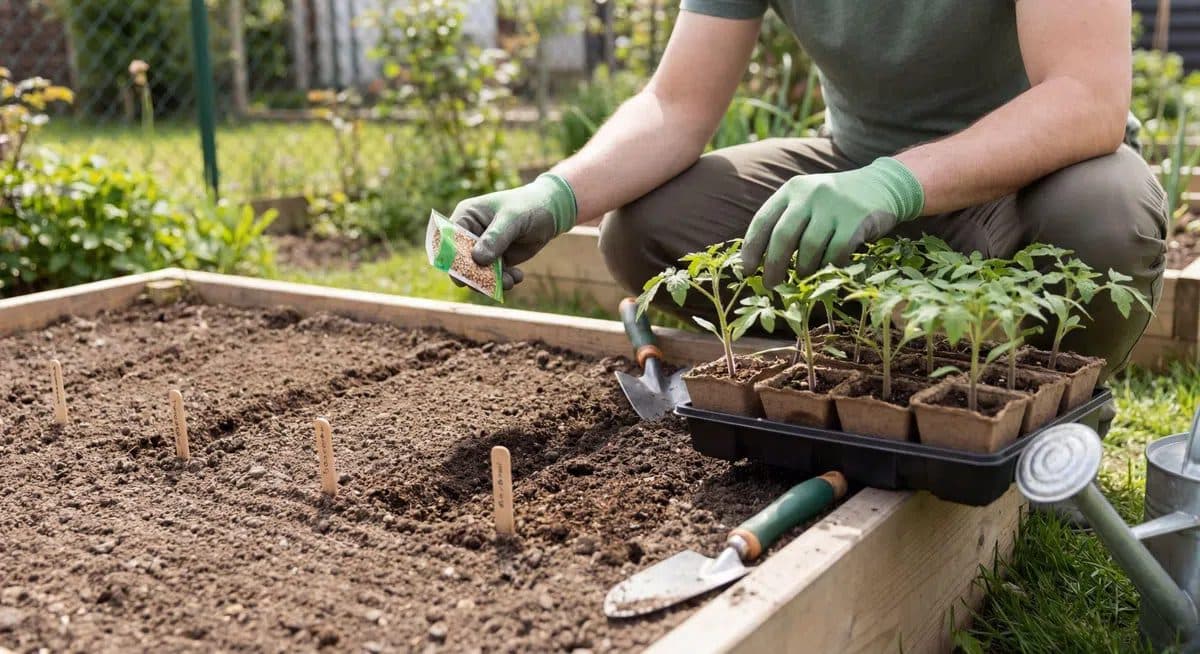
Direct sow: plant seeds where they will grow (outside in your container, bed, or ground).
Direct sow works in containers too — it just means “final spot.”
Start indoors: start seeds in small containers inside, then move them outside later.
Why choose direct sow (simple pros/cons) Pros
Simplest setup
No transplanting step
Many plants grow strong this way
Cons
Weather can slow things down
Seeds can be disturbed by heavy rain, wind, or pests
Why choose starting indoors (simple pros/cons) Pros
More control (warmth, moisture)
Can give you a head start before your local last frost date
Helpful for slower-starting crops
Cons
More gear and attention
You must transplant later
Transplant shock: plants can droop or pause growth after moving outside
Easiest beginner path
Simplest route: direct sow most of your garden.
If you want a head start: start indoors only a couple crops, and direct sow the rest.
If you want simplest: direct sow these (often easiest)
Radish (Cherry Belle)
Peas
Bush green beans
Cucumbers (Slicing, Pickling)
Zucchini
Yellow summer squash
Butternut squash
Sugar pie pumpkin
Sunflower
Arugula (optional)
Lettuce (optional)
Dill (optional)
Cilantro (optional)
If you want a head start: start indoors these (often helpful)
Tomatoes (Large Cherry, Roma)
Peppers (Bell, Jalapeño)
Basil (optional)
Broccoli (optional)
Cabbage (optional)
Either works (many people succeed either way)
Lettuce (Buttercrunch, Cimarron Red)
Kale
Swiss chard
Bok choy
Parsley
Use your local last frost date (conceptually)
Many gardeners wait to move warm-loving seedlings outside until after the local last frost date.
Cool-weather crops are often more flexible.
Minimal beginner indoor setup (keep it simple)
Small cups or a seed tray (with drainage)
Potting mix
Light source (bright window or a simple grow light)
Labels + marker
Gentle watering method (small cup, squeeze bottle, or light sprayer)
Your beginner plan
Pick one or two crops to start indoors (like tomatoes and peppers).
Direct sow the rest.
This keeps you learning without getting overwhelmed.
Common Mistakes
- Starting too many crops indoors and getting overwhelmed.
- Using outdoor dirt indoors instead of potting mix.
- Forgetting labels and mixing seedlings up.
- Transplanting stressed seedlings instead of fixing light and watering first.
Quick Tips
- Starting indoors is optional — you can still grow a great garden by direct sowing.
- Label indoor cups right away. It’s easy to forget what’s what.
- If seedlings look tall and stretchy indoors, they usually need more light.
- To reduce transplant shock: water before moving, start in shade, then move into more sun.
Mini Checklist
- I understand direct sow vs start indoors
- I chose a mostly direct-sow plan for simplicity
- I picked only one or two crops to start indoors (if any)
- I have a minimal indoor setup (cups/tray, potting mix, light, labels)
- I’m using my local last frost date to guide warm crops moving outside
- I expect a short adjustment period after transplanting