Why this matters
Most beginner plants don’t die from “not enough love.” They die from too much water, too often. A simple check-first habit keeps roots healthy and plants growing.
What to do
Use the check-first rule
Don’t water by a schedule.
Water based on how the soil feels right now.
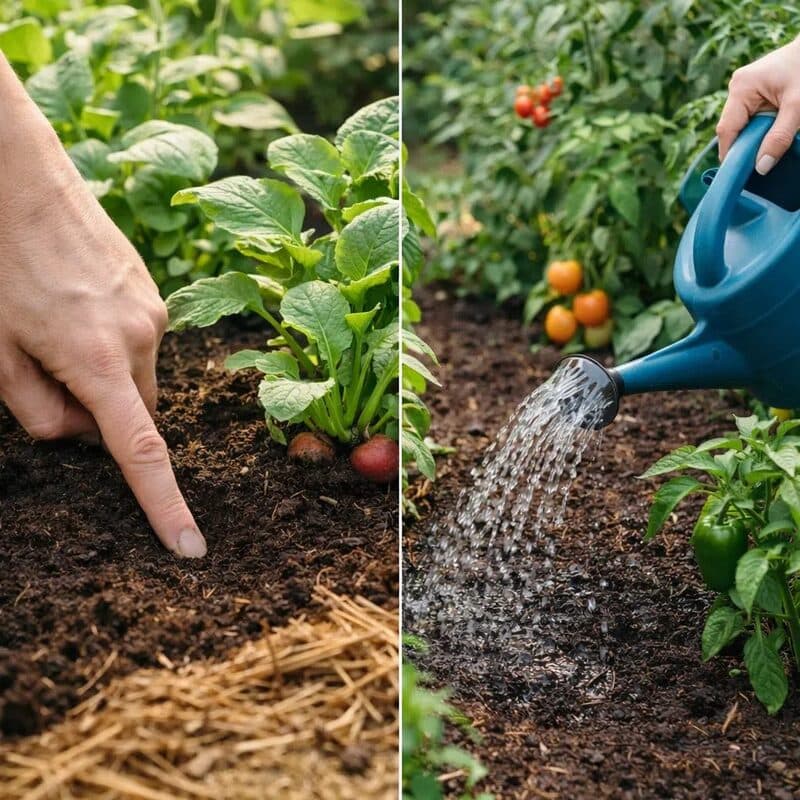
Do the finger check
Press your finger into the soil near the plant.
Check a little below the surface — the top can look dry while underneath is still wet.
If it feels dry, water.
If it feels damp, wait.
If it feels soggy or sticky, stop watering and let it dry out.
Aim for “wrung-out sponge” soil
The goal is damp, not muddy.
Water should soak in, not sit on top.
Water the soil, not the leaves
Pour near the base of the plant.
Wet leaves can invite problems, especially if they stay wet.
Morning is best if possible
It gives plants time to use water during the day.
It helps leaves dry faster if they get splashed.
Containers: what to do
Containers dry out faster, so check more often.
Make sure pots have drain holes. No drain holes = trapped water.
Water until the soil is evenly damp and extra water can drain out.
Empty any saucer that holds standing water.
Beds / in-ground: what to do
Water more deeply so moisture reaches roots.
Avoid constant light sprinkling — it keeps roots shallow and the surface wet.
Water slowly so it soaks in. If water runs off, pause and let it absorb, then continue.
Know the signs Signs you’re overwatering
Soil stays soggy or smells sour
Leaves look limp but the soil is wet
Yellowing leaves without new healthy growth
Fungus or algae on the soil surface
Signs you’re underwatering
Soil pulls away from pot edges or looks dusty
Leaves droop and perk up after watering
Crispy leaf edges or dry, curled leaves
Slow growth with dry soil
Common Mistakes
- Watering daily “just in case” instead of checking first.
- Using containers with no drain holes (or letting water sit in a saucer).
- Watering in hot sun so it evaporates fast and can stress plants.
- Light sprinkling over and over instead of watering the soil thoroughly.
Quick Tips
- Mulch (like shredded leaves or straw) helps keep moisture steady — don’t pile it against stems.
- If you’re unsure, wait and check again soon — plants handle “a little dry” better than “constantly wet.”
- Windy days dry soil faster, especially in containers.
- Use labels/notes: “watered,” “soil was dry,” “soil was damp.”
Mini Checklist
- I water based on soil feel, not a schedule
- I do a quick finger check before I water
- My soil feels like a wrung-out sponge (damp, not muddy)
- My containers have drain holes and don’t sit in standing water
- I water the soil near the base, not the leaves
- I avoid constant light sprinkling in beds/in-ground