Why This Is Easy
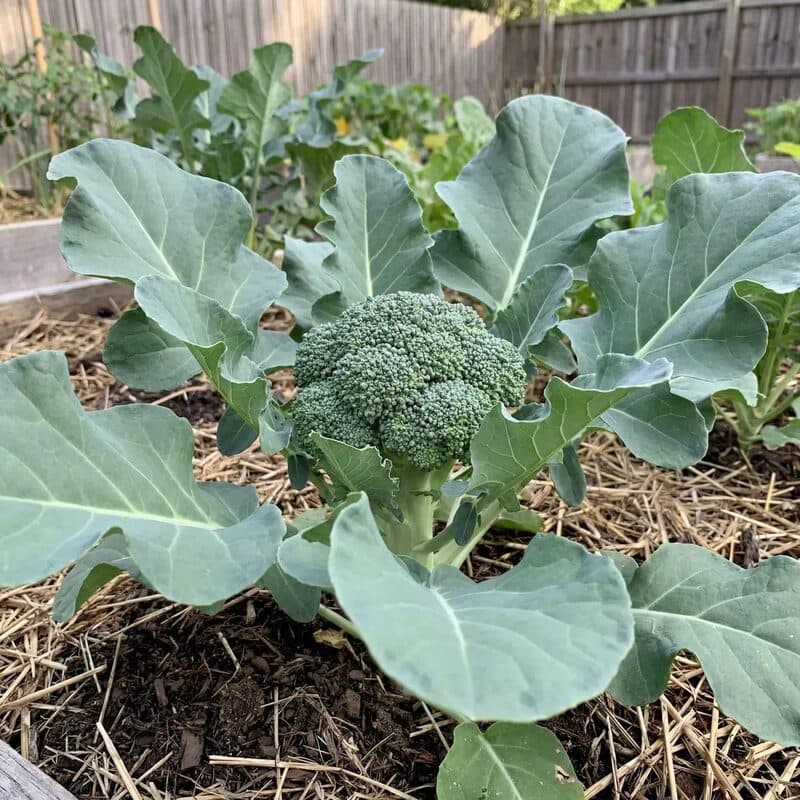
Clear harvest goal: Broccoli produces one main central head, making it easy to know when it’s ready to harvest.
Reliable in cool weather: With steady moisture and simple care, broccoli grows consistently in cooler conditions.
Planting Specs (Depth + Spacing)
- Depth: 1/4–1/2 inch
- Spacing / thinning: 18–24 inches between plants
- Row spacing: 24–36 inches between rows
Timeline (What to Expect)
- Sprout window: 4–10 days (may take longer in cool soil)
- When to thin: When seedlings have 2–3 true leaves (keep the strongest plant)
- When to transplant (if started indoors): About 4–6 weeks after sowing, once seedlings are sturdy with several true leaves
- First harvest window (central head): About 60–75 days after transplanting
- Regrowth / side-shoot note: After the main head is harvested, many plants continue producing smaller side shoots that can be harvested like mini heads.
When to Plant
Broccoli is a cool-weather crop, and timing is critical.
Spring: Plan planting so the main head forms before sustained heat arrives.
Fall: Plan planting so head formation happens as temperatures cool. If broccoli encounters heat while forming a head, it may rush growth, loosen, or lose quality.
How to Plant
Broccoli can be direct sown, but many beginners find starting indoors and transplanting easier.
Best beginner path (start indoors, then transplant):
Provides a head start during cool seasons.
Stronger seedlings are easier to protect from pests.
Transplants often form more reliable heads than very young direct-sown plants during variable weather.
Direct sow (effective, but requires more attention early):
Sow at the correct depth, keep the soil surface evenly moist, and thin to final spacing.
Be prepared to protect young seedlings from pests and temperature swings.
Care Made Simple
Watering Logic
Check-first watering:
If soil feels dry → Water
If damp → Wait
If soggy → Stop and allow soil to dry Broccoli prefers steady moisture, especially while the main head is developing. Large swings can cause stress.
Sun & Shade
Warm spell tip: During unexpected heat, light afternoon shade combined with consistent moisture helps protect head quality.
Feeding (if applicable)
Feeding: Compost mixed into the soil at planting, or a light top-dressing later, is usually sufficient.
Mulch: Helps maintain even moisture and suppress weeds.
Harvest (Keep It Producing)
Broccoli offers a main harvest followed by continued production.
Central head: Harvest when the head is firm and tight, before buds begin to open. Cut the stalk below the head using a clean knife.
Side shoots: Leave the plant in place after the main harvest. Smaller shoots often form along the sides and can be harvested while still tight.
Common Problems + Quick Fixes
Cabbage worms / loopers (chewed leaves, droppings):
Inspect leaf undersides regularly.
Hand-pick pests when found.
Use light netting or row cover to prevent egg-laying.
Aphids (clusters of tiny insects, sticky leaves):
Rinse off with water.
Remove heavily infested leaves.
Maintain steady moisture to reduce plant stress.
Flea beetles (“shot holes,” most damaging to young plants):
Use light netting or row cover early.
Keep growth steady, as stressed plants are more vulnerable.
Loose head or poor head formation (large leaves, weak head):
Common causes include heat stress, crowding, uneven moisture, or excess nitrogen.
Fix by improving spacing, maintaining steadier moisture, and planting for cooler conditions.
Bolting (rapid flowering):
Usually caused by stress, especially heat.
Harvest what is usable and adjust future planting so head formation occurs in cooler weather.
Quick Tips
- For the easiest results, start seeds indoors and transplant into cool weather.
- Harvest the central head slightly early rather than late—tight buds are ideal.
- Leave plants after the main harvest to continue collecting side shoots.
Mini Checklist
- Planted for cool weather so head forms before heat
- Seeds sown at the correct depth and thinned to proper spacing
- Used check-first watering (dry = water, damp = wait, soggy = stop)
- Weeds kept under control to reduce competition
- Leaf undersides inspected regularly for pests
- Light netting or row cover used if pests persist
- Central head harvested while tight, with side shoots harvested afterward
[#toc](Back to TOC)Plant Profile