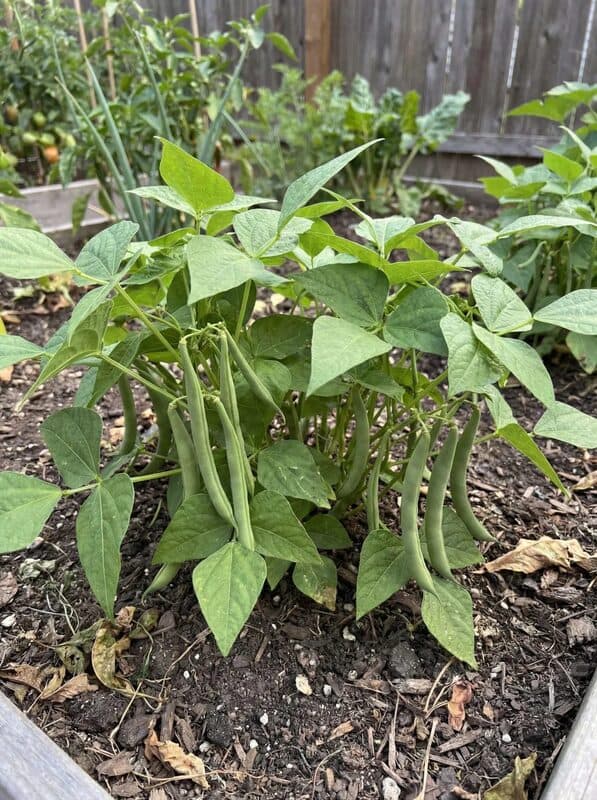
Why This Is Easy
Fast and rewarding: Bush beans produce quickly, with the first harvest often ready in under two months and heavy picking soon after.
No support needed: Unlike pole beans, bush beans stay compact and do not require trellises or stakes—just plant and harvest.
Planting Specs (Depth + Spacing)
- Depth: 1 inch
- Spacing: Thin seedlings to 3–4 inches apart.
Timeline (What to Expect)
- Sprout window: 7–10 days
- When to thin: When seedlings are 2–4 inches tall
- First harvest: 50–60 days
- Harvest window: About 2–3 weeks of heavy picking, after which production slows
- Heat note: Plants may drop blossoms or pause production when temperatures stay above 90°F.
When to Plant
Bush beans are a “warm-weather crop” and need warm soil to sprout and grow well.
Spring: Plant after your local last frost date and once soil has warmed to at least 60°F. Cold, wet soil can cause seeds to rot.
Summer: The main growing season. For an extended harvest, plant new batches every 2–3 weeks through early summer.
Fall: A late-summer planting can produce a fall crop if there is enough time before the first frost.
Cold warning: Do not plant too early. Bean seeds rot easily in cold, wet soil.
How to Plant
Direct sowing is the simplest and most reliable method, as beans do not transplant well.
Prepare: Choose a sunny location with well-draining soil and loosen the top layer.
Sow: Push seeds about 1 inch deep, spacing them 2–3 inches apart in the row.
Cover: Fill soil over the seeds and press gently for good contact.
Water: Water once after planting, then wait until sprouts appear unless conditions are very hot and dry. Overwatering before sprouting can cause rot.
Rows: Space rows 18–24 inches apart for easy access during harvest.
Care Made Simple
Watering Logic
Check-First Watering: Beans need consistent moisture, especially during flowering and pod formation.
If soil feels dry → Water deeply.
If damp → Wait.
Tip: Dry soil during flowering can cause blossoms to drop and pods to become tough. Keep moisture even.
Sun & Shade
Sun & Heat:
Beans prefer full sun, with at least 6 hours daily.
During extreme heat (above 90°F), plants may temporarily stop setting pods and will resume when temperatures cool.
Feeding (if applicable)
Feeding: Beans fix their own nitrogen and require little fertilizer. Compost mixed into the soil at planting is usually sufficient. Avoid high-nitrogen fertilizers, which promote leaves over pods.
Harvest (Keep It Producing)
Pick Early and Often: Harvest pods when they are firm, crisp, and about 5–6 inches long, before seeds inside begin to bulge.
Don’t Wait: Overmature pods signal the plant to stop producing.
Use Two Hands: Support the stem with one hand while picking with the other to avoid breaking brittle branches.
Harvest Dry: Pick when foliage is dry to reduce disease spread.
Flavor Note: Young, slender pods are the most tender and sweet. Check plants every 2–3 days during peak production.
Common Problems + Quick Fixes
Seeds didn’t sprout:
Cause: Soil was too cold or too wet, leading to rot.
Action: Wait for warmer soil (at least 60°F) before replanting and avoid excess watering before emergence.
Blossom drop (flowers fall without forming beans):
Cause: Usually heat stress (temperatures above 90°F) or drought.
Action: Keep soil evenly moist and wait for cooler conditions.
Tough, stringy pods:
Cause: Pods were harvested too late or plants were stressed by dry soil.
Action: Harvest earlier and maintain consistent moisture.
Holes in leaves:
Cause: Mexican bean beetles or other chewing pests.
Action: Check leaf undersides, hand-pick pests, remove heavily damaged leaves, and keep the area clean.
Yellowing leaves or spots:
Cause: Often a fungal or bacterial issue, especially in wet conditions.
Action: Avoid wetting leaves during watering, remove affected plants, do not harvest when plants are wet, and rotate crops next season.
Quick Tips
- Direct Sow Only: Beans have delicate roots and grow best when planted in place.
- Succession Planting: Sow new rows every 2–3 weeks through early summer for a longer harvest.
- Keep Picking: Frequent harvesting keeps plants producing.
- Harvest Dry: Picking dry plants helps prevent disease spread.
Mini Checklist
- Planted after last frost once soil reached 60°F
- Seeds planted 1 inch deep
- Watered once at planting, then waited for sprouts
- Soil kept evenly moist during flowering
- Harvested every 2–3 days during peak production
- Picked pods before seeds bulged
- Used two hands to avoid breaking branches
- Monitored for pests and removed damaged leaves
[#toc](Back to TOC)Plant Profile