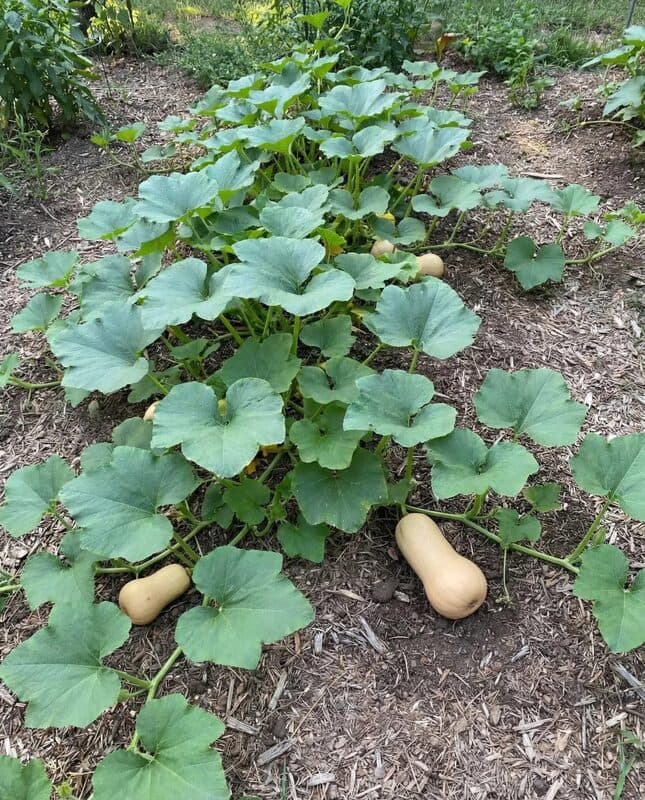
Why This Is Easy
Tough and forgiving: Once established, butternut squash vines grow vigorously with minimal attention, and this variety has natural resistance to vine borers.
Big reward for patience: Just a few plants can produce many squash that store well for months, providing homegrown food into winter.
Planting Specs (Depth + Spacing)
- Depth: 1 inch
- Spacing: Thin seedlings to 24–36 inches apart. Rows should be spaced 5–6 feet apart, as vines spread widely.
Timeline (What to Expect)
- Sprout window: 7–14 days
- When to thin: When seedlings have 2–3 true leaves
- First harvest: 85–100 days
- Space needed: Vines can spread 6–10 feet or more
- Frost note: Harvest before hard frost. Plants are killed by freezing temperatures.
When to Plant
Butternut squash is a warm-weather, long-season crop. It requires warm soil and a long frost-free period to mature.
Spring: Plant after your last frost date once soil has warmed to at least 65–70°F. Cold soil can cause seeds to rot.
Short-season areas: Start seeds indoors 3–4 weeks before your last frost date, then transplant after frost danger has passed. Handle seedlings gently, as squash roots do not like disturbance.
Fall: Not suited for fall planting. Butternut squash needs the full warm season to mature before frost.
Cold warning: Seeds and young seedlings are very tender. Do not rush planting—wait for reliably warm conditions.
How to Plant
Direct sowing is the simplest option if your growing season is long enough. In shorter seasons, starting indoors works well.
Prepare: Select a sunny location with well-draining soil rich in compost. Butternut squash are heavy feeders.
Sow: Push seeds about 1 inch deep, planting 2–3 seeds per spot spaced 3–4 feet apart.
Cover: Fill soil over seeds and press gently for good contact.
Water: Water thoroughly after planting and keep soil moist, but not soggy, until sprouts appear.
Thin: Once seedlings have 2–3 true leaves, thin to the strongest plant per spot.
If starting indoors: Use biodegradable pots that can be planted directly into the ground to avoid disturbing roots. Transplant after the last frost when nighttime temperatures stay above 50°F.
Care Made Simple
Watering Logic
Check-First Watering: Squash need steady moisture, especially during flowering and fruit development.
If soil feels dry 1–2 inches down → Water deeply, soaking 8–10 inches into the soil.
If damp → Wait.
Tip: Water the soil, not the leaves. Wet foliage encourages fungal issues such as powdery mildew.
Sun & Shade
Butternut squash prefer full sun, with at least 6–8 hours daily.
Plants tolerate summer heat well and benefit from ample space to sprawl.
Feeding (if applicable)
Feeding: Work compost into the soil before planting. Side-dress with compost or a balanced fertilizer when vines begin to run and again when fruit starts to form.
Harvest (Keep It Producing)
Wait for Full Maturity: Unlike summer squash, butternut squash must fully ripen on the vine. Harvest when:
Skin turns deep tan or beige
Skin is hard and cannot be dented with a fingernail
Stem appears dry and corky
Cut, Don’t Pull: Use a sharp knife or pruners and leave about 2 inches of stem attached. Broken stems increase the risk of rot during storage.
Timing: Harvest before hard frost. Light frost usually does not harm the fruit, but freezing temperatures will.
Cure for Storage: After harvest, cure squash in a warm, dry place for 7–10 days. This hardens the skin and improves flavor. Store cured squash in a cool, dark area (around 50–55°F) for up to 3 months or longer.
Common Problems + Quick Fixes
Seeds didn’t sprout:
Cause: Soil was too cold or too wet, causing seeds to rot.
Action: Wait for soil temperatures of at least 65–70°F and avoid overwatering before emergence.
Flowers but no fruit (poor pollination):
Cause: Squash produce separate male and female flowers, with males appearing first. Limited pollinator activity can delay fruit set.
Action: Allow time for female flowers to appear, usually about a week later. If needed, hand-pollinate by transferring pollen from a male flower to the center of a female flower.
Wilting vines (possible vine borer):
Cause: Squash vine borers tunnel into stems, causing sudden wilting. Sawdust-like debris near the stem base is a common sign.
Action: Although Waltham Butternut has some resistance, inspect stems regularly. If detected early, remove the borer and bury the damaged section to encourage re-rooting. Remove and destroy affected plants at the end of the season.
White powder on leaves (powdery mildew):
Cause: A common fungal disease, especially in humid conditions or when leaves stay wet.
Action: Water at the base of plants, improve air circulation, and remove heavily affected leaves. Late-season mildew often has little impact if fruit is nearly mature.
Squash bugs:
Cause: Gray-brown insects that weaken plants by feeding on sap.
Action: Check undersides of leaves for bronze-colored egg clusters. Crush eggs and hand-pick adults. Keep the area free of debris where bugs hide.
Quick Tips
- Give Them Room: Vines can spread 6–10 feet or more. Avoid crowding.
- Cure Before Storing: Proper curing improves flavor and storage life.
- Leave the Stem On: Keeping a 2-inch stem helps prevent rot in storage.
- Harvest Before Hard Frost: Light frost is tolerable, but hard frost damages fruit.
Mini Checklist
- Planted after last frost once soil reached 65–70°F
- Seeds planted 1 inch deep
- Seedlings thinned to one strong plant per spot
- Soil kept moist but not soggy, watered at the base
- Compost added at planting and mid-season
- Pollination observed (male flowers first, then female)
- Harvested when skin turned tan and hard, before hard frost
- Left about 2 inches of stem attached
- Cured in a warm, dry place for 7–10 days before storage
[#toc](Back to TOC)Plant Profile