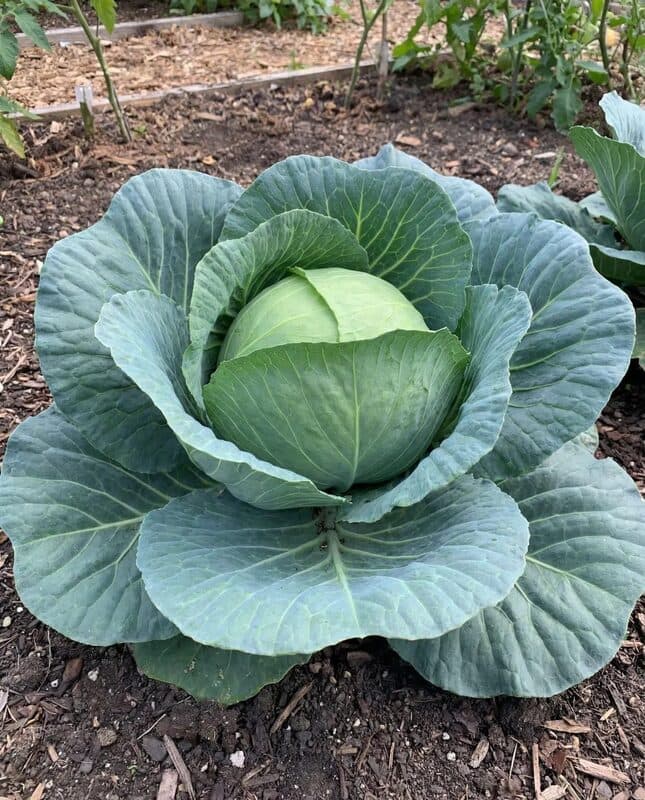
Why This Is Easy
Thrives in cool weather: Cabbage grows best outside of peak summer heat and does not require perfect warm-season conditions.
Clear success marker: One healthy plant produces one solid head, making progress and harvest timing easy to recognize.
Planting Specs (Depth + Spacing)
- Depth: Sow seeds 1/4–1/2 inch deep
- Spacing (for full heads): 18–24 inches between plants
- Row spacing: 24–30 inches between rows
- Direct sow shortcut: Sow several seeds per spot, then thin to the strongest single plant at final spacing
Timeline (What to Expect)
- Sprout window: 4–10 days (may take longer in cool soil)
- When to thin: When seedlings have 2–4 true leaves (keep the strongest plant)
- When to transplant (if started indoors): About 4–6 weeks after sowing, once plants are sturdy with several true leaves
- Harvest window: Many varieties are ready about 70–100+ days after transplanting
- Some early varieties mature sooner
- If direct sown: Expect harvest to be later than transplanted cabbage
When to Plant
Cabbage is a cool-weather crop. The simplest approach is to plan around moderate temperatures.
Spring: Plant so growth and head formation happen before sustained heat arrives.
Fall: Plant so heads form as temperatures cool again. If cabbage grows in prolonged heat, it may produce leaves but struggle to form a tight, sweet head.
How to Plant
Best beginner method (start indoors → transplant):
Start seeds in small containers.
Provide bright light to keep seedlings compact rather than tall and weak.
Harden off seedlings gradually, then transplant into the garden.
Direct sow option (works, but slower):
Sow seeds at the proper depth, keep soil lightly moist, and thin to final spacing.
Care Made Simple
Watering Logic
Check-first watering:
If soil feels dry → Water
If damp → Wait
If soggy → Stop and allow soil to dry slightly Aim for steady moisture. Large swings between dry and wet conditions can cause problems later.
Sun & Shade
Feeding (if applicable)
Other simple care:
Keep weeds under control so cabbage does not compete for water and nutrients.
Compost mixed into the soil is usually sufficient for beginner gardens.
Mulch is optional but helpful for maintaining even moisture and reducing weeds.
Harvest (Keep It Producing)
Harvest when the head feels firm and tight.
Cut the head at the base using a clean knife.
After harvest:
Most cabbage plants produce a single head, which is normal.
Occasionally, smaller side heads or sprouts may form if the stem and some outer leaves are left in place. Consider this a bonus rather than an expectation.
Common Problems + Quick Fixes
Cabbage worms / loopers (holes, chewed edges):
Inspect undersides of leaves regularly.
Hand-pick pests when found.
Use light netting or row cover to prevent egg-laying.
Aphids (clusters of small insects, sticky leaves):
Rinse off with water.
Remove heavily infested leaves if needed.
Splitting heads (cracks near harvest):
Usually caused by moisture swings, such as a dry period followed by heavy watering or rain.
Keep watering more consistent and harvest promptly once heads are firm.
Bolting (flower stalk instead of a head):
Often triggered when young plants experience extended cold followed by warm weather.
Protect young plants from hard cold snaps and maintain steady growth.
Loose heads or no head forming:
Most often caused by excess heat, crowding, uneven moisture, or weak early growth.
Address basics first: spacing, moisture consistency, weed control, and adequate sunlight.
Quick Tips
- For the easiest results, start seeds indoors and transplant.
- Thin early—crowding is one of the fastest ways to end up with small or loose heads.
- Harvest promptly once the head is firm to reduce the risk of splitting.
Mini Checklist
- Selected a cool-weather planting window (spring or fall)
- Seeds sown at the correct depth
- Seedlings thinned to proper spacing
- Used check-first watering (dry = water, damp = wait, soggy = stop)
- Weeds kept under control and moisture kept steady
- Leaf undersides inspected regularly for pests
- Heads harvested when firm, using a clean cut
[#toc](Back to TOC)Plant Profile