Why This Is Easy
Reliable producer: This classic variety has been a home garden favorite since 1928 because it performs well across a wide range of conditions.
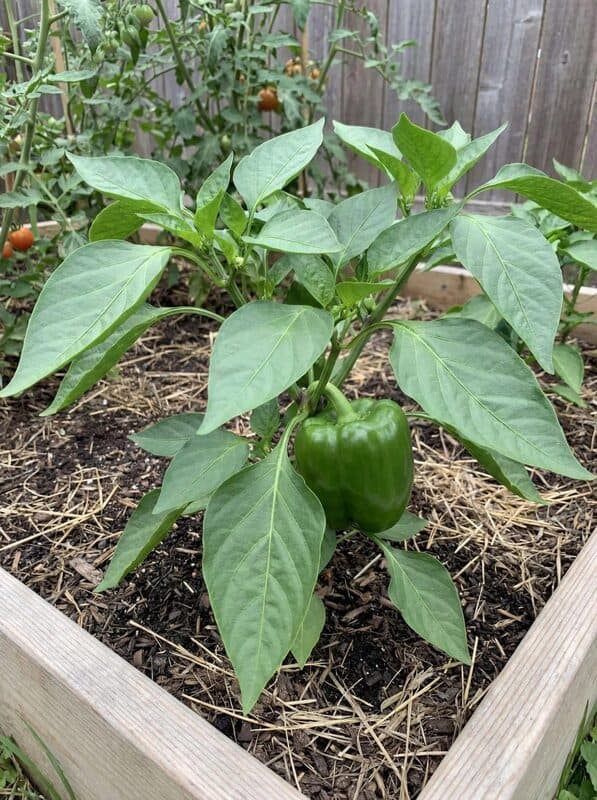
Beginner-friendly harvest: Peppers can be picked green or left to ripen red. Both stages are usable and flavorful, so timing does not need to be perfect.
Planting Specs (Depth + Spacing)
- Depth: 1/4 inch
- Spacing: Thin seedlings or space transplants 12–18 inches apart.
Timeline (What to Expect)
- Sprout window: 10–21 days (peppers are slow to germinate—keep soil warm and be patient)
- When to thin/transplant: When seedlings have 2–3 sets of true leaves
- First harvest (green): 70–75 days from transplant
- Full color (red): 80–90 days from transplant
- Cold risk: Peppers are killed by frost and struggle below 50°F. Growth slows noticeably when nights are cool.
When to Plant
Bell peppers are a “warm-weather crop.” They require consistent warmth to grow well.
Spring: Start seeds indoors 8 weeks before your last frost date. Transplant outdoors only after all frost risk has passed and nighttime temperatures stay above 50°F.
Summer: The main growing season. Once established in warm conditions, peppers produce steadily.
Cold warning: Do not rush peppers outdoors. Cold soil and cool nights stunt growth and can set plants back for weeks. Wait until conditions are reliably warm.
How to Plant
Starting indoors is strongly recommended, as peppers need a long, warm season.
Start indoors: Sow seeds 8 weeks before your last frost date. Plant 1/4 inch deep in small containers filled with seed-starting mix. Keep soil warm (80–85°F) for best germination; a heat mat is helpful. Provide bright light once seedlings emerge.
Harden off: Gradually expose seedlings to outdoor conditions over 7–10 days before transplanting.
Transplant: Move plants outdoors when daytime temperatures reach at least 65°F and nights remain above 50°F. Handle roots gently.
Direct sow (only in very warm climates): Wait until soil is consistently warm. Direct sowing is possible but results in a later harvest.
Care Made Simple
Watering Logic
Check-First Watering: Peppers need steady moisture, especially during flowering and fruiting.
If soil feels dry → Water deeply.
If damp → Wait.
Tip: Uneven watering is the most common cause of blossom end rot (dark, sunken spots on the bottom of peppers). Keep moisture consistent.
Sun & Shade
Sun & Heat:
Peppers prefer full sun, with at least 6–8 hours daily.
In very hot climates (above 90°F), fruit may develop sunscald (papery, bleached patches). Healthy foliage helps shade fruit, so avoid over-pruning leaves.
Feeding (if applicable)
Feeding: Peppers are moderate feeders. Compost mixed into the soil at planting is usually sufficient. Avoid excess nitrogen, which promotes leaf growth at the expense of fruit.
Harvest (Keep It Producing)
Green or Red—Your Choice: California Wonder peppers begin glossy green and turn red if left on the plant longer. Green peppers have a classic bell pepper flavor; red peppers are sweeter.
Pick When Firm: Harvest when peppers feel firm and reach full size (about 4 inches). Use scissors or a knife to cut the stem rather than pulling, which can damage the plant.
Keep Picking: Regular harvesting encourages continued production. Do not leave ripe peppers on the plant for too long.
Flavor Note: Peppers become sweeter the longer they stay on the plant, but harvest before they turn soft or wrinkled.
Common Problems + Quick Fixes
Blossom End Rot (dark, sunken spot on bottom):
What it is: A calcium uptake issue caused by inconsistent watering, not a disease.
Action: Water more evenly and mulch around plants to help stabilize moisture. Affected peppers are still safe to eat if the damaged portion is removed.
Sunscald (papery, bleached patches on fruit):
Cause: Excessive direct sun on exposed fruit, especially during heat waves.
Action: Maintain healthy foliage to shade fruit. Avoid removing too many leaves. Use shade cloth during extreme heat if needed.
Blossom Drop (flowers fall without setting fruit):
Cause: Temperature stress. Peppers often drop blossoms when nights are below 60°F or days exceed 90°F.
Action: Wait for temperatures to stabilize. Plants usually resume fruiting when conditions improve.
Slow Growth / No Peppers:
Cause: Most often cold temperatures or excess nitrogen fertilizer.
Action: Be patient during cool weather and avoid high-nitrogen feeding.
Aphids or other pests:
Action: Check undersides of leaves regularly. Spray pests off with water and keep the growing area clean and weed-free.
Quick Tips
- Warmth Is Everything: Avoid planting too early. Peppers grown in cold soil often never fully recover.
- Support Heavy Plants: As fruit develops, plants may become top-heavy. A small stake or cage helps prevent breakage.
- Harvest Before Frost: Peppers are killed by frost. When cold weather approaches, harvest all remaining fruit. Even green peppers can ripen indoors on a sunny windowsill.
Mini Checklist
- Seeds started indoors 8 weeks before last frost
- Soil kept warm (80–85°F) during germination
- Seedlings hardened off before transplanting
- Transplanted only after nights stay above 50°F
- Planted in full sun with good drainage
- Soil kept consistently moist (not soggy)
- Harvested regularly to encourage more fruit
- Watched for blossom end rot and watered evenly
[#toc](Back to TOC)Plant Profile