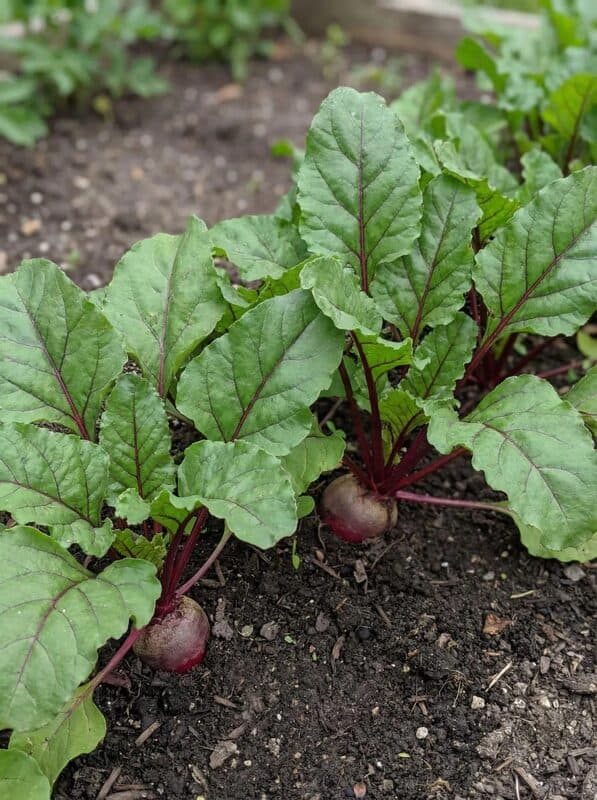
Planting Specs (Depth + Spacing)
- Depth: 1/2 inch
- Spacing / thinning: Thin to 2–3 inches apart
Timeline (What to Expect)
- Sprout window: 7–14 days
- When to thin: When seedlings are about 2 inches tall (or once they have true leaves and feel sturdy)
- Harvest window (roots): About 50–70 days from sowing
When to Plant
Beets are a cool-weather crop. Plant in spring once the soil is workable, and plant again later for a fall crop as days begin to cool. Beets generally struggle more in heat than in cool conditions, so aim for the cooler parts of the season.
How to Plant
Direct sowing is the easiest option for beginners.
Prepare the bed so the soil is loose and drains well.
Smooth the surface so seedlings can push through easily without getting trapped under soil clumps.
Sow seeds at the depth listed above, cover gently, and press the soil lightly for good seed-to-soil contact.
Important beet “seed” tip: What looks like a single seed is usually a small cluster that can sprout multiple seedlings in the same spot. This is why thinning is especially important with beets.
Transplanting: Beets can be transplanted carefully, but direct sowing is simpler and usually produces straighter roots.
Care Made Simple
Watering Logic Beets are low-maintenance once established. Steady moisture keeps roots tender.
Check-first watering:
If soil feels dry → Water
If damp → Wait
If soggy → Stop and allow soil to dry
More simple care:
Keep moisture consistent, especially while seedlings are small.
Sun & Shade If heat arrives, light afternoon shade can help reduce plant stress.
Feeding (if applicable) Mixing compost into the soil before planting is usually sufficient. Keep weeds under control early, as young beets do not compete well.
Harvest (Keep It Producing)
You can harvest beets in two simple ways:
Greens
Pick a few leaves from each plant as needed.
Avoid stripping plants bare—leave enough leaves for the root to continue growing.
Roots
Harvest when the root looks and feels like a usable size.
If soil is firm, loosen gently before pulling to prevent snapping roots.
Harvest some plants early and leave others to continue sizing up.
Overview
Why This Is Easy Beets grow well in cool weather and require no support or special care. You can harvest both the greens and the roots, so you still get food even if the roots stay smaller than expected.
Common Problems + Quick Fixes
Nothing sprouted yet
Avoid replanting too quickly—compare timing to the sprout window above.
Keep the soil surface evenly moist (not soggy).
If the surface crusted, gently rough up the top layer without digging deeply.
If seeds likely dried out repeatedly or washed away, reseed a small section and keep it steadily moist.
Crowding (most common beet mistake)
Seed clusters often cause multiple seedlings to emerge in one spot.
Thin at the stage listed in the Timeline.
Thin gently by snipping extras at soil level, or pull the smallest seedlings when soil is damp to reduce disturbance.
Woody or tough roots
Usually caused by stress from uneven moisture, heat, or slow growth.
Fix: Keep moisture more consistent and harvest before roots remain under stress for too long.
Cracking roots
Often caused by moisture swings (very dry followed by very wet).
Fix: Use check-first watering to keep moisture more even.
Leaf damage (see-through, blotchy, or chewed)
Remove heavily damaged leaves.
Check undersides of leaves regularly.
Rinse plants with a firm spray of water.
Use a light cover or netting if pests continue to return.
Quick Tips
- Expect multiple seedlings per “seed” and plan to thin.
- Keep the soil surface consistently moist until seedlings are clearly established.
- Harvest gradually—greens first, roots as they size up.
- Steady moisture helps prevent tough roots and cracking.
Mini Checklist
- Direct sown at the correct depth
- Soil surface kept evenly moist through the sprout window
- Watched for multiple seedlings per spot (seed clusters)
- Thinned at the stage listed in the Timeline
- Used check-first watering (dry = water, damp = wait, soggy = stop)
- Weeded early to prevent competition
- Harvested greens and roots as needed before stress affects quality
[#toc](Back to TOC)Plant Profile