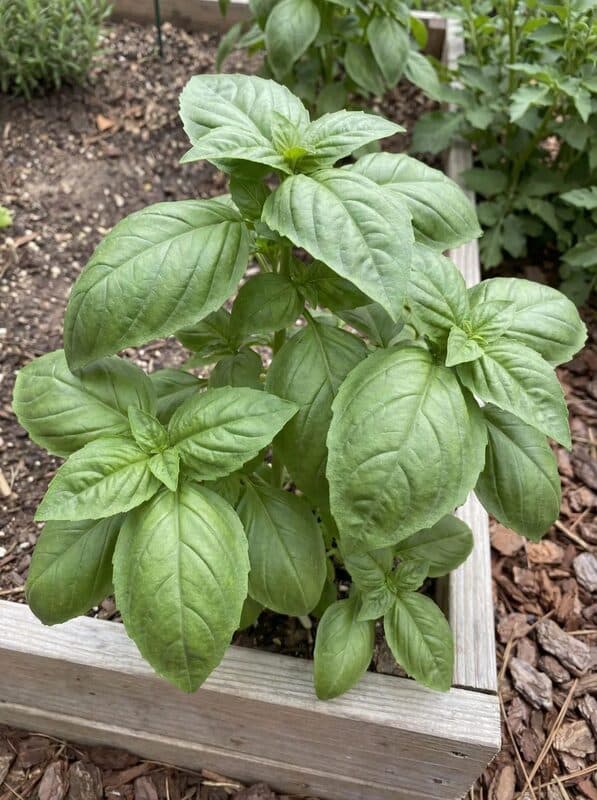
Why This Is Easy
Productive and rewarding: Once established, basil produces steady harvests of large, fragrant leaves throughout the summer.
Forgiving: Regularly pinching the stems encourages branching, allowing for multiple harvests from a single planting.
Planting Specs (Depth + Spacing)
- Depth: 1/4 inch
- Spacing: Thin seedlings to 10–12 inches apart.
Timeline (What to Expect)
- Sprout window: 5–10 days
- When to thin: When seedlings are 2–3 inches tall
- First harvest: 25–30 days (once plants reach 6–8 inches tall)
- Full maturity: 60–75 days
- Cold risk: Quality drops and plants may be damaged if temperatures fall below 50°F. Basil is killed by frost.
When to Plant
Basil is a “warm-weather crop.” It grows best in heat and does not tolerate cold.
Spring: Plant only after your local last frost date has passed and soil temperatures reach at least 60°F. There is no benefit to planting early—basil dislikes cold soil.
Summer: The main growing season. Basil thrives when temperatures stay consistently warm.
Cold warning: Basil struggles below 50°F and is killed by frost. Even brief cold exposure can cause leaves to turn black.
How to Plant
Either method works, though starting indoors provides an earlier harvest.
Start indoors (recommended): Sow seeds 4–6 weeks before your last frost date in small containers filled with seed-starting mix. Keep soil warm (65–70°F) for best germination. Transplant outdoors only after all frost danger has passed.
Direct sow: Wait until after your last frost date and once soil has warmed. Scatter seeds thinly over prepared soil.
Cover: Sprinkle a light layer of soil over the seeds (about 1/4 inch).
Pat: Gently press the soil so seeds make contact with the soil.
Water: Mist gently to avoid washing seeds away.
Care Made Simple
Watering Logic
Check-First Watering: Basil needs consistent moisture to remain productive.
If soil feels dry → Water.
If damp → Wait.
Tip: Basil prefers moist soil but does not tolerate soggy roots. Avoid letting soil dry out completely, as stress encourages early bolting.
Sun & Shade
Sun & Heat:
Basil prefers full sun, with at least 6 hours of direct light daily.
In very hot climates (above 90°F), light afternoon shade can help reduce stress.
Feeding (if applicable)
Feeding: Usually unnecessary if planted in good soil or compost. Basil does not require heavy feeding.
Harvest (Keep It Producing)
Pinch-and-Grow Method: For best results, pinch or snip stems just above a set of leaves.
Leave the Base: Do not strip the plant bare. Leave at least 2–3 sets of leaves on each stem so the plant can continue growing.
Pinch Early and Often: Begin harvesting once the plant has several sets of leaves. Regular pinching promotes bushy growth and delays flowering.
Flavor Note: Harvest in the morning, when essential oils are strongest, for the best flavor.
Common Problems + Quick Fixes
Bolting (Flower stalk appears):
What it is: The plant sends up a flower spike as it prepares to go to seed. This often happens during long, hot days or when the plant is stressed.
Action: Pinch off flower buds as soon as they appear. Regular harvesting helps delay bolting. Once flowers fully open, leaf flavor declines.
Blackened leaves:
Cause: Cold damage. Even temperatures in the 40s can trigger this.
Action: Remove damaged leaves and protect plants if cold nights are expected. If frost threatens, harvest the entire plant or bring containers indoors.
Holes in leaves:
Cause: Slugs, Japanese beetles, or other chewing pests.
Action: Check leaf undersides and hand-pick pests. Rinse plants with a gentle spray of water and keep the area clean and weed-free.
Yellowing leaves:
Cause: Often overwatering or poor drainage.
Action: Check soil moisture and drainage. Ensure containers have drainage holes and soil is not staying soggy.
Quick Tips
- Pinching = More Basil: Frequent harvesting leads to bushier, more productive plants.
- Warm Soil Matters: Planting too early slows growth and can stunt basil.
- Harvest Before Frost: Basil is killed by frost. When cold weather approaches, harvest everything and preserve it by freezing, drying, or making pesto.
Mini Checklist
- Soil is loosened and warm (at least 60°F)
- Seeds planted shallow (1/4 inch)
- Planted after last frost date—basil does not tolerate cold
- Soil kept consistently moist (not soggy)
- Seedlings thinned to prevent overcrowding
- Pinching and harvesting done regularly to encourage bushy growth
- Flower buds removed promptly
[#toc](Back to TOC)Plant Profile