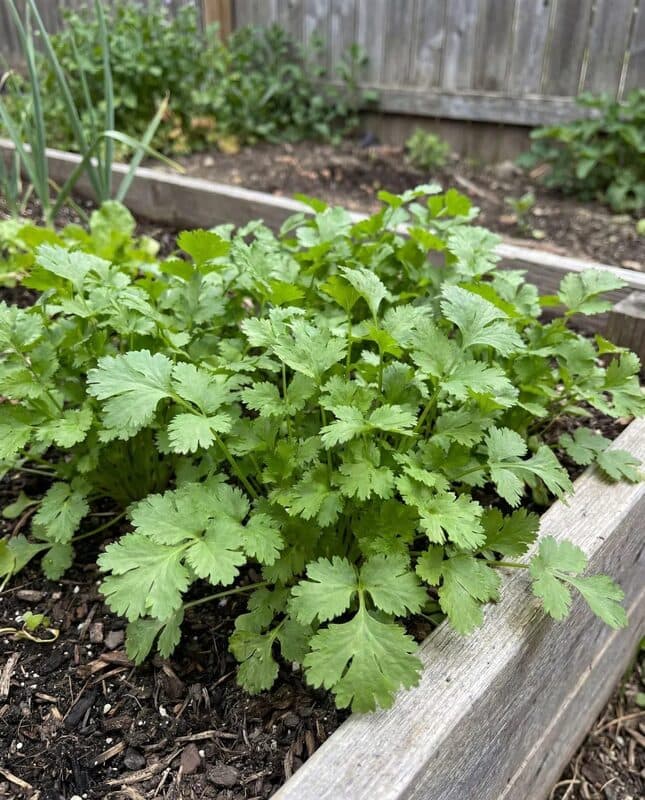
Why This Is Easy
Two harvests from one plant: You can harvest fresh cilantro leaves first, then allow the plant to flower and collect coriander seeds later—two flavors from a single planting.
Cool-weather friendly: Cilantro grows best in spring and fall, when many other herbs slow down, and it tolerates light frost.
Planting Specs (Depth + Spacing)
- Depth: 1/4 to 1/2 inch
- Spacing: Thin seedlings to 2–4 inches apart for leaf harvest, or 6–8 inches apart if growing primarily for seed.
Timeline (What to Expect)
- Sprout window: 7–14 days (up to 21 days in cooler soil)
- When to thin: When seedlings are 2–3 inches tall
- First leaf harvest: 3–4 weeks after sprouting, once plants reach about 6 inches tall
- Seed harvest (coriander): About 90–100 days from planting, after flowers fade and seeds turn brown
- Bolting note: Cilantro flowers and goes to seed quickly in heat. This is normal and expected.
When to Plant
Cilantro is a cool-weather herb that performs best in spring and fall.
Spring: Plant as soon as the soil can be worked, about 2–3 weeks before your last frost date. Cilantro tolerates light frost.
Summer: Not ideal. Temperatures above 75–80°F trigger rapid bolting. Summer plantings usually give only a short leaf harvest before flowering.
Fall: An excellent planting window. Cooler temperatures extend leaf production. Plant 6–8 weeks before your first frost.
Succession planting: For a steady supply of leaves, sow new seeds every 2–3 weeks during spring and again in fall.
How to Plant
Direct sowing works best, as cilantro has a taproot and does not transplant well.
Prepare: Choose a location with full sun to part shade. In warmer climates, afternoon shade helps slow bolting. Loosen soil and mix in compost.
Optional seed prep: Cilantro “seeds” are actually two seeds joined together. Gently crushing the husk and soaking seeds for 24 hours can speed germination.
Sow: Plant seeds 1/4 to 1/2 inch deep, spaced about 1–2 inches apart.
Cover: Fill soil over seeds and press gently. Seeds need darkness to germinate.
Water: Water gently after planting and keep soil moist, not soggy, until sprouts appear.
Rows: Space rows 12–15 inches apart.
Care Made Simple
Watering Logic
Check-First Watering: Cilantro prefers consistent moisture but does not like soggy soil.
If soil feels dry → Water.
If damp → Wait.
Tip: Mulching around plants helps keep soil cool and moist, which can delay bolting.
Sun & Shade
Sun & Heat:
Full sun works well in cool weather.
In warmer conditions, afternoon shade helps extend the leaf harvest.
When temperatures rise above 75–80°F, bolting is expected. Flowers are useful for pollinators, and seeds can be harvested later.
Feeding (if applicable)
Feeding: Cilantro is a light feeder. A small amount of balanced fertilizer once or twice during the season is sufficient. Avoid overfeeding, which can reduce flavor.
Harvest (Keep It Producing)
Leaves (Cilantro):
Begin harvesting when plants reach about 6 inches tall.
Cut the top 2–3 inches of stems to encourage bushier growth and delay bolting.
Harvest regularly. Younger leaves have the best flavor.
Once a thick central stalk forms and leaves become feathery, bolting has begun and leaf quality declines.
Seeds (Coriander):
Allow plants to flower. Small white or pale pink blooms will appear.
After flowers fade, green seeds form and gradually turn light brown.
Cut seed heads and place them upside down in a paper bag to dry for 1–2 weeks. Seeds will fall into the bag as they dry.
Store dried seeds in a sealed container for cooking or replanting.
Common Problems + Quick Fixes
Bolting too fast:
Cause: Heat, long days, or transplant stress.
Action: This is normal for cilantro. Plant during cooler seasons, provide afternoon shade, keep soil cool with mulch, and use succession planting for continued harvest.
Seeds didn’t sprout:
Cause: Seeds planted too deep, soil drying out, or old seed.
Action: Plant only 1/4–1/2 inch deep and keep soil evenly moist. Soaking seeds before planting can help speed germination.
Yellowing leaves or sticky residue (aphids):
Cause: Aphids feeding on stems and leaf undersides.
Action: Rinse off with a strong spray of water and remove heavily affected leaves.
Powdery white spots on leaves:
Cause: Powdery mildew, favored by humidity and poor airflow.
Action: Thin plants for better air circulation, water at the soil level, and remove affected leaves.
Leaf spots (brown or black):
Cause: Bacterial leaf spot, often associated with wet conditions or overhead watering.
Action: Remove infected plants and avoid wetting leaves. Rotate crops the following year.
Quick Tips
- Direct sow only—cilantro does not transplant well.
- Use succession planting every 2–3 weeks for a steady leaf supply.
- Bolting is part of the plant’s life cycle. Let it flower and harvest coriander seeds.
- Mulch helps keep soil cool and extend leaf production in warm weather.
Mini Checklist
- Planted during cool weather (spring or fall)
- Seeds planted 1/4–1/2 inch deep
- Soil kept moist until seedlings emerged
- Seedlings thinned to 2–4 inches apart
- Leaves harvested once plants reached 6 inches tall
- Top growth cut to encourage bushier plants
- Watched for bolting as temperatures warmed
- Allowed some plants to flower for coriander seed harvest
[#toc](Back to TOC)Plant Profile