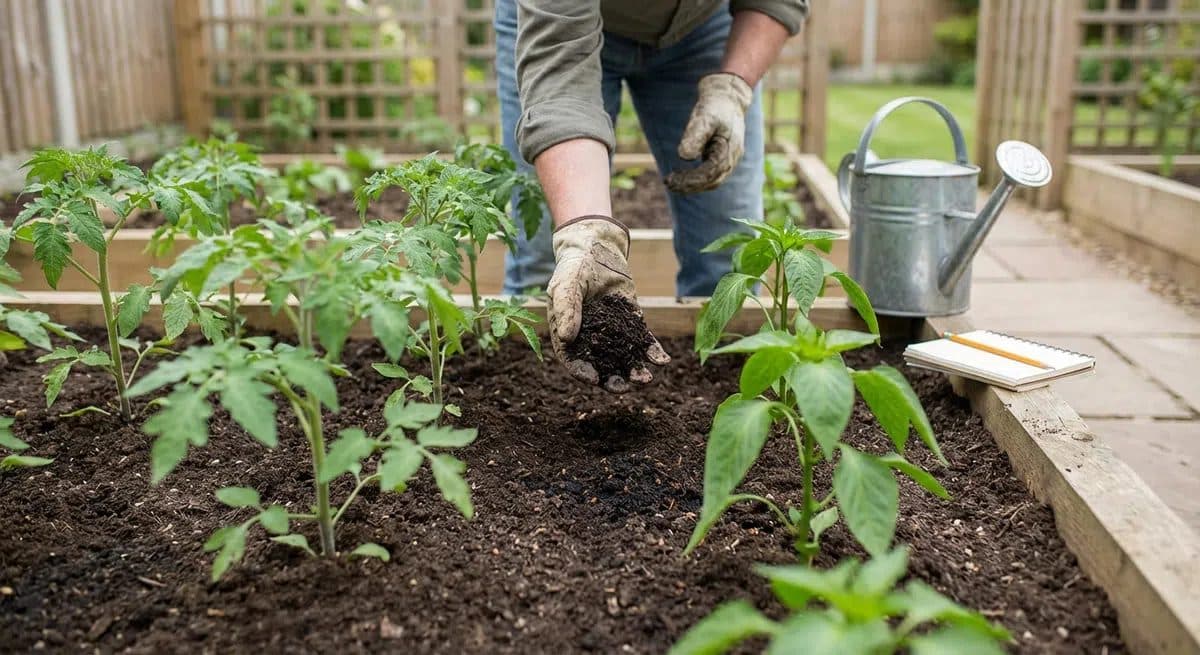
Why this matters
Healthy soil does most of the work. Overfeeding early on can hurt plants faster than underfeeding. This keeps feeding calm, gentle, and beginner-safe.
What to do
Start with the core idea
Seeds already contain what they need to sprout.
Good soil + steady watering gets you far.
Feeding is a support tool — not the main job.
Start simple (best beginner move)
Use quality soil for your setup:
Containers: potting mix
Beds/in-ground: garden soil + compost (or a soil-compost blend)
Compost is the safest “first feed.” It improves soil over time.
Feeding won’t fix poor drainage — fix water + drainage first.
When feeding helps (general signs)
New growth looks pale compared to healthy green.
Growth is slow after the plant has clearly started growing and settling in.
Later on, heavy producers may need extra support:
Tomatoes
Peppers
Squash family (zucchini, yellow squash, butternut, pumpkin)
If you’re unsure, take a quick photo and note what you see for a few days before changing anything.
When NOT to feed
Right after planting seeds.
When seedlings are tiny and still getting established.
When plants look stressed (droopy from heat, freshly transplanted, pest damage).
When soil is soggy or waterlogged.
When you’re not sure if the real issue is sun or watering.
Beginner-safe gentle options (choose ONE, keep it simple)
Compost top-dress: add a light layer on the surface and water it in.
Compost tea / mild organic liquid feed: follow label directions.
Slow-release balanced fertilizer: use later; follow label directions.
Don’t mix options at the same time.
The simple rule
If you feed, start gentle and watch the plant. (Use the mildest label guidance.)
Look for better color and steady new growth.
If plants look worse, pause feeding and go back to basics (sun + watering + drainage).
Watering first, feeding second
Never feed dry soil — water first.
If soil is already too wet, skip feeding until it’s back to normal damp.
Use your journal
One line is enough:
“Top-dressed compost today”
“Pale leaves — waiting and watching”
“Fed lightly — watching new growth”
Common Mistakes
- Feeding too early because sprouts “look small.”
- Overfeeding to “speed things up.”
- Feeding when soil is waterlogged or plants are stressed.
- Mixing multiple products and not knowing what caused the problem.
Quick Tips
- Compost is hard to overdo compared to strong fertilizers.
- One change at a time helps you learn what actually worked.
- Many “needs fertilizer” moments are really watering or sunlight issues.
- If you use any product, follow label directions.
Mini Checklist
- I’m starting with quality soil and compost as my foundation
- I’m not feeding right after planting seeds or when plants are tiny
- I check watering and sunlight before assuming it’s a feeding issue
- If I feed, I start gentle and watch the plant’s response
- I water first and never feed dry soil
- I write a one-line note when I add anything to the soil