Why this matters
The first days are when beginners accidentally “kill with kindness.” A simple check-based routine keeps you calm, consistent, and on track.
What to do
What you’re watching for (keep it simple)
Moisture: soil damp like a wrung-out sponge, not soggy
Sunlight: is your spot staying sunny, or getting shaded?
Sprouts: tiny green tips breaking the surface
Pests: holes, chewed edges, bugs on leaves
Crowding: too many seedlings packed together
Daily (takes 2 minutes) Check soil feel first
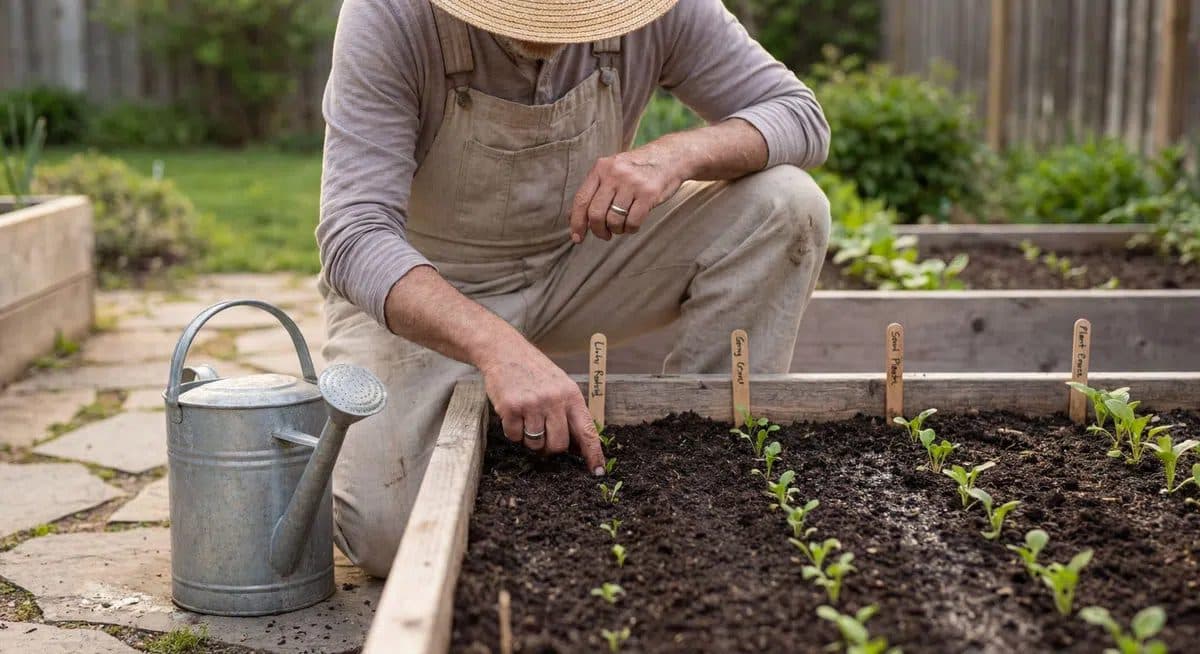
Touch the soil near where you planted.
If it’s damp, don’t water.
If it’s dry, water gently.
Look for sprouts
Scan the planted area for tiny green growth.
Once sprouts appear, avoid blasting them with water.
Check sun/shade
Notice if a fence, tree, or building is casting more shade than you expected.
If your spot is becoming shady, make a note (don’t panic-move everything).
Quick pest glance
Look under a couple leaves if you have seedlings.
Look for chewing, sticky spots, or clusters of tiny bugs.
Write a one-line note
Example: “Soil damp, no sprouts yet,” or “Sprouts! Leaves look good.”
Occasional tune-ups Pull tiny weeds
Remove weeds while they’re small so they don’t steal water and light.
Refresh labels
Make sure labels are readable and in the right spot.
Thin if crowded (when seedlings are up)
If many seedlings are packed together, choose the strongest and snip extras at soil level.
Thinning helps the remaining plants grow bigger and healthier.
Add light mulch if needed
If the soil surface dries out quickly, a thin layer of mulch helps hold moisture.
Adjust based on weather
Wind and sun dry things out faster (especially containers).
Cool, cloudy stretches keep soil wet longer.
Let soil feel guide you — not the calendar.
When to worry vs when to wait Wait when:
You don’t see sprouts yet, but the soil is staying lightly moist.
The surface looks quiet — seeds often take time.
Some seeds sprout unevenly (a few first, then more later).
Worry when:
Soil stays soggy and smells sour (ease up on watering).
Seedlings fall over at the base or look mushy (improve airflow, avoid wet leaves).
Leaves are getting chewed fast (check for pests more closely).
Big rule: don’t dig up seeds “to check.” It usually makes things worse.
Do NOT do this (early on)
Don’t overwater “just in case.”
Don’t constantly move pots around trying to find the perfect spot.
Don’t replant too soon because you’re impatient.
Don’t dig up seeds to see if they’re sprouting.
Don’t fertilize immediately — young seedlings can be sensitive.
Common Mistakes
- Panicking and changing everything at once (water, light, location).
- Watering on a routine instead of checking the soil.
- Letting weeds get established before noticing them.
- Skipping thinning and ending up with weak, crowded plants.
Quick Tips
- The goal is consistency, not perfection.
- If you’re unsure, check the soil again later before watering.
- Photos help: snap a quick picture sometimes to see progress.
- One-line notes turn confusion into learning fast.
Mini Checklist
- I do a quick soil-feel check before watering
- I scan for sprouts and pests without disturbing the soil
- I keep a one-line note about what I see
- I remove small weeds when I notice them
- I’m prepared to thin crowded seedlings by snipping extras
- I’m not digging up seeds or replanting too soon