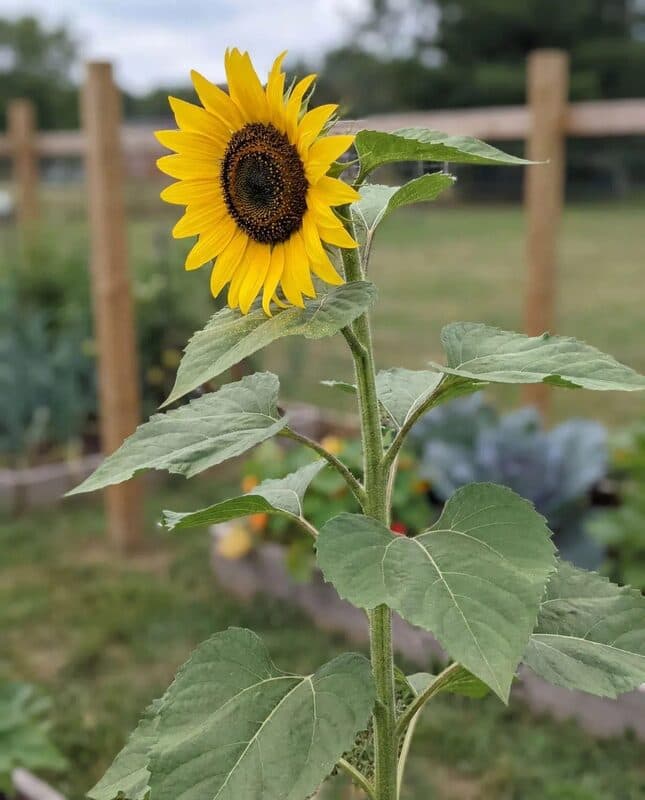
Why This Is Easy
One of the easiest plants to grow from seed: Large seeds, fast germination, and dramatic results make sunflowers especially satisfying (and popular with kids).
Low maintenance once established: Plants tolerate drought well, have relatively few pest issues, and produce edible seeds you can harvest and roast.
Planting Specs (Depth + Spacing)
- Depth: 1 inch
- Spacing: 18–24 inches apart (wider spacing produces larger flower heads)
Timeline (What to Expect)
- Sprout window: 7–14 days
- First blooms: 80–100 days
- Seed harvest: 30–45 days after blooming, when the back of the flower head turns brown
- Height: 8–12 feet tall with flower heads 10–14 inches across
When to Plant
Sunflowers are warm-weather plants. They need warmth to germinate and grow, but are adaptable once established.
Direct sow outdoors: After the last frost, when soil temperature reaches about 70°F. This is usually 1–2 weeks after your last frost date.
For continuous blooms: Sow new seeds every 2–3 weeks through early summer.
Starting indoors (optional): Start 2–4 weeks before last frost, but sunflowers prefer direct sowing because their long taproots dislike disturbance.
How to Plant
Direct sowing is strongly recommended. Sunflowers grow quickly and transplant poorly.
Direct Sowing (Recommended)
Choose your spot: Full sun is essential—at least 6–8 hours daily. Plant on the north side of the garden so tall plants don’t shade others. Consider wind exposure; nearby fences or structures provide helpful shelter.
Prepare soil: Sunflowers aren’t fussy, but loose, well-drained soil supports strong root growth. Compost improves results but isn’t required.
Sow seeds: Plant 1 inch deep, about 6 inches apart. After sprouting, thin to 18–24 inches apart.
Protect from critters: Birds and small animals often dig up seeds. Cover planting areas with netting, row cover, or wire until seedlings are a few inches tall.
Water: Water well after planting and keep soil moist until sprouts appear.
Starting Indoors (Short Seasons Only)
Start only 2–4 weeks before last frost—sunflowers grow fast and become rootbound quickly.
Use biodegradable pots that can be planted directly into the soil.
Transplant carefully after the last frost, handling roots gently.
Care Made Simple
Watering Logic Check-first watering keeps plants healthy without overdoing it.
Seedlings: Keep soil moist until plants are about 6 inches tall.
Established plants: Water deeply once or twice a week during dry periods. The most critical watering window is about 20 days before and after flowering.
Tip: Water at the base, not overhead. Wet foliage can encourage disease.
Sun & Shade
Full sun (6–8 hours minimum) is essential.
Young sunflowers track the sun across the sky; mature flower heads naturally face east.
Feeding (if applicable)
Sunflowers are not heavy feeders. Average soil is usually sufficient.
For larger flowers, work compost into the soil at planting or side-dress with a balanced fertilizer when plants reach about 1 foot tall.
Avoid excess nitrogen, which promotes leaf growth at the expense of flower size.
Harvest (Keep It Producing)
You can grow sunflowers for cut flowers or for edible seeds.
For Cut Flowers
When to cut: When petals are just beginning to open.
How to cut: Use clean, sharp scissors and cut at a slight angle, leaving 1–2 feet of stem.
Vase life: About 6–10 days. Remove leaves below the water line.
For Edible Seeds
Seeds are ready when:
Petals have dried and fallen.
The back of the head turns from green to yellow to brown.
Seeds are plump and fully striped, with hard shells.
Protect heads: Cover maturing heads with cheesecloth, netting, or a paper bag to deter birds and squirrels.
How to harvest:
Cut the head with 1–2 feet of stem attached.
Hang upside down in a dry, well-ventilated area for 2–3 weeks.
Rub seeds loose by hand or with a stiff brush.
Roasting: Soak seeds overnight in salted water, drain, then roast at 300°F for 30–40 minutes until golden.
Common Problems + Quick Fixes
Seeds eaten before sprouting:
Cause: Birds or small animals digging up seeds.
Action: Cover planted areas with netting or wire until seedlings are established.
Seedlings cut off at soil level:
Cause: Cutworms feeding at night.
Action: Place a simple collar around the stem base to block them.
Plants falling over:
Cause: Wind, heavy flower heads, or shallow roots.
Action: Stake plants early (around 3 feet tall) and grow in a sheltered spot.
Leaves yellowing or wilting:
Cause: Often overwatering or poor drainage.
Action: Allow soil to dry slightly between waterings and ensure good drainage.
Seeds eaten before harvest:
Cause: Wildlife feeding on mature heads.
Action: Cover heads once petals fall and harvest promptly when ready.
Small or missing flower heads:
Cause: Too much shade, crowding, or excess nitrogen.
Action: Ensure full sun, proper spacing, and moderate feeding.
Quick Tips
- Protect seeds early and again at maturity to stay ahead of wildlife.
- Stake plants before they start leaning.
- Wider spacing leads to larger flower heads.
- A great beginner crop with fast, visible results.
Mini Checklist
- Planted after last frost when soil reached 70°F
- Seeds planted 1 inch deep
- Seedlings protected from birds
- Plants thinned to 18–24 inches apart
- Full sun location
- Staked in windy areas
- Watered at the base
- Seed heads protected during ripening
- Harvested when backs turned brown
- Seed heads dried before removing seeds
[#toc](Back to TOC)Plant Profile