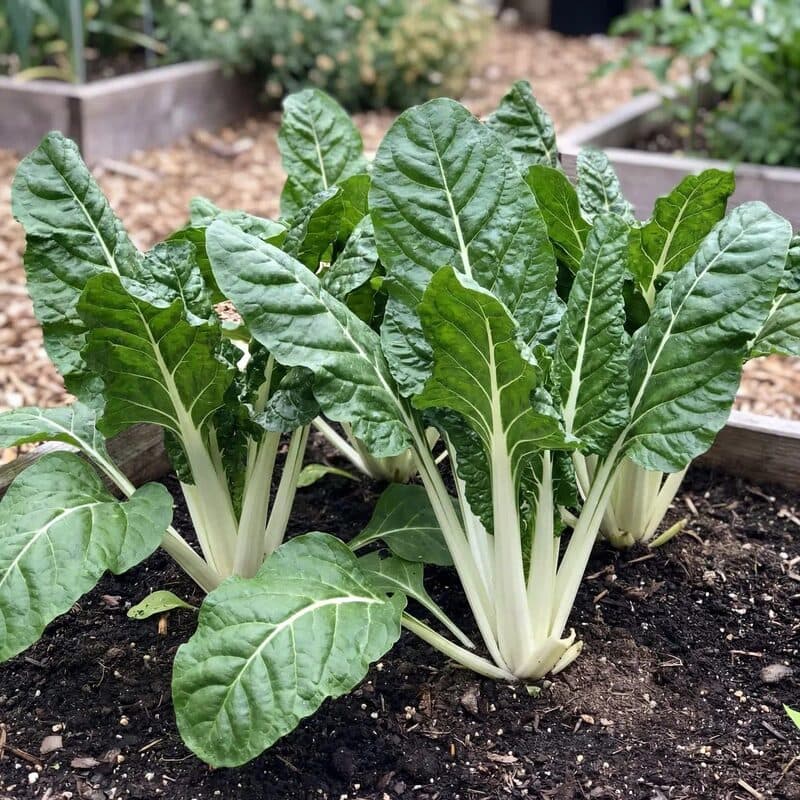
Why This Is Easy
Tough and forgiving: Once established, Swiss chard keeps producing new leaves for a long time.
Heat-tolerant for a leafy green: It usually handles warm spells better than spinach and many lettuces, making it less fussy in everyday gardens.
Planting Specs (Depth + Spacing)
- Depth: 1/2 inch
- Spacing / thinning: Thin to 4–6 inches for baby-leaf harvests, or 8–12 inches for larger plants with thicker stems and better airflow.
Timeline (What to Expect)
- Sprout window: 7–14 days
- When to thin: About 2–3 weeks after sprouting, or when seedlings are around 2 inches tall with a few true leaves
- First harvest (baby leaves): About 25–35 days
- Larger leaves + stems: About 50–60 days
- Ongoing harvest: Once established, plants continue replacing leaves as long as you harvest correctly (outer leaves first, center intact).
When to Plant
Swiss chard is a cool-weather crop that adapts well as conditions change. Plant in spring around your last frost window, and plant again later for a fall crop. When summer warms up, chard often keeps producing—especially if moisture stays steady and plants receive some afternoon shade during hot spells.
How to Plant
Direct sowing is the simplest approach.
Loosen the soil so roots can grow easily and water can drain well.
Place seeds where you want your row or small patch.
Cover to the recommended depth, then gently press the soil for good seed contact.
Water gently so seeds are not washed out of place.
Optional: You can start indoors and transplant, but Swiss chard is usually happiest when started where it will grow.
Care Made Simple
Watering Logic Check-first watering (no fixed schedule):
If soil feels dry → water
If soil feels damp → wait
If soil feels soggy → stop watering and let it dry slightly
Other simple care:
Aim for steady moisture so leaves stay tender, but avoid waterlogged soil.
Sun & Shade
In hot spells, afternoon shade can reduce stress and help maintain leaf quality.
Feeding (if applicable)
Compost mixed into the soil is usually enough.
If growth looks weak, a light top-dress of compost can help.
Keep weeds down so chard isn’t competing for water and nutrients.
Harvest (Keep It Producing)
Harvest outer leaves first and always leave the center growing point intact.
Pick regularly to encourage steady new growth.
Remove older leaves if they become thick, tough, or tired-looking so the plant focuses on fresh growth.
Harvest as baby leaves for milder flavor, or let leaves grow larger for fuller bunches.
Common Problems + Quick Fixes
Leaf miners (squiggly tunnels):
Remove and discard damaged leaves.
Check undersides of leaves.
A light cover or netting helps prevent egg-laying.
Slugs, snails, or chewing holes:
Inspect plants in the evening or early morning.
Hand-pick pests.
Rinse leaves before eating.
Use a light cover if damage continues.
Yellowing leaves:
First check moisture and drainage, then sunlight.
Fix “too wet” or “too dry” conditions before adding anything to the soil.
Crowding:
Thin plants so air can move freely through the leaves.
Crowding leads to weaker plants and more pest pressure.
Quick Tips
- Start harvesting as soon as leaves are usable—frequent picking keeps leaves tender.
- Always harvest outer leaves first and protect the center.
- If leaves toughen, switch to younger harvests and keep moisture steady.
Mini Checklist
- Planted Swiss chard 1/2 inch deep and pressed soil gently
- Kept soil lightly moist during germination
- Thinned seedlings to match harvest goals (baby leaf or full size)
- Used check-first watering (dry = water, damp = wait, soggy = stop)
- Harvested outer leaves while protecting the center
- Removed damaged or old leaves to encourage new growth
- Watched for leaf miners and chewing pests and addressed them early
[#toc](Back to TOC)Plant Profile