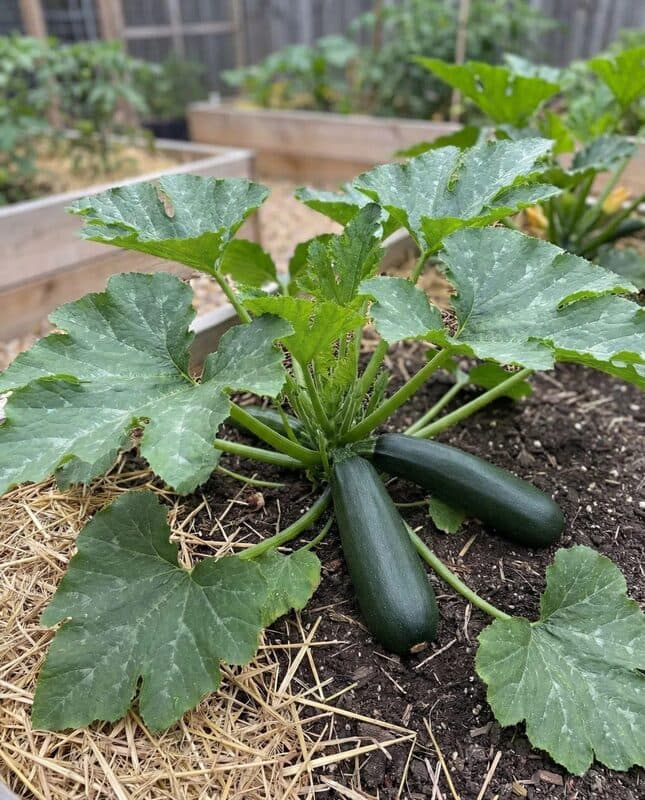
Why This Is Easy
A true beginner favorite: Zucchini is famously productive. One or two plants often produce more than enough for most households.
Fast and vigorous: Once the weather is warm, plants grow quickly—from a small sprout to a large, leafy bush in just a few weeks.
Planting Specs (Depth + Spacing)
- Depth: 1 inch
- Spacing: 24–36 inches apart (zucchini needs plenty of room for airflow)
Timeline (What to Expect)
- Sprout window: 7–12 days
- When to thin: When seedlings have their first set of true (jagged) leaves
- First harvest: 45–55 days
- Ongoing harvest: Once fruiting begins, check plants every 24 hours—zucchini grows very fast
When to Plant
Zucchini is a warm-weather crop with no frost tolerance. Seeds can rot in cold, wet soil.
Spring: Plant only after soil is warm and all danger of frost has passed.
Summer: If plants slow down by mid-summer, a second planting in July can provide a fresh harvest in early fall.
Cold warning: Unexpected cold (below 40°F) can stunt growth or damage leaves.
How to Plant
Direct sowing is best. Zucchini grows so quickly that it often outgrows indoor containers.
Prepare: Choose a sunny location and mix in compost. Zucchini is a heavy feeder and performs best in rich soil.
Sow: Plant 2–3 seeds together in a small group (a “hill”), about 1 inch deep.
Cover: Lightly cover with soil and gently firm for good seed contact.
Water: Keep soil moist until the large green sprouts emerge.
Care Made Simple
Watering Logic Check-first watering:
If soil feels dry 1 inch down → water deeply at the base
If damp → wait
Tip: Zucchini needs plenty of water for fruit production, but wet leaves encourage disease. Always water the soil, not the foliage.
Sun & Shade
Light: Full sun (at least 6–8 hours)
Heat: Zucchini grows best between 70°F and 90°F
Feeding (if applicable)
If plants look pale or flower production slows, add compost around the base as a light top-dressing.
Harvest (Keep It Producing)
Best size: Harvest zucchini at 6–8 inches long for best flavor and texture.
Don’t let them oversize: Very large fruit becomes tough and signals the plant to slow production.
Use tools: Cut fruit with a knife or scissors. The stems are thick and prickly, and pulling can damage the plant.
Common Problems + Quick Fixes
Powdery mildew (white spots on leaves):
Action: Improve airflow and keep leaves dry when watering. Remove badly affected leaves if needed.
Squash bugs:
Action: Check undersides of leaves for orange or bronze egg clusters and remove them. Hand-pick adult bugs when seen.
Fruit rot:
Cause: Small fruits that yellow and rot early were not pollinated.
Fix: Be patient and allow time for pollinators, or plant nearby flowers to attract bees.
Quick Tips
- Zucchini flowers are edible and can be harvested for cooking.
- Check plants daily—fruit size can change quickly.
- Adequate spacing reduces disease and keeps plants healthier.
Mini Checklist
- Soil warm and frost-free
- Seeds planted 1 inch deep
- Thinned to one strong plant per spot
- Watering at the base only
- Harvesting regularly at 6–8 inches
- Weekly checks under leaves for insect eggs
[#toc](Back to TOC)