Why This Is Easy
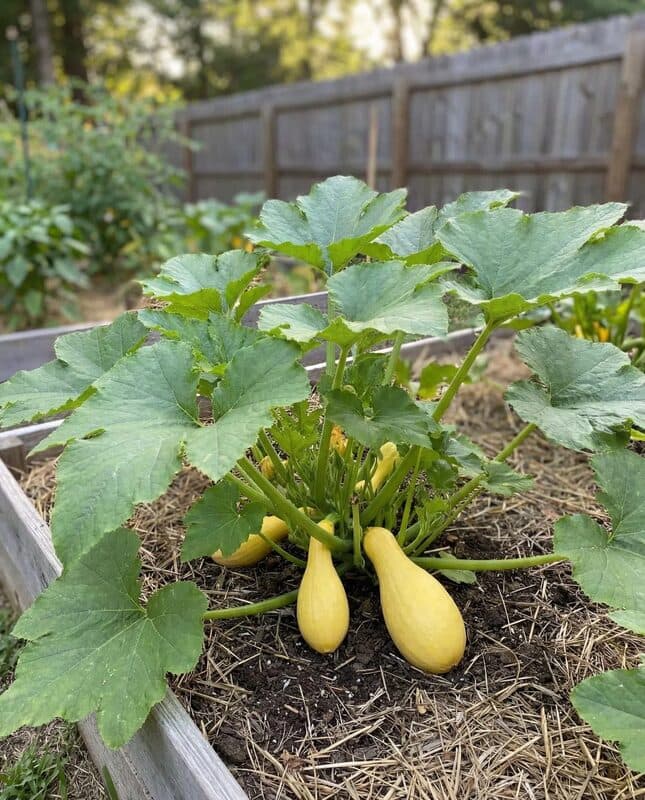
Massive production: One or two healthy plants will supply more squash than most families can keep up with all summer.
Fast payoff: Goes from seed to harvest in about 50 days, making it one of the most rewarding beginner crops.
Planting Specs (Depth + Spacing)
- Depth: 1 inch
- Spacing: 24–36 inches apart (plants grow into large, wide bushes)
Timeline (What to Expect)
- Sprout window: 7–10 days
- When to thin: When seedlings have their first true (jagged) leaves—keep the strongest plant per spot
- First harvest: 45–55 days
- Ongoing harvest: Once production starts, check plants daily
When to Plant
Yellow squash is a warm-weather crop with zero frost tolerance.
Spring: Plant only after your last frost date, once soil feels warm to the touch.
Summer: A second planting in mid-summer can extend harvest into early fall.
Cold warning: If a late frost threatens after planting, cover seedlings overnight with a bucket, cloth, or row cover.
How to Plant
Direct sowing works best—squash grows fast and dislikes root disturbance.
Prepare: Choose a sunny spot and mix in compost. Squash are heavy feeders and thrive in rich soil.
Sow: Plant 2–3 seeds in a small cluster (often called a “hill”) about 1 inch deep.
Cover: Smooth soil over seeds and gently firm for good contact.
Water: Water well immediately after planting. Keep soil moist (not soggy) until sprouts appear.
Care Made Simple
Watering Logic Check-first watering:
If soil feels dry 1 inch down → water deeply at the base
If damp → wait
Tip: Large squash leaves can hide dry soil underneath. Always check with your finger. Water only at the soil—wet leaves encourage powdery mildew.
Sun & Shade
Full sun: At least 6–8 hours daily
Heat response: Leaves may wilt in extreme heat to protect themselves. If they recover in the evening, the plant is fine.
Feeding (if applicable)
If leaves look pale or growth slows, side-dress with compost or a light organic fertilizer once flowering begins.
Harvest (Keep It Producing)
Pick early, pick often: Harvest squash at 6–8 inches long for best flavor and texture.
Don’t wait: Oversized squash become tough, seedy, and signal the plant to stop producing.
Use tools: Cut squash from the plant with scissors or a knife—pulling can damage the main stem.
Common Problems + Quick Fixes
Powdery mildew (white dusty coating on leaves):
Action: Improve airflow with proper spacing. Water only at the base. Remove the worst affected leaves.
Squash bugs (gray, shield-shaped insects):
Action: Check undersides of leaves for bronze egg clusters and rub them off. Hand-pick adults and drop into soapy water.
Fruit rotting at the tip:
Cause: Blossom end rot from uneven watering
Fix: Maintain steady moisture using the check-first watering rule
Quick Tips
- Space matters: Proper spacing prevents most disease issues.
- Two hands when harvesting: Hold the plant with one hand and cut with the other.
- Daily walk: Once fruiting starts, squash can grow an inch a day—check plants every morning.
Mini Checklist
- Soil warm and frost danger passed
- Seeds planted 1 inch deep in rich soil
- Seedlings thinned to strongest plant
- Watering at soil level (leaves kept dry)
- Harvested at 6–8 inches long
- Checked undersides of leaves weekly for squash bug eggs
[#toc](Back to TOC)Plant Profile