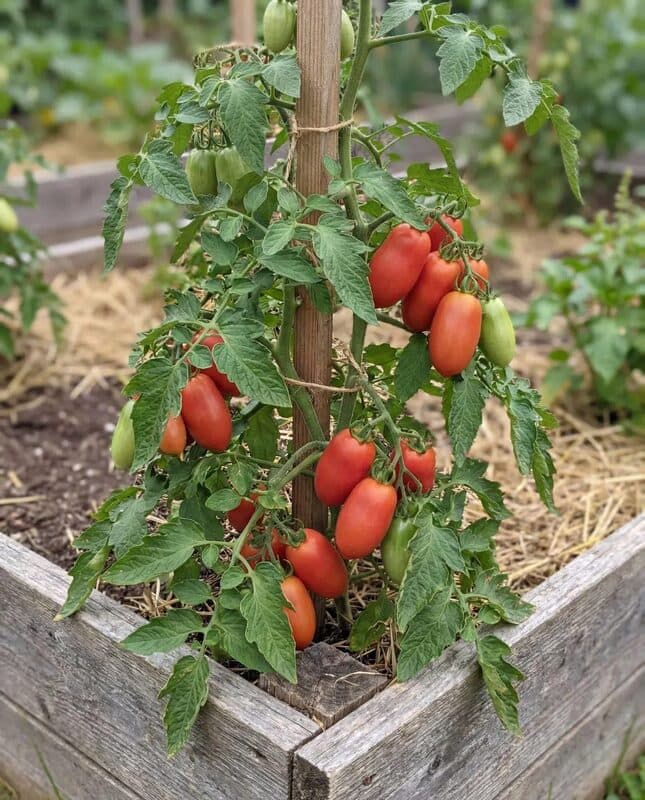
Why This Is Easy
Built-in resistance: The “VF” means this variety is naturally resistant to Verticillium and Fusarium wilts—two common soil diseases that frustrate many beginners.
Predictable growth: Roma VF is a determinate tomato. It grows into a compact, bushy plant, reaches a set size, and then focuses its energy on producing fruit all at once—great for sauces and bulk harvests.
Planting Specs (Depth + Spacing)
- Depth: 1/4 inch (for starting seeds indoors)
- Spacing: 18–24 inches apart
- Container growing: Performs well in 5-gallon containers or larger
Timeline (What to Expect)
- Sprout window: 7–14 days
- When to thin/transplant: When seedlings are 3–4 inches tall with their first true (jagged) leaves
- First harvest: About 70–80 days after transplanting
- Harvest style: Most fruit ripens within a short window—ideal for making sauce, paste, or salsa in one big batch
When to Plant
Roma tomatoes love warmth and have zero frost tolerance.
Spring: Transplant outdoors only after your last frost date, when nighttime temperatures stay above 55°F.
Summer: Peak growing season. Warm days and nights help develop thick, meaty fruit.
Cold warning: Sudden cold snaps can permanently stunt plants. Cover them if temperatures dip unexpectedly.
How to Plant
Starting indoors gives Roma VF enough time to mature properly.
Start indoors: Sow seeds 6–8 weeks before your last frost date. Use bright light or grow lights to prevent leggy seedlings.
Transplant deeply: Bury the stem up to the first set of leaves. Roots will form along the buried stem, creating a strong, stable plant.
Support: Even though Roma VF is bush-type, the fruit load gets heavy. Install a tomato cage or short, sturdy stake at planting time to keep fruit off the ground.
Care Made Simple
Watering Logic Check-first watering:
If soil feels dry 1 inch down → water deeply at the base
If damp → wait
Tip: Consistent moisture is critical for preventing fruit problems. Water early in the day so any splashed leaves dry quickly.
Sun & Shade
Full sun: At least 6–8 hours of direct sunlight is required for good fruit color and flavor
Airflow: Space plants well—Roma plants grow thick and need air moving through the leaves
Feeding (if applicable)
Mix compost into the soil at planting time.
Once small green fruits appear, a light side-dressing of compost helps support the main harvest.
Harvest (Keep It Producing)
When to pick: Harvest when fruit is fully red, firm, and evenly colored.
Gentle twist: Romas should release easily with a slight twist. If you have to tug, give it more time.
End of season: Determinate plants finish after their main harvest. Once fruiting is done and no new flowers appear, the plant can be removed.
Common Problems + Quick Fixes
Blossom end rot (black spot on bottom of fruit):
Cause: Calcium imbalance caused by uneven watering
Fix: Keep soil moisture steady—avoid dry-to-soaked swings
Blight (brown spots on lower leaves):
Action: Remove leaves touching the soil. Mulch to prevent soil splash.
Fruit not setting:
Cause: Extreme heat (above 90°F days or 75°F nights)
Fix: Be patient—fruit set resumes once temperatures cool slightly
Quick Tips
- Don’t prune: Roma VF is determinate. Removing suckers reduces yield.
- Mulch early: Straw or wood chips help maintain even moisture and keep fruit clean.
- Best for cooking: Thick flesh, low water content, and fewer seeds make Romas perfect for sauces, pastes, roasting, and freezing.
Mini Checklist
- Transplanted after last frost and warm nights (55°F+)
- Stem planted deep for strong roots
- Cage or stake installed at planting
- Used check-first watering at the base
- Avoided pruning branches
- Harvested when fruit was fully red and firm
[#toc](Back to TOC)Plant Profile