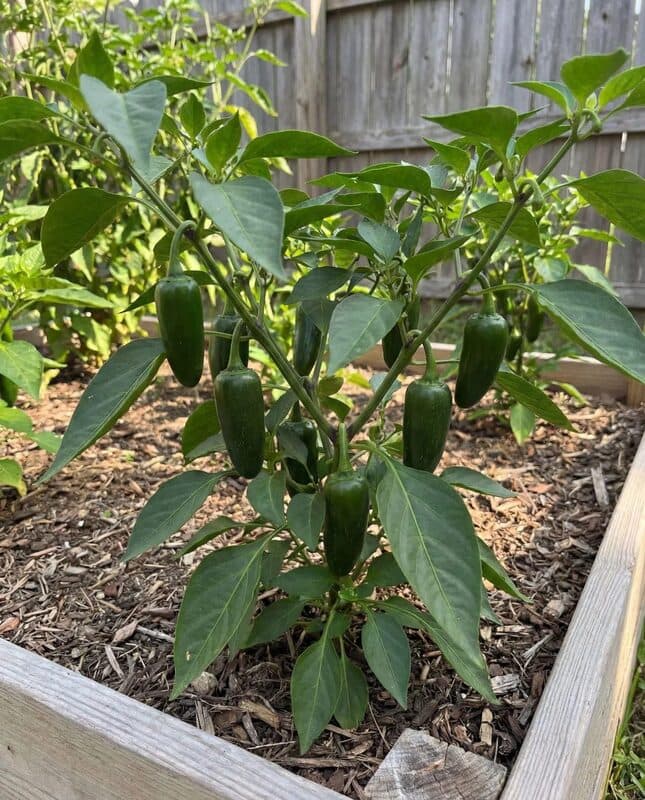
Why This Is Easy
Productive plant: A single jalapeño plant can produce dozens of peppers over the season, so even a small planting goes a long way.
Compact and forgiving: Jalapeños tolerate minor watering inconsistencies better than many vegetables, and their bushy size works well in small gardens or containers.
Planting Specs (Depth + Spacing)
- Depth: 1/4 inch
- Spacing: 14–24 inches apart (plants grow about 2 feet tall and roughly 18 inches wide)
Timeline (What to Expect)
- Sprout window: 10–21 days (peppers require warmth, so germination can be slow)
- When to transplant outdoors: After all frost risk has passed and nighttime temperatures stay above 55–60°F
- First harvest: 70–90 days from transplant (longer if starting directly from seed)
- Harvest window: Continuous production for 30–45 days or more once fruiting begins
When to Plant
Jalapeños are warm-weather plants with no frost tolerance and require consistent heat.
Start indoors: Sow seeds 8–10 weeks before your last expected frost. Seeds germinate best at 75–85°F.
Transplant outdoors: Move plants outside 1–2 weeks after your last frost date, once soil reaches about 65°F and nights remain above 55–60°F.
Direct sowing outdoors: Only recommended in very warm climates with a long growing season.
Beginner option: Purchasing nursery transplants is a common and reliable shortcut that saves time and effort.
How to Plant
Starting Indoors (Recommended)
Fill containers with seed-starting mix, which is lighter than regular potting soil.
Sow seeds 1/4 inch deep, placing 2–3 seeds per cell and thinning later.
Provide warmth (75–85°F) using a heat mat or warm location.
Once sprouted, give seedlings 14–16 hours of bright light daily.
Harden off seedlings about 10 days before transplanting by gradually exposing them to outdoor conditions.
Transplant once nighttime temperatures consistently stay above 55–60°F, spacing plants 14–24 inches apart.
Direct Sowing (Warm Climates Only)
Wait until soil temperature reaches at least 65°F.
Sow seeds 1/4 inch deep, spaced 14–16 inches apart.
Keep soil moist until seedlings emerge.
Care Made Simple
Watering Logic
Check-First Watering: Jalapeños prefer steady moisture but do not tolerate soggy soil.
If soil feels dry 1–2 inches down → Water deeply at the base.
If damp → Wait.
Tip: Large swings between dry and wet soil can lead to blossom end rot and misshapen fruit.
Sun & Shade
Sun & Heat:
Full sun (8–10 hours daily) supports the best growth and yields.
Jalapeños handle heat well up to about 90°F.
Below 55°F or above 95°F, plants may pause flowering and fruit set.
Feeding (if applicable)
Feeding: Jalapeños are moderate feeders.
Mix compost into the soil at planting.
Once flowering begins, feed every 4–6 weeks with a balanced or pepper-specific fertilizer.
Avoid excess nitrogen, which encourages leaf growth over fruit.
Support (if needed): Plants heavy with fruit may benefit from staking or a small cage.
Harvest (Keep It Producing)
When to Pick
Green jalapeños: Harvest at 3–4 inches long, when fruit is dark green, firm, and glossy.
Red jalapeños: Leave fruit on the plant longer to ripen fully. Red peppers are sweeter and slightly hotter.
How to Harvest
Use scissors or pruning shears to cut peppers from the plant, leaving a short stem.
Avoid pulling or twisting, which can damage branches.
Gloves are helpful when harvesting large quantities.
Keep Harvesting
Regular picking encourages continued flowering and fruit production. Avoid leaving mature peppers on the plant too long.
Common Problems + Quick Fixes
Seeds didn’t sprout:
Cause: Soil temperature too low.
Action: Provide steady warmth (75–85°F) and allow up to three weeks for germination.
Flowers dropping without fruit:
Cause: Temperature stress from cool nights or extreme heat.
Action: Wait for conditions to stabilize; fruit set usually resumes naturally.
Blossom end rot:
Cause: Inconsistent watering affecting calcium uptake.
Action: Maintain even moisture. Remove affected fruit; later peppers are often unaffected.
Aphids:
Cause: Sap-feeding insects on new growth.
Action: Spray off with water, encourage beneficial insects, or use insecticidal soap if needed.
Lots of leaves but no peppers:
Cause: Excess nitrogen.
Action: Switch to a balanced or lower-nitrogen fertilizer once flowering begins.
Slow growth or yellowing leaves:
Cause: Cool conditions, nutrient imbalance, or poor drainage.
Action: Ensure warmth, good drainage, and appropriate feeding.
Quick Tips
- Starting indoors or using transplants provides a strong head start.
- Wait for warm soil and nights before planting outdoors.
- Harvest frequently to keep plants productive.
- Handle peppers carefully—capsaicin can irritate skin and eyes.
Mini Checklist
- Seeds started indoors 8–10 weeks before last frost (or transplants purchased)
- Warmth provided for germination (75–85°F)
- Transplanted after frost risk passed and nights stayed above 55–60°F
- Plants spaced 14–24 inches apart in full sun
- Soil kept evenly moist and well-draining
- Feeding started once flowering began
- Peppers harvested regularly at desired size
- Fruit cut with scissors rather than pulled
[#toc](Back to TOC)Plant Profile