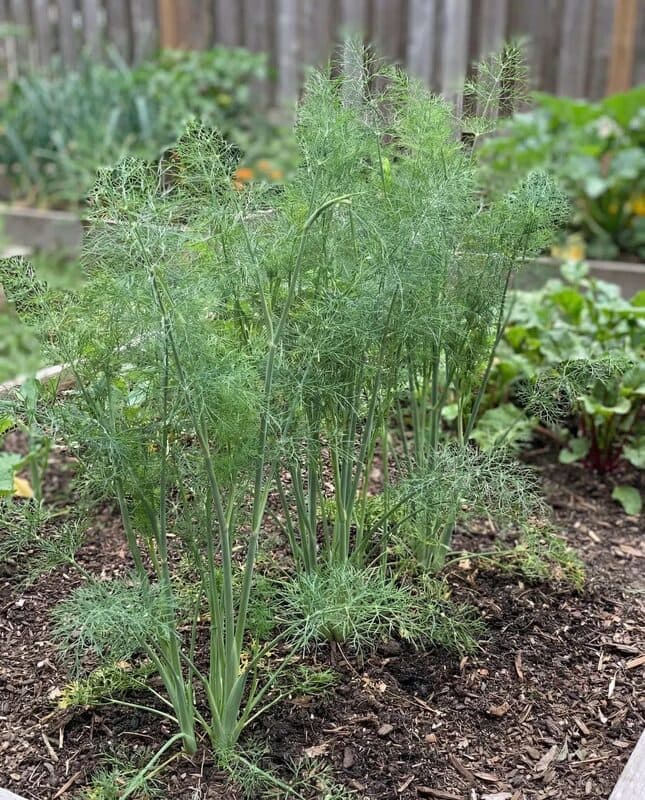
Why This Is Easy
Fast and forgiving: Dill grows quickly with minimal care. Direct sow, water as needed, and harvest—an excellent herb for beginners.
Double harvest: You can enjoy fresh, feathery leaves first, then allow plants to flower and collect seeds for pickling and seasoning, all from the same planting.
Planting Specs (Depth + Spacing)
- Depth: 1/4 inch (dill seeds need some light to germinate, so avoid planting too deep)
- Spacing: Thin seedlings to 6–12 inches apart.
Timeline (What to Expect)
- Sprout window: 10–21 days (germination can be slow—be patient)
- When to thin: When seedlings are 2–3 inches tall
- First leaf harvest: 40–50 days, once plants reach 6–8 inches tall
- Seed harvest: 70–90 days, after flowers fade and seeds turn brown
- Bolting note: Dill flowers quickly in hot weather. This is normal—harvest leaves early, then allow the plant to set seed.
When to Plant
Dill is a cool-weather herb that bolts in heat and performs best in spring and fall.
Spring: Plant after the last frost once soil has warmed to at least 60°F. This is the primary planting window.
Summer: Dill bolts quickly in hot weather. Summer plantings usually provide a short leaf harvest before flowering.
Fall: In mild climates, plant in late summer for a fall harvest. Dill tolerates light frost.
Succession planting: For a steady supply of fresh leaves, sow new seeds every 2–3 weeks through spring and into early summer.
How to Plant
Direct sowing is strongly recommended, as dill has a taproot and does not transplant well.
Prepare: Choose a sunny location with well-draining soil. Dill is adaptable but benefits from compost mixed into the soil.
Sow: Scatter seeds about 1 inch apart and cover with approximately 1/4 inch of soil. Do not bury seeds deeply.
Water: Water gently after planting and keep soil moist, not soggy, until sprouts appear.
Thin: When seedlings reach 2–3 inches tall, thin to 6–12 inches apart. Crowded plants are more prone to disease.
Rows: Space rows 12–18 inches apart.
Care Made Simple
Watering Logic
Check-First Watering: Dill prefers consistent moisture but does not tolerate wet soil.
If soil feels dry → Water deeply.
If damp → Wait.
Tip: Once established, dill is fairly drought-tolerant. Allow soil to dry slightly between waterings rather than overwatering.
Sun & Shade
Sun & Heat:
Full sun (6–8 hours daily) is ideal.
In hot climates, light afternoon shade can help delay bolting.
When temperatures remain above 75–80°F, bolting is expected. Flowers can be enjoyed and seeds harvested.
Feeding (if applicable)
Feeding: Dill requires minimal fertilization. One or two light feedings during the season are sufficient. Excess fertilizer can reduce flavor.
Staking (if needed): Mammoth Long Island dill can reach 3–5 feet tall. In windy areas, provide support with stakes or plant near a fence.
Harvest (Keep It Producing)
Leaves (Dill Weed):
Begin harvesting when plants are 6–8 inches tall.
Snip leaves as needed. Flavor is best before flowering.
Regular harvesting encourages bushier growth and can delay bolting.
Once a thick central stalk forms and flowering begins, leaf quality declines.
Flowers:
Dill flowers are edible and commonly used in pickling.
Yellow flower clusters attract beneficial insects.
Seeds:
Allow plants to flower fully. After blooms fade, green seeds will form.
Wait until seeds turn brown.
Cut seed heads and place them upside down in a paper bag to dry for 1–2 weeks. Seeds will drop into the bag as they dry.
Store dried seeds in a sealed container for cooking, pickling, or replanting.
Common Problems + Quick Fixes
Seeds didn’t sprout:
Cause: Seeds planted too deep, soil dried out, or old seed.
Action: Plant only 1/4 inch deep and keep soil consistently moist. Germination can take up to 3 weeks.
Bolting too fast:
Cause: Heat stress or long days.
Action: This is normal. Plant early in spring or again in fall. Use succession planting and harvest leaves early. Allow bolted plants to flower and set seed.
Aphids:
Cause: Aphids cluster on stems and leaves.
Action: Dill flowers attract ladybugs that often control aphids naturally. If needed, spray aphids off with water or use insecticidal soap.
Caterpillars (parsleyworms/swallowtail larvae):
Cause: Black swallowtail butterflies lay eggs on dill.
Action: These caterpillars become butterflies. If possible, leave them undisturbed. Otherwise, hand-pick and relocate. Planting extra dill helps share the crop.
Powdery mildew:
Cause: Fungal disease encouraged by humidity and poor air circulation.
Action: Thin plants for airflow, water at the soil level, and remove affected leaves.
Plants falling over:
Cause: Tall growth combined with wind or rain.
Action: Stake plants or grow them near a fence. Choose a sheltered location when possible.
Quick Tips
- Direct sow only—dill does not transplant well.
- Succession plant every 2–3 weeks for continuous leaf harvest.
- Plant seeds shallowly, as light aids germination.
- Bolting is part of the life cycle—use flowers and seeds rather than viewing it as a failure.
Mini Checklist
- Planted after last frost once soil reached 60°F
- Seeds planted 1/4 inch deep
- Soil kept moist until seedlings emerged
- Seedlings thinned to 6–12 inches apart
- Leaves harvested once plants reached 6 inches tall
- Regular cutting done to delay bolting
- Tall plants staked if needed
- Some plants allowed to flower for seed harvest
[#toc](Back to TOC)Plant Profile