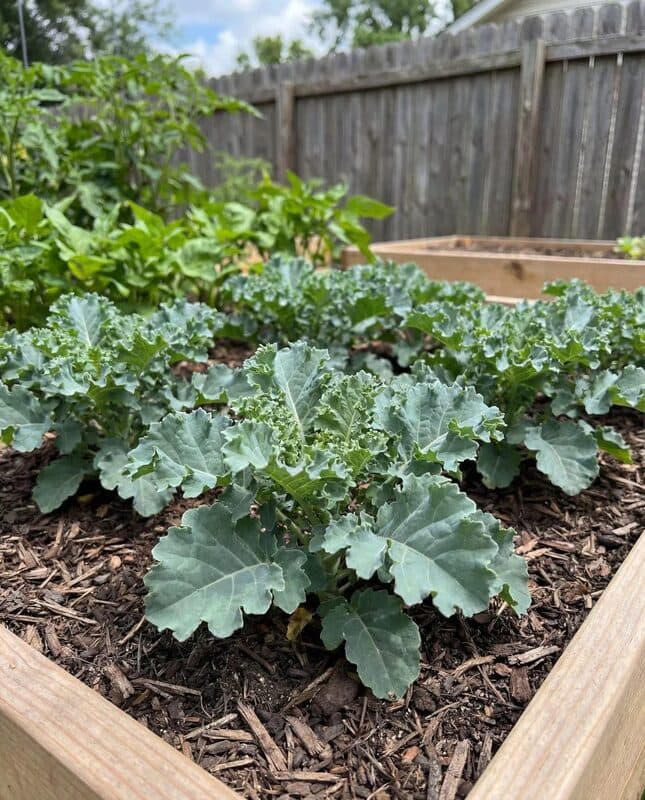
Why This Is Easy
Very forgiving: Kale handles cool weather well and continues growing even when conditions are less than perfect.
Long harvest window: You don’t harvest once and stop—kale allows repeated picking over time.
Planting Specs (Depth + Spacing)
- Depth: 1/4–1/2 inch
- Spacing / thinning: Thin plants to 12–18 inches apart
Timeline (What to Expect)
- Sprout window: 5–10 days after planting
- When to thin: About 2–3 weeks after sprouting, once seedlings have a few true leaves
- First harvest: Baby leaves around 25–30 days; mature leaves later
- Ongoing harvest: Full plants are usually ready around 50–65 days and will continue producing with proper harvesting
- Cold tolerance: Kale tolerates temperatures down to about 20°F and often develops better flavor after cold exposure
When to Plant
Kale is a cool-weather crop that performs best in mild temperatures and struggles in sustained heat.
Spring: Sow seeds as soon as the soil can be worked and the risk of hard freezes is passing. Kale tolerates cool nights and light frost.
Fall: Sow seeds in late summer so plants establish before cold weather. Kale is one of the last vegetables to keep producing as temperatures drop and can continue well into cooler conditions.
How to Plant
Kale can be direct sown or started indoors, and both methods work well for beginners.
Direct sowing: Plant seeds at the proper depth, cover lightly with soil, and keep the soil lightly moist until sprouts appear. Thin seedlings once they are established so plants have room to grow.
Starting indoors: Sow seeds in small containers with seed-starting mix. Keep soil lightly moist and provide bright light. Transplant outdoors once plants are sturdy and outdoor conditions are cool and comfortable.
Care Made Simple
Watering Logic
Watering: Check the soil before watering.
If soil feels dry → Water
If damp → Wait
If soggy → Stop and allow soil to dry
Moisture balance: Kale prefers consistent moisture but does not tolerate sitting in wet soil.
Sun & Shade
Feeding (if applicable)
Feeding: Compost-rich soil is usually sufficient. Kale is not a heavy feeder when soil quality is good.
Mulch (optional): A light mulch helps maintain even moisture and keeps roots comfortable.
Harvest (Keep It Producing)
Harvest kale by picking outer leaves first and leaving the center growing point intact. This allows the plant to continue producing new leaves. Harvest regularly once leaves reach a usable size. Frequent picking supports steady growth and helps prevent leaves from becoming overly tough. Kale often develops a sweeter, milder flavor after exposure to cooler weather.
Common Problems + Quick Fixes
Holes in leaves: Chewing pests are common. Check undersides of leaves, hand-pick pests, rinse plants with water, or use a light garden cover or netting.
Yellowing leaves: Check moisture, drainage, and sun exposure first. Address these basics before adding fertilizer.
Tough or bitter leaves: Harvest younger leaves, maintain steady moisture, and avoid long gaps between harvests.
Crowding: Thin plants properly so air can circulate, reducing stress and disease risk.
Quick Tips
- Start harvesting once leaves are large enough to use—no need to wait for perfection.
- Always harvest outer leaves and leave the center growing.
- Cooler weather usually improves flavor.
- Regular harvesting keeps plants productive longer.
Mini Checklist
- Seeds planted at the correct depth
- Seedlings thinned to proper spacing
- Soil moisture checked before watering
- Soil kept moist but not soggy
- Outer leaves harvested regularly
- Plants monitored for chewing pests
- Plants kept uncrowded for airflow
[#toc](Back to TOC)Plant Profile