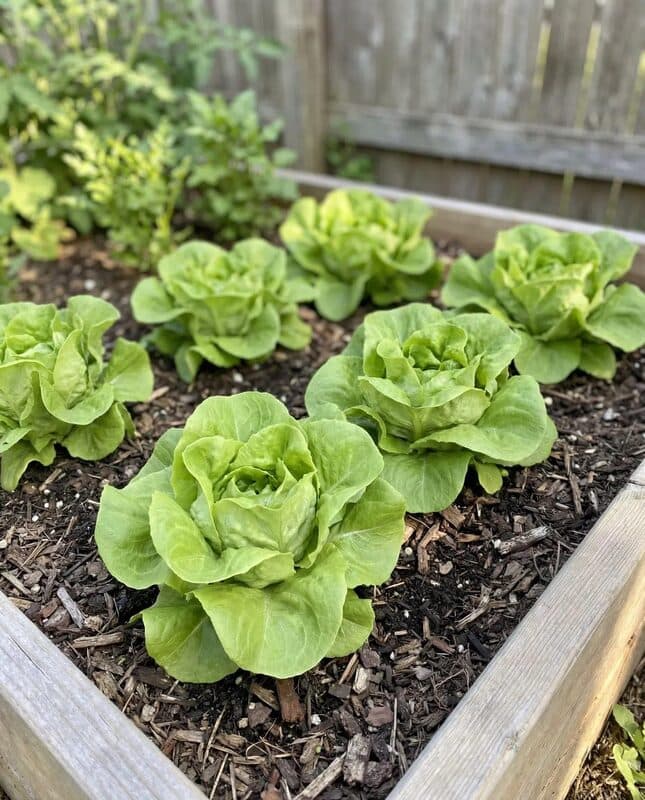
Why This Is Easy
Fast reward: You can begin harvesting tender baby leaves in under a month.
Forgiving harvest style: Picking a few leaves at a time allows the plant to keep growing back using a cut-and-come-again approach.
Planting Specs (Depth + Spacing)
- Depth: 1/8 inch (seeds need a bit of light, so cover very lightly)
- Spacing: Thin seedlings to 8–10 inches apart for full heads
Timeline (What to Expect)
- Sprout window: 7–14 days (faster in warm soil, slower in cool conditions)
- When to thin: When seedlings are about 2 inches tall
- Baby leaf harvest: 25–30 days
- Full head harvest: 55–65 days
- Heat warning: Quality declines and plants may bolt if temperatures consistently stay above 75–80°F
When to Plant
Lettuce is a cool-weather crop that thrives in spring and fall and struggles in summer heat.
Spring: Plant as soon as the ground is thawed and workable. Lettuce tolerates light frost well.
Fall: Plant in late summer as temperatures begin to cool. If soil is still hot, provide shade to protect seedlings.
How to Plant
Direct sowing is best because lettuce has delicate roots.
Prepare: Loosen the top layer of soil and break up large clumps.
Sow: Sprinkle seeds thinly along the row.
Cover: Lightly dust soil over the seeds, about the thickness of a coin. Seeds need a small amount of light to germinate.
Pat: Gently press the soil so seeds make good contact.
Water: Mist gently. Heavy watering can wash seeds away.
Optional: Seeds can be started indoors 3–4 weeks before the last frost, but transplant carefully to avoid root damage.
Care Made Simple
Watering Logic
Check-First Watering: Lettuce needs steady moisture to stay tender and sweet.
If the top inch of soil feels dry → Water gently at the base.
If damp → Wait.
Tip: Avoid letting soil dry out completely, as this leads to bitter leaves.
Sun & Shade
Sun control:
Cool weather (spring and fall): Full sun works well.
Warming weather: Partial shade improves quality. During heat waves, use shade cloth or plant near taller crops to block afternoon sun.
Feeding (if applicable)
Feeding: Usually unnecessary if soil was prepared with compost or good garden soil.
Harvest (Keep It Producing)
Buttercrunch lettuce can be harvested in two ways:
Cut-and-come-again (best for beginners): Once leaves reach 3–4 inches, snip outer leaves with scissors and leave the center intact. The plant will continue producing new leaves.
Whole head: Allow the plant to form a full, slightly firm head (about baseball to softball size), then cut the entire plant at the soil line.
Common Problems + Quick Fixes
Bitter leaves:
Cause: Heat stress or uneven watering.
Fix: Water more consistently and provide shade. Harvest immediately once bitterness appears.
Bolting (tall center stalk):
What it is: The plant responds to heat by sending up a flower stalk, making leaves very bitter.
Fix: Harvest the entire plant as soon as bolting begins and compost the stalk.
Tiny holes in leaves:
Cause: Slugs or flea beetles.
Fix: Check leaf undersides, hand-pick slugs in the evening, and keep the area weed-free to reduce pest pressure.
Quick Tips
- Succession planting: Sow a small amount every 2 weeks for a steady salad supply rather than one large harvest.
- Cool-down trick: For late-summer sowing, rinsing seeds in cold water and drying them before planting can help improve germination.
- Morning harvest: Pick leaves early in the day when they are crispest.
Mini Checklist
- Soil loosened and free of large clumps
- Seeds sown very shallow and lightly covered
- Soil kept consistently moist, not soggy
- Seedlings thinned to proper spacing
- Leaves checked for slugs if holes appear
- Outer leaves harvested regularly for early salads
[#toc](Back to TOC)Plant Profile