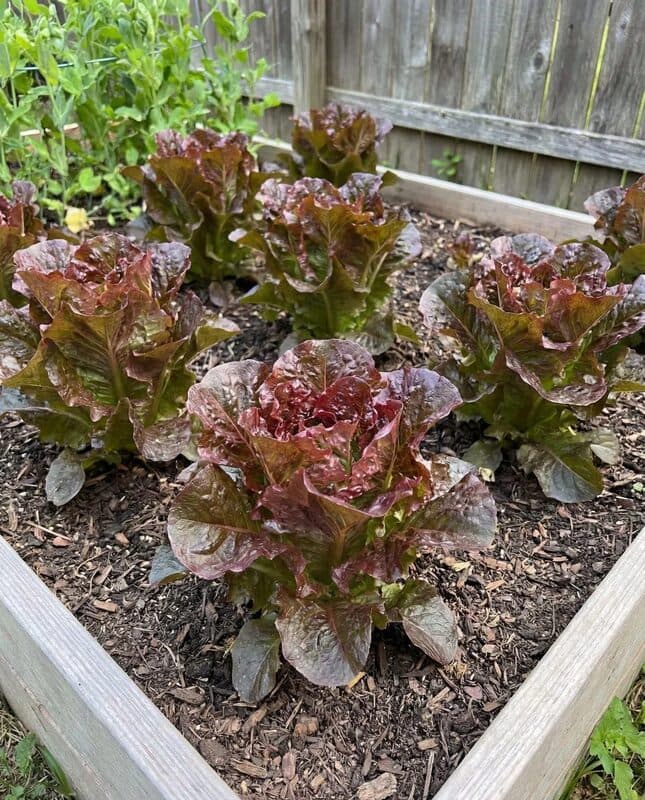
Why This Is Easy
Beginner-friendly variety: Cimarron Red is well known for being slow to bolt, meaning it tolerates warmth better than many lettuces without quickly turning bitter.
Flexible harvest options: You can harvest tender baby leaves early or allow the plant to form a full, deep-red head.
Planting Specs (Depth + Spacing)
- Depth: 1/8–1/4 inch (cover very lightly; seeds need some light to germinate)
- Spacing: Thin seedlings to 8–12 inches apart
Timeline (What to Expect)
- Sprout window: 7–14 days
- When to thin: When seedlings are 2–3 inches tall
- Baby leaf harvest: 21–30 days
- Full head harvest: 50–70 days
- Heat note: Although more heat-tolerant than most lettuces, quality declines if temperatures consistently exceed 80°F
When to Plant
Lettuce is a cool-weather crop, and Cimarron Red is slightly more forgiving if planting runs late.
Spring: Plant as soon as the soil is workable and no longer frozen.
Fall: Plant in late summer. This variety tolerates lingering warmth while establishing and produces well as temperatures cool in autumn.
How to Plant
Direct sowing gives the best results.
Prepare: Smooth the soil surface and break up hard clumps.
Sow: Sprinkle seeds thinly along the row.
Cover: Lightly dust soil over the seeds. Do not bury them deeply.
Pat: Gently press the soil so seeds make contact with the soil surface.
Water: Mist lightly. Heavy watering can wash seeds away.
Optional: Seeds may be started indoors 3–4 weeks before the last frost, but transplant carefully to avoid disturbing roots.
Care Made Simple
Watering Logic
Check-First Watering: Steady moisture keeps leaves crisp and mild.
If the top inch of soil feels dry → Water
If damp → Wait
Tip: Uneven watering is a common cause of bitter lettuce.
Sun & Shade
Sun & Shade:
Cool weather: Full sun helps deepen red coloration.
Hot spells: Provide afternoon shade or plant near taller vegetables for protection.
Feeding (if applicable)
Feeding: Compost mixed into the soil at planting is usually sufficient.
Harvest (Keep It Producing)
Cut-and-come-again: When leaves reach 3–4 inches, snap or cut outer leaves near the base.
Save the center: Leave the central rosette intact so the plant continues producing leaves for weeks.
Full head: For a romaine-style head, wait until the plant feels full and leafy, then cut the entire plant at the soil line.
Common Problems + Quick Fixes
Bolting (going to seed):
Signs: The center stretches upward and leaves turn bitter.
Fix: Harvest the whole plant immediately. Once bolting starts, it cannot be reversed.
Holes in leaves:
Cause: Slugs or snails are the most common cause.
Fix: Check plants at dusk or dawn and hand-pick pests.
Yellowing leaves:
Cause: Often caused by overwatering or poor drainage.
Fix: Check soil moisture before watering and ensure beds or containers drain well.
Crowding:
Issue: Plants appear weak or may rot near the base.
Fix: Thin plants so air can move freely between them.
Quick Tips
- Red color often deepens with good sun exposure.
- Harvest in the cool morning for the best texture.
- Mulch around plants to keep roots cool and moisture steady.
Mini Checklist
- Soil surface smoothed and clump-free
- Seeds sown very shallow and lightly covered
- Soil kept consistently moist
- Seedlings thinned to 8–12 inches apart
- Plants checked for slugs if holes appear
- Outer leaves harvested first
[#toc](Back to TOC)Plant Profile