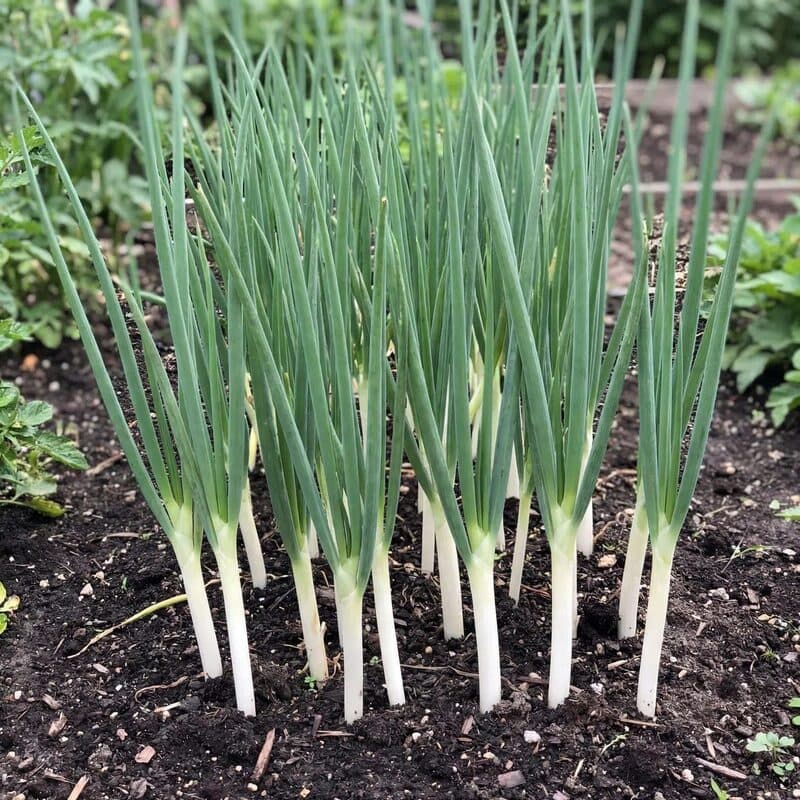
Why This Is Easy
Cut-and-come-again harvest: Snip the green tops and they regrow, allowing multiple harvests from one planting.
Flexible and low-maintenance: Scallions tolerate cool weather, grow well in small spaces or containers, and rarely suffer serious pest problems. A short row can provide fresh green onions as needed.
Planting Specs (Depth + Spacing)
- Depth: 1/4 inch
- Spacing: 1–2 inches apart (no thinning required, or thin for thicker stalks). Rows spaced about 12 inches apart.
Timeline (What to Expect)
- Sprout window: 7–14 days (faster in warm soil, slower in cool soil)
- Young scallion harvest: 30–40 days (tender, mild, about 6–8 inches tall)
- Full-size harvest: 60–80 days (16–18 inches tall with thicker white stalks)
- Cut-and-come-again: Cut greens about 1 inch above the soil line and they will regrow for additional harvests
When to Plant
Scallions are cool-weather crops that tolerate light frost and offer flexible planting windows.
Spring: Plant 4–6 weeks before your last frost date, once soil can be worked and reaches about 45°F. Ideal soil temperature is 60–85°F.
Summer: Plant for fall harvest. Scallions tolerate some heat but grow best between 55–80°F.
Fall: In mild climates, plant in fall for winter or early spring harvest.
Succession planting: Sow new seeds every 2–4 weeks for a steady supply throughout the season.
How to Plant
Direct sowing is simple and effective.
Prepare: Choose a sunny location (at least 6 hours of sun) with well-draining soil. Work in compost if soil quality is poor.
Sow: Scatter seeds in a narrow band or row, about 1/2 inch apart, and cover with 1/4 inch of soil. Alternatively, plant in clumps by dropping 8–10 seeds per hole, 1/4 inch deep, with holes spaced 3–4 inches apart.
Water: Water gently after planting and keep soil consistently moist until sprouts appear.
Thin (optional): Thinning is not required, but thinning to 2–3 inches apart produces thicker, more leek-like stalks.
Starting Indoors (Optional)
Start seeds indoors 8–10 weeks before the last frost.
Transplant seedlings outdoors 4–6 weeks before the last frost, when they are 4–6 inches tall.
Harden off seedlings for 7–10 days before transplanting.
Container Growing
Scallions grow well in containers due to their shallow roots.
Use a pot at least 6 inches deep with drainage holes.
Plant in clumps of 8–10 seeds, spaced 3–4 inches apart.
Care Made Simple
Watering Logic
Check-First Watering: Scallions have shallow roots and need steady moisture.
If the soil surface feels dry → Water
If damp → Wait
Tip: Because roots are shallow, check moisture often in hot or dry weather. Avoid both drying out and waterlogged soil.
Sun & Shade
Sun & Temperature:
Full sun (6–8 hours) is ideal, though scallions tolerate partial shade.
Best growth occurs between 55–80°F.
Plants tolerate light frost, making them well suited for early spring and fall.
Feeding (if applicable)
Feeding: Scallions are light feeders. If growth appears slow or leaves look pale, apply a balanced liquid fertilizer or fish emulsion once or twice during the season. A light feeding after cut-and-come-again harvest encourages regrowth.
Weeding: Keep beds weeded, as scallions compete poorly with weeds. Weed gently to avoid disturbing shallow roots.
Harvest (Keep It Producing)
When to Harvest
Young and tender: 30–40 days, when plants reach 6–8 inches tall.
Full size: 60–80 days, when plants are 12–18 inches tall and about 1/2 inch thick at the base.
Harvest at any size that suits your needs.
How to Harvest
Whole plant: Gently pull plants or loosen soil with a fork and lift.
Cut-and-come-again: Cut green tops about 1 inch above the soil. Leave roots and the white base in place so plants regrow. Apply a light feeding after cutting to support regrowth.
Storage
Use fresh for best flavor.
Store unwashed scallions in the refrigerator, wrapped in a damp paper towel, for up to one week.
Chopped greens can be frozen for longer storage.
Common Problems + Quick Fixes
Seeds didn’t sprout:
Cause: Soil too cold or too dry.
Action: Keep soil evenly moist. Germination can take longer in cool conditions, so patience is important.
Thin, weak growth:
Cause: Insufficient sun, poor soil, or overcrowding.
Action: Ensure at least 6 hours of sun, feed lightly, and thin if plants are very crowded.
Thrips:
Cause: Small insects that create silvery streaks or blotches on leaves.
Action: Rinse plants with a strong spray of water. Use insecticidal soap if needed. Keep beds clean and weed-free.
Onion maggots:
Cause: Larvae feeding at the base of plants.
Action: Remove affected plants and discard the base. Rotate crops to avoid repeat problems.
Slugs:
Cause: Feeding at night in damp conditions.
Action: Hand-pick in the early morning or evening. Keep the area clean and free of debris.
Quick Tips
- Sow every 2–4 weeks for continuous harvest.
- Cut greens instead of pulling entire plants to extend production.
- Scallions are well suited to containers and small spaces.
- Their onion scent can help deter some garden pests.
Mini Checklist
- Planted early in spring or succession-planted through the season
- Seeds sown 1/4 inch deep
- Soil kept consistently moist until sprouts emerged
- Plants spaced 1–2 inches apart or grown in clumps
- Harvesting at young or full size as needed
- Cutting greens above the soil line for regrowth
- Light feeding applied after cutting to encourage new growth
[#toc](Back to TOC)Plant Profile