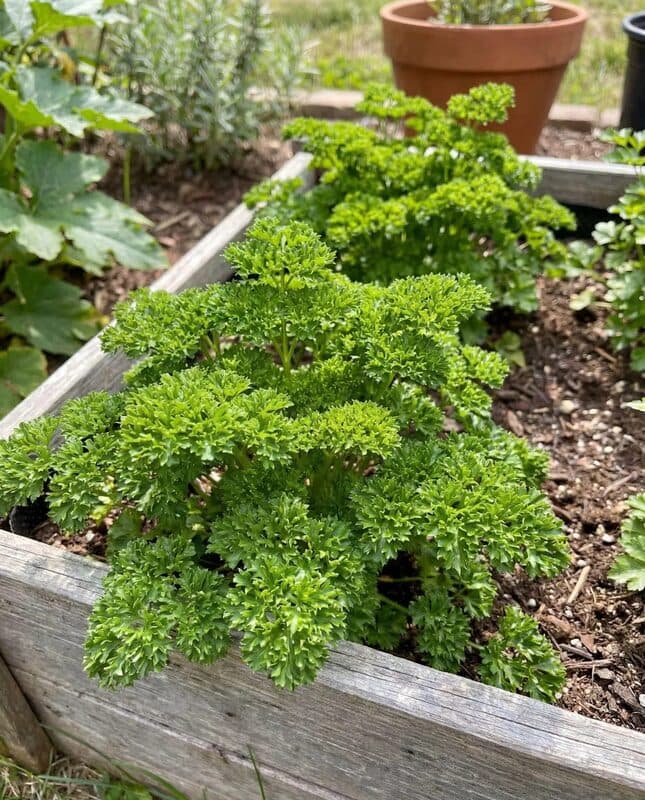
Why This Is Easy
Cut-and-come-again herb: Harvest outer leaves and the plant continues producing, giving you fresh parsley all season from a single planting.
Cool-weather tolerant and shade-friendly: Parsley performs well in conditions that challenge many other herbs, making it a forgiving choice for beginners.
Planting Specs (Depth + Spacing)
- Depth: 1/4 inch (cover lightly—darkness supports germination)
- Spacing: Thin plants to 6–10 inches apart
Timeline (What to Expect)
- Sprout window: 14–28 days (parsley is famously slow to germinate—patience is important)
- When to thin: When seedlings are 2–3 inches tall
- First harvest: 70–75 days, or once plants have 8–10 leaves
- Ongoing harvest: All season long; parsley is a biennial but typically grown as an annual
When to Plant
Parsley prefers cool weather and tolerates light frost.
Spring: Sow seeds 2–4 weeks before your last frost date, as soon as soil can be worked. Soil temperatures of 50–70°F support germination, with 65–75°F being ideal.
Fall: In mild climates, plant in late summer for fall and winter harvest.
Indoor start: Start seeds indoors 6–8 weeks before the last frost to offset slow germination.
Succession planting: Sow new seeds every 3–4 weeks for a steady supply of fresh parsley.
How to Plant
Parsley can be direct sown or started indoors. Slow sprouting is normal, so patience matters.
Speeding Up Germination (Optional but Helpful) Parsley seeds have a hard coat that delays germination. To speed the process:
Soak seeds in warm water for 12–24 hours before planting, or
Freeze seeds for 3–5 days, then soak in warm water for a few hours. Either method softens the seed coat and can noticeably reduce germination time.
Direct Sowing
Prepare: Choose a site with full sun to partial shade (at least 6 hours of sun). Work compost into well-draining soil.
Sow: Plant seeds 1/4 inch deep, spacing them about 1–2 inches apart. Cover lightly—parsley germinates best in darkness.
Water: Keep soil consistently moist, but not soggy, until sprouts appear. Drying out during this period can prevent germination.
Mark rows: Seedlings emerge slowly and look grass-like at first. Marking rows helps avoid accidental disturbance.
Thin: Once seedlings reach 2–3 inches tall, thin to 6–10 inches apart.
Starting Indoors
Sow seeds 6–8 weeks before the last frost.
Plant 1/4 inch deep in seed-starting mix and keep temperatures around 65–75°F.
Keep soil evenly moist and expect sprouts in 2–4 weeks.
Harden off seedlings and transplant outdoors, spacing 6–10 inches apart.
Container Growing
Parsley grows well in containers. Use a pot at least 6–8 inches deep with drainage holes.
Place containers in a sunny window or on a patio.
Care Made Simple
Watering Logic
Check-First Watering: Parsley has shallow roots and needs consistent moisture.
If the soil surface feels dry → Water
If damp → Wait
Tip: Mulch helps retain moisture and suppress weeds. Avoid letting parsley dry out completely, as it does not recover well from drought stress.
Sun & Shade
Sun & Temperature:
Full sun (6–8 hours) is ideal, though parsley tolerates partial shade, especially in hot climates.
Best growth occurs at 50–70°F, and plants tolerate light frost.
In very hot weather, afternoon shade helps reduce stress and delay bolting.
Feeding (if applicable)
Feeding: Parsley benefits from fertile soil. Feed once or twice during the season with a balanced fertilizer or liquid feed. Pale or yellowing leaves may indicate a need for nitrogen.
Weeding: Keep the area weed-free, as parsley’s shallow roots do not compete well. Weed carefully to avoid root disturbance.
Harvest (Keep It Producing)
When to Harvest
Begin harvesting once plants have at least 8–10 leaves and are 6 inches or taller.
Always harvest from the outside first, leaving the center growth intact.
How to Harvest
Cut stems at the base of the plant, near soil level, rather than trimming leaf tips. This encourages fuller regrowth.
Remove no more than one-third of the plant at a time to allow recovery.
Harvest every 2–3 weeks to promote steady growth and help prevent bolting.
Flavor Note Young leaves are milder, while mature leaves have a stronger flavor. Triple Curled parsley is generally milder than flat-leaf Italian types.
Storage
Fresh: Store stems in a glass of water in the refrigerator or wrap them in a damp paper towel.
Freeze: Chop and freeze in ice cube trays with water or oil for long-term storage.
Drying: Parsley can be dried, but much of its flavor is lost; freezing preserves taste better.
Common Problems + Quick Fixes
Seeds didn’t sprout or took a long time:
Cause: Normal slow germination, dried-out soil, or cool temperatures.
Action: Keep soil consistently moist and be patient. Pre-soaking seeds and using fresh seed can improve results.
Weak or leggy seedlings:
Cause: Insufficient light.
Action: Provide at least 6 hours of direct sun or supplemental lighting, and thin crowded seedlings.
Yellowing leaves:
Cause: Overwatering, drought stress, or nutrient deficiency.
Action: Check moisture levels and drainage first. Feed lightly if soil nutrients are low.
Bolting:
Cause: Heat stress or natural second-year flowering habit.
Action: Remove flower stalks promptly during the first year to extend leaf harvest. In hot climates, provide partial shade. Once heavy bolting begins, quality declines and plants are best replaced.
Aphids:
Cause: Common sap-feeding insects.
Action: Spray plants with water or use insecticidal soap if infestations are heavy.
Caterpillars (parsley worms):
Cause: Black swallowtail larvae feeding on leaves.
Action: These develop into butterflies. Share plants if possible, or hand-pick and relocate. Planting extra parsley can help accommodate them.
Quick Tips
- Pre-soak seeds to speed slow germination.
- Expect a 2–4 week sprout window and remain patient.
- Harvest outer stems first to keep plants productive.
- Label rows to avoid disturbing slow-emerging seedlings.
Mini Checklist
- Seeds pre-soaked for 12–24 hours (optional)
- Planted 1/4 inch deep in full sun to partial shade
- Soil kept consistently moist until sprouts appeared
- Seedlings thinned to 6–10 inches apart
- Outer stems harvested first, center left intact
- Stems cut at the base rather than leaf tips
- Flower stalks removed promptly if bolting begins
[#toc](Back to TOC)Plant Profile