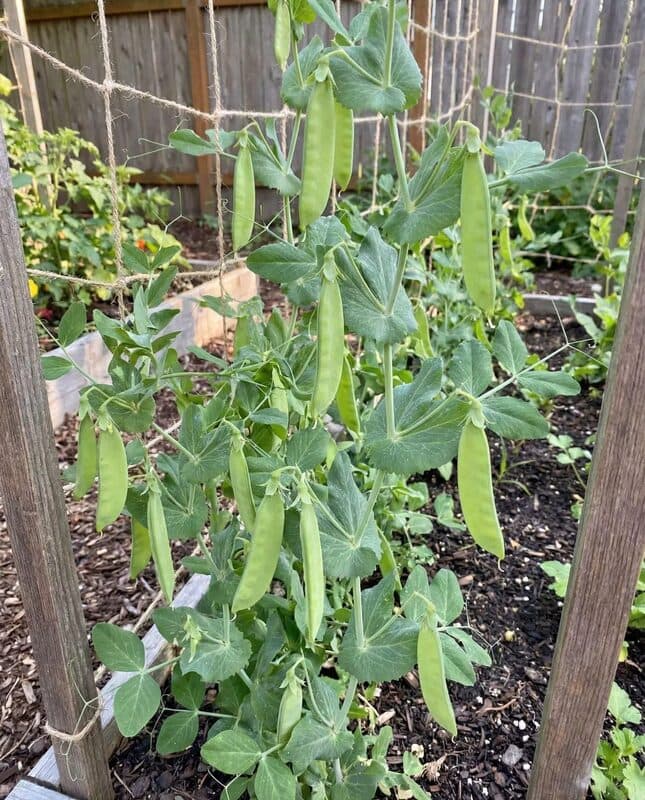
Why This Is Easy
Perfect cool-weather crop: Peas thrive in early spring when many vegetables are still waiting to be planted.
Disease-resistant and productive: Oregon Sugar Pod II resists powdery mildew, fusarium wilt, and common pea viruses. Compact vines (28–36 inches) produce generous yields of double pods.
Planting Specs (Depth + Spacing)
- Depth: 1–1½ inches
- Spacing: 2–3 inches apart, with rows spaced 18–24 inches apart
Timeline (What to Expect)
- Sprout window: 7–14 days (faster in warmer soil, slower in cold soil)
- First harvest: 60–68 days
- Harvest window: 2–3 weeks with regular picking
- Snow pea note: Harvest pods when they are flat and about 4 inches long, before peas inside begin to swell
When to Plant
Peas are cool-weather crops that love spring and struggle in heat.
Spring (main season): Plant 2–4 weeks before your last frost date, as soon as soil can be worked. Peas tolerate light frost and grow best at 55–65°F.
Soil temperature: Seeds germinate in soil as cool as 40°F, but 50–70°F is ideal. Cold soil means slower germination.
Fall crop: In mild climates, plant again in late summer for a fall harvest, about 8–10 weeks before the first expected frost.
Heat warning: Peas stop producing when temperatures consistently exceed 80°F. Time planting so harvest finishes before summer heat.
How to Plant
Direct sowing is recommended—peas do not transplant well.
Prepare: Choose a sunny location (6–8 hours of sun). Work compost into well-draining soil. Peas improve soil by fixing nitrogen, so rich fertilizer is unnecessary.
Sow: Plant seeds 1–1½ inches deep and 2–3 inches apart, either in rows or wide bands.
Water: Water thoroughly after planting and keep soil lightly moist until sprouts appear.
Support: Install a trellis, netting, or short stakes at planting time. Though vines are short, support improves airflow and makes harvesting easier.
Protect seedlings: Birds often target young pea shoots—cover with netting or row cover until plants are established.
Replanting Tip If germination is uneven, replant immediately. New seedlings catch up quickly.
Care Made Simple
Watering Logic
Check-First Watering:
If soil feels dry 1 inch down → Water
If damp → Wait
Tip: In cool spring weather, rainfall may provide enough moisture. Avoid overwatering, which can encourage disease.
Sun & Temperature
Full sun (6–8 hours) is ideal.
Best growth occurs at 55–65°F.
Production declines once temperatures exceed 80°F—this is normal for peas.
Feeding (if applicable)
Feeding: Peas are legumes and fix their own nitrogen. Too much fertilizer leads to leafy growth with few pods. Compost at planting is usually sufficient.
Weeding: Keep beds weed-free, especially early on. Weed gently—pea roots are shallow.
Harvest (Snow Peas)
When to Harvest
Harvest pods when they are flat, tender, and about 4 inches long.
Pick before peas inside swell; overmature pods become tough and signal plants to stop producing.
How to Harvest
Use two hands: Hold the vine with one hand and pick with the other, or use scissors. Vines are fragile.
Harvest every 1–2 days during peak production to keep plants producing.
Eating
Snow peas are eaten whole—pod and all.
Oregon Sugar Pod II is stringless and excellent raw, lightly steamed, or in stir-fries.
Common Problems + Quick Fixes
Seeds didn’t sprout or rotted:
Cause: Cold, wet soil.
Action: Wait for soil to reach at least 45–50°F. Avoid overwatering and replant if needed.
Flowers but no pods:
Cause: High temperatures above 80°F.
Action: Plant earlier in spring or grow as a fall crop in warm climates.
Powdery mildew:
Cause: Fungal disease during warm days and cool nights.
Action: This variety is resistant, but improve airflow with spacing and trellising. Water at the base and remove affected leaves if needed.
Aphids:
Cause: Common pest as weather warms.
Action: Spray off with water or use insecticidal soap if infestations are heavy.
Yellow leaves or stunted growth:
Cause: Root stress, disease, or aphid-spread viruses.
Action: Remove severely affected plants and rotate crops—avoid planting peas in the same spot for three years.
Bird damage:
Cause: Birds feeding on seedlings.
Action: Use bird netting or row cover until plants are 6 inches tall.
Quick Tips
- Plant early—peas thrive in cool weather.
- Even short vines benefit from support.
- Harvest often to keep plants producing.
- Pick pods while flat, before peas swell.
Mini Checklist
- Planted 2–4 weeks before last frost
- Seeds planted 1–1½ inches deep and spaced properly
- Trellis or support installed at planting
- Seedlings protected from birds
- Soil kept moist but not soggy
- Pods harvested flat at about 4 inches
- Picking every 1–2 days during peak production
- Using two hands or scissors to protect vines
[#toc](Back to TOC)Plant Profile