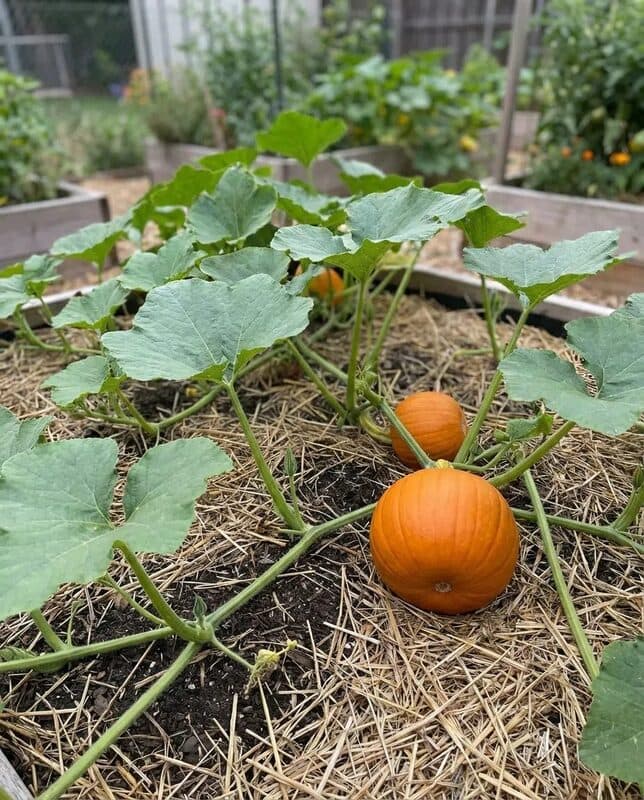
Why This Is Easy
Classic pie pumpkin: Small (5–8 lb) fruits with sweet, fine-grained flesh—excellent for pies, soups, and roasting. Much better eating quality than carving pumpkins.
Manageable size: Vines and fruits are smaller than giant pumpkins. Still needs space, but won’t overwhelm a typical garden.
Planting Specs (Depth + Spacing)
- Depth: 1 inch
- Spacing: 3–4 feet between plants; rows 5–6 feet apart (vines can spread 10–15 feet)
Timeline (What to Expect)
- Sprout window: 7–14 days (best with warm soil, 70°F+)
- First harvest: 90–100 days
- Harvest timing: Before first frost, when rind is hard and stem begins to dry
- Curing: 1–2 weeks after harvest for best storage
When to Plant
Pumpkins are warm-weather crops with zero frost tolerance.
Direct sow outdoors: After all frost danger has passed and soil reaches at least 70°F (often 2–4 weeks after last frost).
Start indoors (short seasons): 2–4 weeks before last frost in biodegradable pots. Transplant only after soil is warm.
Timing for fall harvest: Count back ~100 days from your first expected fall frost to find the latest safe planting date.
How to Plant
Direct Sowing (Recommended)
Prepare: Choose the sunniest spot. Pumpkins need space and rich soil. Work compost or well-rotted manure into the bed.
Create hills (optional): Form mounds ~12 inches across and 3–4 inches high, spaced 4–6 feet apart. Hills warm faster and improve drainage.
Sow: Plant 2–3 seeds per hill, 1 inch deep. Thin to the strongest seedling after sprouting.
Water: Water well after planting and keep soil evenly moist until sprouts appear.
Starting Indoors (Short Growing Seasons)
Start 2–4 weeks before last frost—no earlier.
Use biodegradable pots so roots aren’t disturbed.
Plant seeds 1 inch deep; keep warm (70–85°F).
Transplant only after frost danger has passed and soil is warm. Handle gently.
Care Made Simple
Watering Logic
Check-First Watering:
If soil feels dry 2 inches down → Water deeply at the base
If damp → Wait
Tip: Avoid overhead watering to reduce disease. As pumpkins near maturity, slightly reduce watering to prevent watery flesh.
Sun & Temperature
Full sun (6–8 hours minimum) is essential.
Pumpkins thrive in warm weather (70°F+).
Frost kills plants—harvest before the first hard frost.
Feeding (if applicable)
Feeding: Pumpkins are heavy feeders.
Enrich soil with compost or manure at planting.
Side-dress with compost or balanced fertilizer when vines begin to run.
Switch to a low-nitrogen fertilizer once flowers appear (too much nitrogen = leaves, fewer fruits).
Mulching: Straw or leaf mulch conserves moisture, suppresses weeds, and keeps fruit off wet soil.
Harvest
When to Harvest
Color: Fully orange (or mature variety color).
Rind test: Skin resists a fingernail and doesn’t puncture easily.
Stem: Dry and corky, not green.
Timing: Harvest before the first hard frost.
How to Harvest
Cut the stem with a sharp knife or pruners, leaving 3–4 inches attached.
Don’t carry pumpkins by the stem—it can snap and invite rot.
Handle gently to avoid bruising.
Curing & Storage
Cure in a warm, dry place (80–85°F) with good airflow for 1–2 weeks.
Store in a cool, dry area (50–55°F). Properly cured Sugar Pie pumpkins can store 3–5 months.
Common Problems + Quick Fixes
Seeds didn’t sprout:
Cause: Soil too cold or wet.
Action: Wait for soil to reach 70°F. Don’t rush planting.
Lots of flowers but no fruit:
Cause: Pollination timing—male flowers appear first.
Action: Be patient. Encourage bees or hand-pollinate in the morning using a small brush.
Powdery mildew:
Cause: Common late-season fungal disease.
Action: Water at the base, improve airflow, remove badly affected leaves. Usually cosmetic—fruit is still fine.
Squash vine borers:
Cause: Larvae bore into stems, causing sudden wilting.
Action: Check for frass at stem bases. Remove borers if found and mound soil over the wound. Prevent with row cover early and crop rotation.
Squash bugs:
Cause: Sap-sucking insects.
Action: Crush egg clusters, hand-pick adults, keep garden debris-free.
Fruit rotting on soil:
Cause: Constant moisture beneath fruit.
Action: Place straw, cardboard, or a board under pumpkins.
Quick Tips
- Wait for warm soil—70°F+ is key.
- Plan space: Vines spread 10–15 feet.
- Hand-pollinate if fruit set is poor.
- Cure pumpkins before storage for longest shelf life.
Mini Checklist
- Planted after last frost with soil at 70°F
- Seeds planted 1 inch deep; thinned to strongest seedling
- Spaced 3–4 feet apart with wide rows
- Full sun location chosen
- Soil enriched with compost/manure
- Deep watering at the base; mulched under fruit
- Harvested when rind is hard and stem is dry
- Stem cut with 3–4 inches attached
- Cured 1–2 weeks before storage
[#toc](Back to TOC)Plant Profile